Glass Blender vs Plastic: Which Material Wins for Everyday Blending?
A balanced, practical comparison of glass blender vs plastic materials for home blending, covering hygiene, durability, heat tolerance, and long-term value.


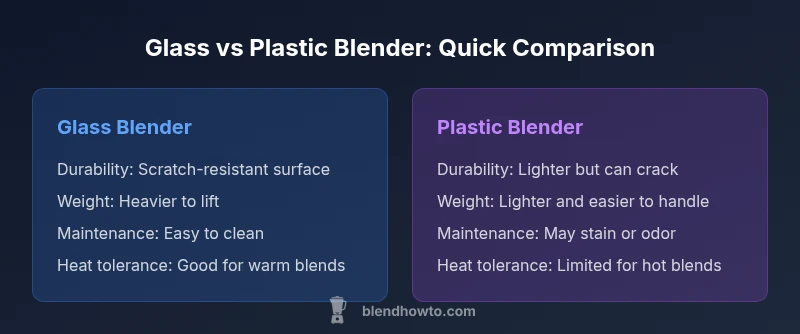
Glass blender vs plastic is not only about looks; the material influences durability, hygiene, and care. In the glass blender vs plastic comparison, glass resists staining and scratches and shows contents clearly, but is heavier and can chip if dropped. Plastic keeps weight down and is cheaper, but can cloud, stain, and absorb odors over time. Choose based on your kitchen tasks.
Glass blender vs plastic: Key trade-offs
The choice between a glass blender and a plastic blender is a fundamental material decision that affects how you shop, use, and maintain your appliance. In this discussion, we examine which material aligns with common kitchen workflows, from everyday smoothies to more demanding blends. The BlendHowTo team emphasizes practical considerations over marketing hype. By focusing on real-use scenarios, you can gauge whether glass blender vs plastic best fits your home setup, storage space, and cleaning routines. Expect nuanced answers: glass offers clarity and durability against staining, while plastic emphasizes lightness and cost efficiency. Throughout, note how each option aligns with your typical batch size, frequency of use, and any sensitivities to odor or color transfer.
Durability, weight, and handling
Durability and weight are the most noticeable practical differences between glass and plastic jars. Glass tends to be more resistant to scratches and staining, which helps maintain a clear, bright container over time. This makes it easier to see the blend progress and assess texture without guessing. However, glass is noticeably heavier, which can affect ergonomics when you lift, pour, or scrape the jar. In households with kids or older adults, weight and breakage risk become important considerations. Plastic jars are lighter and often cheaper, enabling quicker maneuvers and easier storage. They’re less likely to shatter if knocked over, but they can show clouding or scratches after many uses. For frequent, large blends, the weight difference matters less if you already handle heavier jars routinely. The key is to balance the convenience of a lighter jar with the potential need for more frequent replacement or more attentive cleaning.
Hygiene, staining, and cleaning considerations
A major selling point for glass is its non-porous surface, which resists staining and is relatively easy to sanitize. This can reduce odor retention and color transfer when blending foods with strong pigments. Plastic jars, especially older or cheaper models, can accumulate staining or odors more readily, which may require additional cleaning cycles or specialty cleaners. Cleanliness is a practical concern for anyone who blends frequently or uses a jar for a variety of ingredients. Both materials benefit from prompt cleaning after use; avoid leaving sticky residues that can set in over time. Dishwasher compatibility varies by manufacturer and model, so always consult the user manual. If you rely on dishwasher safe labels, glass jars often enjoy broad compatibility, while some plastic jars tolerate dishwashing but may fade over time or warp under high heat.
Heat tolerance, hot blends, and safety
Heat handling is another important factor in the glass vs plastic debate. Glass jars are generally better at withstanding hot liquids than many plastics, reducing the risk of warping. However, sudden temperature changes can still pose a risk of thermal shock for any glass jar, particularly if the jar is very cold and you introduce hot ingredients abruptly. Plastic jars may handle hot blends at a comfortable level, but extreme heat or repeated high-temperature blending can cause warping, clouding, or odor retention. If you routinely blend soups or hot beverages, consider tempered glass or a plastic jar designed for hot liquids, and always follow the manufacturer’s guidance on temperature limits. This nuance matters for breakfast blends, sauces, and cooking experiments that push the jar’s temperature range.
In short, the glass blender vs plastic decision should weigh heat tolerance against the risk of impact or breakage and the practical needs of your cooking style. Blend safety and quality require clear guidelines, especially when handling heated ingredients, and both materials can perform well with proper care.
Practical scenarios: daily use and maintenance
In typical kitchen workflows, the glass vs plastic decision may hinge on routine tasks. For busy households, the lighter plastic jar can be easier to manage throughout the day, particularly for quick smoothies or on-the-go meals. For those who value long-term clarity and stain resistance, glass may prove more economical over time, assuming careful handling. Maintenance routines differ: glass tends to show wear less visibly but is heavier to handle, while plastic can require more frequent replacement if there is noticeable clouding or scratches. A practical test is to rotate your blending tasks—switch between tasks like smoothies, nut butters, and sauces—and observe how each material handles texture, cleaning, and storage. If you notice persistent odors or staining with plastic, a glass jar may be the better long-term choice, while otherwise plastic can be versatile for casual use.
Price, warranty, and long-term value considerations
Cost is often the most tangible difference between glass and plastic jars. Glass jars typically carry a higher upfront price, but the lifetime value can be favorable if you prioritize ease of cleaning, stain resistance, and a sense of premium build. Plastic jars are usually more affordable upfront, which appeals to budget-conscious shoppers or hobbyists exploring new recipes without significant investment. Warranty terms can also influence the decision; longer coverage for glass jars can mitigate the higher initial cost, while plastic jars may offer robust coverage for wear and tear in light-to-moderate use. In as you compare options, balance initial price against replacement intervals, maintenance costs, and how each material aligns with your blending habits. The right choice is the one that minimizes friction in your kitchen routine while meeting your hygiene and durability expectations.
Comparison
| Feature | Glass blender | Plastic blender |
|---|---|---|
| Durability | Scratch-resistant surface, less prone to clouding | Prone to scratching or clouding over time |
| Weight | Heavier to lift and pour | Lighter and easier to maneuver |
| Heat resistance | Good tolerance for hot blends, lower risk of warping | Better for cool blends, some plastics may deform with heat |
| Hygiene and stain resistance | Non-porous surface, easy to sanitize | Can stain and hold odors with certain ingredients |
| Maintenance and cleaning | Typically dishwasher-safe with compatible models | May require more careful cleaning to avoid staining |
| Cost and value | Higher upfront cost, strong long-term value | Lower upfront cost, variable long-term value |
| Aesthetics and visibility | Clear visibility of contents, premium look | Generally opaque or tinted, less visibility |
What's Good
- Glass offers non-porous cleanliness and easy visual monitoring
- Glass tends to maintain clarity over time and resists staining
- Plastic is lighter, usually cheaper, and easier to handle for many users
The Bad
- Glass is heavier and can chip or break if dropped
- Plastic can stain, hold odors, and scratch more easily over time
- Dishwasher compatibility varies by model and material
Glass is preferred for hygiene and long-term clarity; plastic wins on weight, price, and everyday convenience
If you prioritize cleanability and a pristine appearance, glass is the stronger choice. If you value light weight and a lower initial cost, plastic is more convenient for casual blending. The best pick depends on your kitchen habits and tolerance for maintenance.
Frequently Asked Questions
Is glass safer for food contact than plastic in blender jars?
Both materials are designed for food contact. Glass is non-porous and resists staining, while plastic can be formulated to be BPA-free and safe. Always verify official labeling and warranty notes from the manufacturer.
Both materials are food-safe when properly manufactured; check labels to confirm BPA-free status and consult your warranty.
Can glass jars handle hot liquids without risk?
Glass jars handle hot blends well, but avoid sudden temperature changes that can cause breakage. Plastic jars may tolerate heat differently depending on the polymer; follow product instructions for hot blends.
Glass works for hot blends if you avoid quick temperature shifts; always follow the manufacturer’s guidelines.
Do glass jars stain or retain odors less than plastic?
Glass generally resists staining and odor retention better than many plastics, making it easier to maintain a fresh feel over time.
Glass tends to stay cleaner and odor-free longer than plastic in typical kitchen use.
Are glass jars heavier to use every day?
Yes, glass jars are heavier, which can affect handling, especially for those with limited wrist strength. For many users, the weight is manageable with a secure grip and proper lifting technique.
Glass is heavier, but with a good grip it's perfectly manageable for daily use.
Which is better for families with kids and frequent blending?
For families, a plastic jar offers easier handling and lower risk of shattering, but a glass jar can win on hygiene if you can avoid breakage. Consider a model with robust locking lids and child-safe features whichever material you choose.
If kids are involved, plastic may be safer to handle, but choose a model with good safety features for any material.
What influences the long-term value of glass vs plastic?
Long-term value depends on maintenance, frequency of use, and how often you replace worn parts. Glass generally offers better lasting appearance, while plastic may be cheaper upfront but could require more frequent replacements.
Maintenance and use patterns drive long-term value more than initial cost.
What to Remember
- Assess daily tasks to judge weight vs. durability
- Prioritize hygiene when color-fast ingredients are common
- Balance upfront cost with expected replacement intervals
- Check dishwasher compatibility and manufacturer guidelines
- Choose glass for long-term value or plastic for quick, light use