Why Glass Jar Over Plastic Blender: An Analytical Guide
An analytical comparison of glass jar versus plastic blender jars, covering heat resistance, hygiene, cleaning, and long-term value. Learn when glass makes sense and how to care for it.


Glass jars typically resist staining, leaching, and heat-related damage better than many plastics. This quick comparison explains why a glass jar can outperform plastic in everyday blending, especially with hot soups, acidic fruit, or frequent washing. If you want durability, safer heating, and easy cleaning, a glass jar often wins.
The Case for Glass: Why glass jar instead of plastic blender matters
Choosing the jar material for your blender is more than a cosmetic choice. It can influence flavor, safety, and how easy your kitchen stays after blending. According to BlendHowTo, glass jars offer predictable performance in heat resistance, chemical stability, and odor control. In practice, this matters most when you blend acidic fruits, hot soups, or frequently wash and sanitize the jar. If you're weighing the question why glass jar instead of plastic blender, consider three angles: flavor purity, hygiene, and long-term maintenance. Glass is non-porous, so it resists staining and odor absorption; it also shows you when cleanliness has been achieved because you can see through to the bottom. Yet glass is heavier and more prone to shattering if dropped. The BlendHowTo team emphasizes that the decision should align with your cooking style and storage habits. For instance, a glass jar shines in a kitchen with frequent citrus or tomato blends, and where you want to avoid plastic-related flavor carryover. In the sections that follow, we unpack the science behind these differences and provide practical guidance to help you decide. BlendHowTo Analysis, 2026 also informs these practical considerations.
Material Science of Jars: Glass vs Plastic
Material science informs the practical decisions behind the kitchen jar. The two most common jar materials are glass and BPA-free plastics. Glass is inherently non-porous and chemically inert, which means it resists staining and flavor transfer and holds up under heat better than many plastics. Plastic jars often offer lighter weight and more flexible lids, but they can absorb acids and fragrances over time, especially with repeated blending of citrus or tomato-based ingredients. This section outlines core properties such as hardness, impact resistance, thermal expansion, and chemical interactions, to help you see how each material behaves under typical blending scenarios. The data you care about when choosing between glass and plastic revolves around how the jar handles heat, how easy it is to sanitize, and how long you can expect it to look and perform after dozens or hundreds of blends. The takeaway is straightforward: glass tends to be the more stable, long-lasting choice for many users, but it comes with trade-offs in weight and breakage risk. BlendHowTo’s perspective emphasizes balancing your cooking style with practical handling realities.
Food Safety and Hygiene Considerations
Food safety and hygiene considerations are critical when selecting a blender jar material. Glass jars are non-porous and easy to sanitize, which minimizes the risk of harboring bacteria in micro-scratches. Plastic jars can fare differently depending on the formulation and the presence of additives; some plastics may stain or retain odors after repeated citrus blends or tomato-based recipes. Regular cleaning with mild soap and warm water, and occasional deeper sanitizing, helps maintain flavor integrity and prevents cross-contamination. If you routinely blend acidic or spicy ingredients, glass tends to resist lingering odors and flavors better over time. In addition, glass is less likely to degrade with repeated dishwashing, provided you avoid impacts and thermal shock. BlendHowTo Analysis, 2026 notes that these hygienic advantages contribute to the practical longevity of glass jars in a busy kitchen.
Performance and Longevity: Durability and Heat
Performance hinges on how the jar material responds to heat, mechanical stresses, and repeated use. Glass jars offer excellent thermal stability and inert behavior, which translates to predictable blending with hot ingredients and less risk of chemical transfer. Plastic jars, while lighter and cheaper upfront, may show more pronounced wear from acids and high heat over time, including clouding or mild scratching. If you blend hot soups, blended coffee drinks, or milk-based beverages, glass can minimize flavor anomalies caused by heat-related plastic interactions. Durability is a trade-off: glass can crack or shatter if dropped or subjected to rapid temperature changes, whereas plastic jars resist breakage but can warp or scratch. Your choice should reflect how carefully you handle kitchen gear and how often you need long-term reliability. BlendHowTo teams highlight that the final decision depends on your tolerance for weight, breakage risk, and cleaning rigor.
Cleaning, Care, and Longevity of Glass Jars
Care for glass jars centers on avoiding thermal shocks and physical impacts. Before you wash, let hot liquids cool slightly to prevent cracking. Hand washing with a soft sponge preserves the rim gasket longer, while dishwashers can be convenient if the jar is labeled dishwasher-safe. Always inspect the jar for chips or cracks before reuse, because small flaws can propagate with heavy use. If a stain or odor persists, a paste of baking soda and water or a gentle lemon soak can help refresh the interior without damaging the glass. The non-porous surface of glass makes it easier to achieve a squeaky-clean finish, and you can visually confirm cleanliness through the clear walls. For frequent users, establishing a quick post-blend wash routine reduces residual flavors and maintains the jar’s pristine appearance. BlendHowTo’s guidance underscores that consistent care improves longevity and preserves flavor fidelity over time.
Practical Buying Guidance: What to Look For
When evaluating glass jars for your blender, check these practical criteria: jar thickness and rim integrity, lid and gasket compatibility, and the blender’s compatibility with glass containers. Look for tempered or borosilicate glass that can handle thermal cycling and avoid jars with visible cracks or chips in the rim. Ensure the lid seals tightly and that the gasket is replaceable to maintain hygiene. Confirm that your blender model supports jars made of glass and verify the maximum recommended blend capacity. Consider the weight you’re comfortable handling and whether a protective sleeve or carrying strap is available. Finally, inspect the manufacturer’s care instructions and warranty terms. A well-supported glass jar with a robust lid is often a strong value, especially for users who value flavor purity and easy cleaning. In this context, the BlendHowTo team notes that long-term value often comes from pairing a high-quality glass jar with a compatible blender.
Debunking Common Myths About Glass Jars
Myths about glass jars often center on weight, fragility, and brittleness. While glass is heavier than plastic, modern glass jars are designed to be more ergonomic and balanced, reducing fatigue during everyday use. The idea that glass always shatters is outdated; many manufacturers now produce tempered or borosilicate glass that withstands routine drops with proper care. Similarly, concerns about stiffness or cleaning difficulty are mitigated by a simple care routine and the non-porous surface that resists staining. Finally, the belief that glass is not compatible with all blenders is mostly solved by checking the model’s jar compatibility and opting for brands that offer glass jars as accessories. The truth is glass jars can be a durable, hygienic choice when properly selected and cared for, especially for users who prioritize flavor fidelity and cleanability.
Use Case Recommendations: When Glass Makes Sense
Different kitchen routines favor different jar materials. Glass jars are a strong choice for cooks who frequently blend hot soups, citrus-heavy recipes, or blends that require repeat washing. They excel when you want to minimize flavor carryover and keep odors at bay, particularly in small or open-plan kitchens where you want a clean aroma profile. If you’re budget-conscious or need a lighter setup, you might prefer plastic jars, provided you’re comfortable with potential odor retention and more frequent cleaning. In mixed-use scenarios—such as smoothie blends, nut butters, and occasionally hot soups—many blender systems offer glass jars as a premium option that arguably delivers better long-term value. The BlendHowTo team recommends evaluating your typical recipes, cleaning routine, and storage needs to decide which jar aligns with your lifestyle. As a practical takeaway, if your routine involves frequent hot blends or citrus-heavy recipes, glass can save you time on cleaning and flavor management over the long term.
Comparison
| Feature | Glass Jar | Plastic Jar |
|---|---|---|
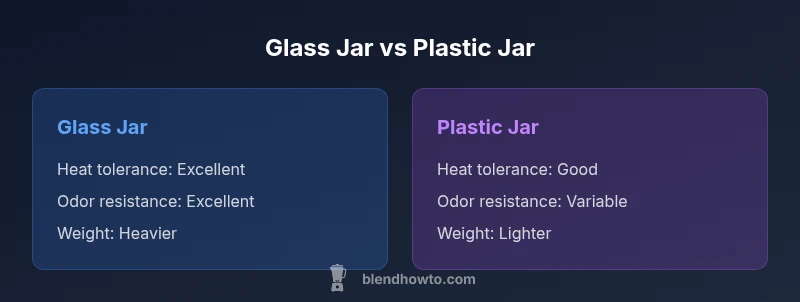
| Heat Tolerance | Excellent | Good |
| Odor & Stain Resistance | Excellent | Variable |
| Chemical Safety | Low leaching risk (inert) | Potential for leaching with certain plastics |
| Weight & Handling | Heavier; requires careful handling | Lighter and easier to maneuver |
| Cleaning & Hygiene | Non-porous; easy sanitation | Porous surface can harbor residues in scratches |
| Cost Range | Typically mid-to-high | Typically low-to-mid |
| Best For | Flavor fidelity, hot blends, long-term storage | Budget-friendly, quick blends, convenient use |
What's Good
- Low risk of chemical leaching compared to plastic
- Easier to sanitize and visually confirm cleanliness
- Excellent odor and stain resistance with proper care
- Long-term durability when not dropped or subjected to thermal shocks
- Clear visibility helps monitor cleanliness and blend performance
The Bad
- Heavier to lift and move around the countertop
- Breakage risk if dropped or subjected to rapid temperature changes
- Usually more expensive upfront than basic plastic jars
- Some blender models have limited clearance with glass jars
Glass jars are typically a better long-term choice for flavor fidelity, hygiene, and heat handling, but weigh the handling and breakage risk.
If your blending activities include hot blends, citrus-heavy recipes, or frequent cleaning, glass usually delivers clearer advantages. If you value weight savings and lower upfront cost, plastic may be more convenient in the short term; however, glass tends to offer superior durability over many cycles of use when managed carefully.
Frequently Asked Questions
What are the main advantages of using a glass jar in a blender?
Glass jars offer superior heat tolerance, chemical stability, and hygiene. They’re non-porous, resist staining, and are easier to sanitize, helping preserve flavor and aroma over many uses.
Glass jars resist staining and odors better and are easier to clean, which helps preserve flavor over many blends.
Are glass jars safe to use with hot liquids in blenders?
Yes, when the jar is rated for heat and you avoid rapid temperature changes. Glass handles heat well and minimizes flavor transfer from hot ingredients, but you should follow the manufacturer’s guidance for hot blends.
Yes, glass jars handle hot blends well when you follow the manufacturer’s guidelines and avoid sudden temperature changes.
Will a glass jar fit my existing blender model?
Compatibility depends on the blender’s design. Check the model’s manual for jar type acceptance and look for third-party glass jars listed as compatible by the brand.
Check your blender’s manual for jar compatibility and look for glass jars that the brand lists as compatible.
Is glass more expensive than plastic jars?
Glass jars often have a higher upfront price but may offer better longevity and cleaning convenience, which can reduce long-term costs for frequent blenders.
Glass jars usually cost more upfront but can save you money over time through durability and easier cleaning.
How should I clean a glass blender jar to avoid streaks?
Rinse immediately after use, wash with mild soap and warm water, and avoid harsh abrasives. For persistent smudges, use a baking soda paste or a lemon water rinse to restore clarity.
Rinse after blending, wash with mild soap, and use gentle cleaners for tough stains to keep glass clear.
Can glass jars be used for freezing blends?
Glass can be used for freezing if the jar is rated for freezing and you allow for expansion space. Avoid rapid temperature changes, and never seal a hot blend in glass that isn’t rated for freezing.
Glass can be frozen if it’s rated for freezing and you leave headspace; avoid rapid temp changes.
What to Remember
- Prioritize glass when heat and flavor integrity matter
- Expect a heavier jar with a potential breakage risk
- Choose glass with good lid gasket compatibility and warranty
- Clean and inspect regularly to extend longevity