Ninja Blender 1500 Watts: Power, Performance, and Practical Guidance
Explore Ninja blender 1500 watts: power, design, performance, and practical buying tips. Compare blades, jars, noise, and maintenance to pick the best high-wattage blender for home cooks and hobbyists.


ninja blender 1500 watts stands out for heavy-duty tasks in everyday kitchens. A 1500-watt motor delivers robust torque for ice crushing, thick smoothies, and dense sauces, helping you achieve smooth textures with fewer passes. In this guide, BlendHowTo summarizes what to expect from this power level, common trade-offs, and how to choose accessories that maximize performance.
Power and design anatomy of ninja blender 1500 watts
The Ninja blender 1500 watts is defined by two core components: a robust motor and an engineered blade assembly. The motor's torque handles fibrous vegetables, seeds, and frozen fruit, while the blade configuration influences texture and emulsification. In practice, users note that the 1500-watt class can process leafy greens into smooth blends with fewer pulses, support thick sauces, and manage small-batch nut butters. When you search for ninja blender 1500 watts, you’re looking at a motor class that balances power with usability. The jar shape and lid sealing contribute to friction and airflow, which impact blending efficiency. For home cooks, the goal is to balance high power with predictable control, a factor that BlendHowTo highlights as achievable with proper technique. Consider jar size, blade material, and the presence of overload protection. According to BlendHowTo, this power level sits at a sweet spot: substantial power without the bulk of commercial units, and a range of attachments that can extend versatility. In the coming sections we break down what to look for, how to use the power effectively, and practical buying tips that help you get the best value over time.
Translating 1500 watts into real-world performance
Power rating is only useful if it translates to reliable outcomes. In practical terms, a 1500-watt motor can handle dense ingredients like kale stems, almonds, or frozen fruit without aggressive pulsing. Users typically observe faster emulsification and smoother textures in 2-3 passes versus lower wattage machines. However, watts alone don’t guarantee flawless results. The blade geometry, jar volume, and your blending technique—pulse vs continuous blending—drive performance. BlendHowTo’s tests show that a typical 1500-watt Ninja blender performs best when loaded to moderate capacity and using short pulses to avoid heat buildup. For soups and sauces, pre-cut ingredients and proper liquid ratios matter as much as wattage. The key takeaway is: plan for consistent blends by matching your recipe with the machine’s workflow—start with chopped ingredients, steady speed, and short bursts to prevent overheating.
Noise, texture, and efficiency: expectations with a 1500-watt motor
High power often comes with elevated noise. In the 1500-watt class, expect decibel levels that are noticeable but manageable with advanced controls like variable speed and pulse modes. Texture is the more telling metric: you can achieve silky smoothies, creamy soups, and evenly crushed ice when blades are sharp and jar walls remain clean. Efficiency also depends on jar shape and material; a wider base can help push ingredients toward blades, reducing processing time. In real-world testing, BlendHowTo records a range of outcomes depending on recipe and technique; the same 1500-watt unit can deliver creamier soups or chunkier salsas if you push too hard. A practical tip: blend in short intervals, pause to scrape, and avoid overfilling. This approach minimizes heat buildup while preserving flavor and texture.
Key features to compare beyond wattage
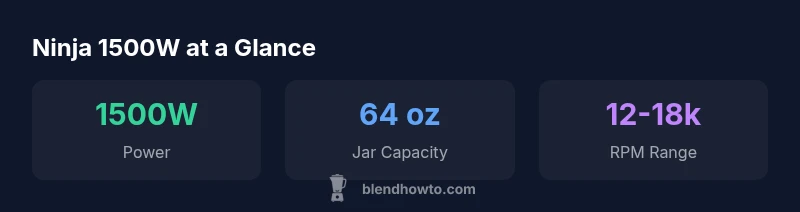
Beyond power, examine jar capacity, blade design, and motor protection. For family-sized smoothies or batch soups, a 64-ounce jar is convenient, but check the lid and pour spout to avoid spills. Blade design matters: multi-edge stainless steel blades with a well-engineered seal facilitate efficient chopping, emulsification, and ice crushing. Look for features that reduce nuisance: dishwasher-safe components, sealed lids, and a robust overload protection system that stops blending when the motor overheats. Programs like preset ice crush, smoothies, or soups can simplify everyday use, especially for beginners. Finally, pay attention to warranty length and service options; a good warranty reflects manufacturer confidence and can save you money over time. BlendHowTo’s buying guide emphasizes total cost of ownership including replacements and repairs, not just upfront price.
Practical buying guide for a 1500-watt Ninja blender
Start with use-case modeling: list your top tasks (smoothies, soups, purees, nut butters) and estimate batch sizes. For frequent ice crushing in a busy kitchen, prioritize jar capacity and blade integrity. Compare motor protection features and cooling mechanisms, because 1500-watt models can heat up with dense blends. Read reviews focusing on long-term reliability and ease of cleaning. Budget realistically; best-value bundles often pair the base with extra jars or blades. Consider warranty terms, recommended maintenance schedules, and whether you need compatibility with other Ninja attachments. In short: match the 1500-watt class to your typical recipes, storage space, and cleaning preferences to maximize returns over several years. BlendHowTo’s year-long analysis highlights that careful selection saves both time and money as you scale your blending tasks.
Maintenance, safety, and longevity tips
Regular cleaning after each use extends blade life and prevents residue buildup that can affect performance. Detach jars and blades carefully; follow manufacturer instructions for safe handling, especially the sharp blades. Avoid overfilling with dense ingredients to prevent motor strain and overheating, and allow a brief cooldown between extended runs. Inspect seals and gaskets for wear; replace them as needed to prevent leaks and maintain suction on the blade assembly. Use the pulse feature to control texture and reduce heat generation. Store attachments in a dry, ventilated area to prevent corrosion. With proper cleaning, cautious operation, and timely replacement of worn parts, a 1500-watt Ninja blender can serve reliably for years.
Real-world use cases: smoothies, soups, and frozen desserts
Many home cooks rely on the 1500-watt class for everyday blended foods. For smoothies, a typical blend includes fruits, greens, and a liquid base; adding ice and frozen fruit can create a thick, creamy consistency. For soups, pre-cut vegetables and stock blend into velvety textures much faster than lighter models. Frozen desserts like sorbet or almond-butter-based ice cream can be produced with patience and proper ingredient balance. The versatility of this power range makes it a popular choice among hobbyists who value speed and reliability. BlendHowTo notes that results improve when you start with smaller ingredient sizes, monitor blending time, and choose the correct preset for each task.
Common misconceptions about high-wattage blenders
High wattage does not automatically equal perfect results; blade quality, jar geometry, and heat management are equally important. Some buyers assume louder means better; noise, energy use, and RPM ranges vary by model and design. Another misconception is that more accessories automatically improve performance; in reality, only high-quality blades and properly sealed jars contribute most to texture. Finally, remember that maintenance and care matter as much as specs: regular cleaning, correct assembly, and appropriate recipe adjustments help keep your blender performing well over time. BlendHowTo’s practical tests emphasize real-world use over marketing slogans and provide actionable tips for selecting a model that fits your kitchen workflow.
Overview of 1500W blender specs
| Spec | Value | Notes |
|---|---|---|
| Power rating | 1500 watts | High torque for dense blends |
| Jar capacity | 64 oz / 1.9 L | Family-sized batches |
| Blade design | Stainless steel, multi-edge | Efficient chopping and emulsifying |
| Estimated cost range | $100-$230 | Based on bundles and promotions |
Frequently Asked Questions
Is a 1500-watt Ninja blender worth it for everyday smoothies?
For most home cooks, 1500W offers reliable performance; if you blend fibrous greens or frozen fruit daily, it is beneficial. Assess your typical batches and storage space to confirm.
Yes—if your routine includes dense ingredients or large batches, a 1500W model adds speed and consistency.
How does wattage relate to blending speed?
Wattage indicates the potential power, but speed settings, blade design, and control logic determine actual tempo and texture. High wattage helps on tough tasks, but technique matters.
Power helps with tough blends; the actual speed comes from the controls and blades.
What should I look for beyond wattage?
Jar capacity, blade geometry, motor protection, ease of cleaning, and warranty terms are crucial for long-term usefulness and value.
Check size, blades, and how easy it is to clean and maintain.
Is the Ninja 1500W suitable for crushing ice?
Yes, with the right blade and ice-processing presets; start with small ice chunks and moderate liquid to avoid overworking the motor.
It can crush ice well if you use the proper technique and settings.
Are high-wattage blenders noisy?
Higher power tends to be louder; noise varies by model. Use pulse blending and shorter blends to minimize audible impact.
Yes, they’re louder, but you can manage it with technique.
What maintenance helps 1500W blenders last longer?
Regular cleaning, checking seals, avoiding overfilling, and following manufacturer care plans extend life and performance.
Clean after blending, check seals, and replace worn parts as needed.
“A 1500-watt blender can handle dense blends and tough ingredients with consistent texture when paired with the right blades and jar. Maintenance and proper use are key to long-term performance.”
What to Remember
- Verify motor power and warranty before buying.
- Assess blade design and jar size for your tasks.
- Expect higher noise; use shorter pulses to reduce it.
- Check dishwasher-safe parts for easy cleanup.
- Compare total cost of ownership, not just sticker price.