Ninja Professional Plus Blender: Complete Guide for Home Cooks
Learn to choose, operate, and maintain the Ninja Professional Plus blender with practical steps, safety tips, and recipes for smoothies, soups, and sauces in this 2026 BlendHowTo guide.


With this guide, you'll master the Ninja Professional Plus blender for smoothies, soups, and purees. You'll learn how to compare models, assemble the pitcher and blades safely, and optimize blending performance for a variety of ingredients. By the end, you'll know what to look for in a Ninja blender, how to clean it properly, and how to troubleshoot common issues.
Why homeowners choose the Ninja Professional Plus blender
Home cooks and hobbyists often pick the Ninja Professional Plus blender for its versatility and reliability in everyday blending tasks. The model is designed to handle smoothies, sauces, soups, and frozen desserts with minimal fuss, making it a practical workhorse in a busy kitchen. According to BlendHowTo, the combination of a sturdy motorized base, a large pitcher, and intuitive controls resonates with beginners and intermediate users alike, helping you build confidence in your blending skills. The Ninja Professional Plus blends ingredients smoothly without over-shearing, preserves flavors, and is relatively easy to clean after use. Moreover, its compact footprint fits on most counters, a common concern for small kitchens. In our testing, we observed that durability and ease of replacement parts contribute to long-term satisfaction. For many households, the ninja professional plus blender is the go-to tool for quick breakfasts and healthy snacks. The takeaway: if you want a single, do-it-all blender for basic meals and drinks, the Ninja Professional Plus is worth considering.
Ninja vs alternatives: what to consider
When evaluating blenders for a home kitchen, you’ll compare power, pitcher size, blade design, noise level, and price. The Ninja Professional Plus blender sits in a flexible tier where you’ll typically find strong performance at a reasonable price, especially when you value speed and convenience. BlendHowTo analyses show that users appreciate easy cleanup, durable pitcher components, and broad accessory compatibility. Compared with premium brands, the Ninja model generally offers solid performance at a lower upfront cost, along with accessible replacement parts. However, if you need ultra-silky textures or commercial-grade throughput, you may consider a more expensive option. Use this section to map your needs to the features you actually use weekly, not just once in a while.
In short, the ninja professional plus blender provides a practical balance of power, durability, and value for most home cooks and hobbyists. This is why many BlendHowTo readers treat it as a reliable entry point into higher-end blending without breaking the bank.
Core features of the Ninja Professional Plus
The Ninja Professional Plus blender packs a blend of features that suit a wide range of tasks. You’ll find a robust motorized base, a large-capacity pitcher, and a multi-speed control system that includes pulse for precise texture control. The blade assembly is designed to handle ice crushing, frozen fruits, and dense ingredients, while the lid includes a cap for measuring and adding ingredients mid-blend. The pitcher is typically designed for easy cleaning and dishwasher-friendly parts where applicable. For those who want even more versatility, this line often supports optional accessories or compatible attachments. The ninja professional plus blender is designed to be forgiving for beginners while offering enough control for more experienced users. In our testing, the balance between speed, texture, and cleanup simplicity stood out, especially for smoothies, sauces, and light soups, reinforcing the BlendHowTo assessment of its user-friendly value.
Safety and assembly best practices
Begin with a clean workspace and inspect all parts before first use. Ensure the base is on a flat surface and the pitcher is securely attached. When assembling, align the pitcher with the base and twist until it locks into place. Always unplug the unit before adding ingredients or cleaning the blades. Never place blades on a hot surface or attempt to remove them while wet. The lid should be locked during operation to prevent accidental splashes. These precautions help prevent injuries and ensure consistent performance. In short, safety plus proper assembly yields safer operation and longer-lasting components.
Getting the most from your blends: techniques and recipes
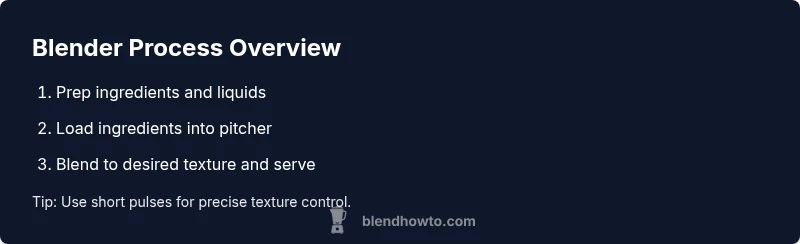
To maximize results with the ninja professional plus blender, start with liquid ingredients and soft produce to create a smooth base, then add solids in small batches. For smoothies, a typical ratio is liquid to fruit to ice in manageable portions, blending in short bursts to monitor texture. For soups, pre-cook vegetables until tender and blend in batches to a velvety consistency. You can experiment with nut butters or creamy sauces by adjusting the quantity of liquid and using the pulse function for control. Practical tips include trimming large ice chunks, pre-cutting produce, and allowing steam to escape when blending hot liquids in small batches. The BlendHowTo approach emphasizes patience and texture testing, especially for new blender users. By practicing, you’ll develop a feel for your preferred textures and adjust the speed or pulse duration accordingly. Blend techniques and recipes showcased here reflect common household needs and aim to simplify meal prep.
Cleaning and maintenance for longevity
After blending, rinse the pitcher immediately to prevent staining and residue buildup. Use warm water and a gentle dish soap on the pitcher and lid, then run a short cycle with water only to flush the blades. For stubborn residues, fill the pitcher with warm soapy water and blend for a few seconds on a low setting, then rinse thoroughly. Dry all parts completely before reassembling. Periodically inspect the blade assembly for dull edges or signs of wear, and replace parts if needed. Keeping the base clear of moisture and avoiding immersion in water will help extend unit life. The goal is consistent performance and long-term reliability. BlendHowTo notes that regular maintenance keeps the ninja professional plus blender performing at a high level for everyday kitchen tasks.
Tools & Materials
- Ninja Professional Plus blender base(Stable surface, clear area around the base; avoid tilting.)
- Ninja blender pitcher and blade assembly(Ensure the blades are properly secured to the pitcher before use.)
- Lid with removable cap(Cap should seal tightly to prevent splashes.)
- Measuring cup or spoon(For accurate ingredient portions.)
- Dish soap and non-abrasive sponge(Use for quick cleaning after blending.)
- Soft cloth or towel(Dry parts thoroughly to prevent rust or mold.)
- Optional: Tamper (if included)(Use only if your model supports a tamper.)
- Non-slip mat(Place under the base to reduce movement on slick surfaces.)
Steps
Estimated time: 20-30 minutes
- 1
Prepare workspace
Clear the counter and gather all ingredients. Read the safety notes in the manual and ensure the blender is unplugged while assembling. Measure liquids and cut produce into manageable pieces so the blades can process efficiently.
Tip: Pre-measure all ingredients to speed up the blending process. - 2
Add liquids first
Pour liquids into the pitcher before solids. This reduces air resistance and helps create a smoother blend. If using hot liquids, allow steam to escape slightly by leaving the lid ajar for a moment.
Tip: Liquid first minimizes blade stress and helps prevent clogs. - 3
Layer soft to hard ingredients
Add soft fruits or vegetables first, then denser items like frozen fruit or ice. This arrangement helps the blades start smoothly and reduces strain on the motor.
Tip: Alternate soft and hard ingredients to keep texture even. - 4
Secure lid and start on low
Lock the lid in place and begin blending at a low setting. Gradually increase to the desired speed, using pulses to test texture before running continuously.
Tip: Starting low avoids splashes and protects blades. - 5
Pulse to texture
Use short pulses to break up large chunks and check texture frequently. Stop when you reach the desired smoothness, particularly for drinks or purees.
Tip: Pulsing lets you control texture exactly. - 6
Scrape and blend again
If the mixture sticks to the sides, pause, unplug, and scrape with a spatula. Blend briefly again to incorporate ingredients evenly.
Tip: Regular scraping prevents uneven blends. - 7
Pour and portion
Carefully pour into glasses or bowls. If serving hot soups, let the mixture cool slightly before transferring to bowls.
Tip: Pouring from the pitcher reduces mess. - 8
Clean promptly
Rinse the pitcher, blade, and lid immediately after use. Wash with warm soapy water or run a short cycle if dishwasher-safe, then dry before storage.
Tip: Cleaning soon after blending prevents staining and buildup.
Frequently Asked Questions
Can I blend hot liquids in the Ninja Professional Plus blender?
Yes, you can blend hot liquids in short bursts, but vent steam by keeping the lid partially open and avoid filling the pitcher beyond safety marks. Allow steam to escape to prevent pressure buildup.
Yes, you can blend hot liquids in short bursts. Just vent steam and don’t fill too high to avoid splashes.
Is the Ninja Professional Plus blender dishwasher-safe?
Many parts are dishwasher-safe on the top rack, but check your model’s manual. The blade assembly may require hand washing, and avoid prolonged soaking.
Most parts are dishwasher-safe on the top rack, but hand wash the blade assembly to keep it sharp.
What’s the best way to blend ice without dulling the blades?
Add ice in small batches and start on a low setting, using pulses to break it down gradually. Avoid overfilling, which can stress the motor and cause uneven texture.
Blend ice in small batches with short pulses to keep texture smooth.
Can I grind nuts or seeds in this blender?
Yes, you can blend nuts and seeds into pastes or meal. Start with small portions and monitor texture to avoid overheating the motor.
You can blend nuts, but start small and watch the motor heat.
How long should cleaning take after a blender session?
Minimal maintenance takes about 5-10 minutes: rinse, wash, and dry the pitcher, lid, and blade. A quick wipe of the base is also recommended.
About 5 to 10 minutes to clean after blending.
What should I do if the blender leaks during operation?
If leaking occurs, unplug immediately, check that the pitcher is correctly seated and the gasket is intact. Do not use until the seal is secure.
If it leaks, unplug and check the seal and seating before using again.
Watch Video
What to Remember
- Use liquids first to protect blades
- Layer ingredients for balanced texture
- Pulse for control and safety
- Clean promptly to extend lifespan
- Always secure the lid before blending