Plastic Blender vs Glass: Which Jar Is Right for Your Kitchen?
Compare plastic blender vs glass jars for weight, durability, cleaning, safety, and cost to help home cooks choose the right jar for daily blending.


Plastic blender jars are lighter and cheaper, while glass jars resist staining and are easier to clean. This quick comparison highlights durability, safety, and maintenance trade-offs so you can choose between plastic blender vs glass based on your cooking habits and cleaning routines for everyday kitchen tasks.
Plastic blender vs glass: material basics
In the ongoing debate of plastic blender vs glass, the jar material used in most home blenders shapes how you blend, clean, and store. Plastic jars are commonly made from polycarbonate or Tritan copolymer and tend to be lighter and less prone to breaking if dropped. Glass jars, often soda-lime or borosilicate, are heavier but offer a non-porous surface that resists staining and odors more effectively. For many home cooks, the decision hinges on how you blend, how you clean, and how much you value weight versus long-term cleanliness.
Durability, weight, and impact resistance
Plastic jars shine when you need a light, comfortable grip and easy handling, especially for kids or people with limited wrist strength. They tolerate minor bumps without shattering. Glass jars provide superior impact resistance in terms of chemical etching and scratching, but they can crack or break if dropped. The weight difference is noticeable: plastic jars are substantially lighter, while glass jars add heft that can reduce motion fatigue during long blending sessions. This section highlights practical implications for daily use and storage.
Cleaning, odors, and staining
Cleaning is a practical concern after blending berry smoothies or turmeric-rich recipes. Glass jars resist staining and odor absorption better than most plastic jars, which can subtly retain flavors or residues over time. However, glass is prone to chipping at the lip if mishandled, while plastic jars may develop micro-scratches that harbor residues. Dishwasher compatibility also varies; many glass jars tolerate dishwasher cycles well, while some plastic jars perform best with hand washing to preserve seal integrity and prevent clouding.
Safety and chemical considerations
Historically, certain plastics used for blender jars contained bisphenol A (BPA) or other additives. Modern jars are BPA-free, but some users remain cautious about long-term chemical exposure. Glass jars pose no such concern for chemical leaching under normal use. In practice, most blends involve acidic or hot ingredients; you should verify jar tolerance for heat and avoid extreme temperatures that could stress the seal. Always check manufacturer guidelines for your model to confirm safe operating temperatures and dishwasher safety.
Heat tolerance and blending performance
A common myth is that glass always blends better. In reality, performance depends more on the blade assembly, motor speed, and jar shape than the material alone. Plastic jars can warp slightly if exposed to repeated high-heat blending, though most modern bottles maintain their form. Glass jars often stay stable under heat, but their heavier weight can slow down speed and require more careful handling during pulse blends. For hot soups or sauces, ensure your blender design supports the intended temperatures.
Cost, warranty, and long-term value
Initial price gaps between plastic and glass jars are a major decision factor. Plastic jars typically cost less upfront, while glass jars command higher initial prices but may offer longer life with less odor retention and staining. Warranty terms sometimes reflect this: plastic-based jars might include shorter wear coverage, whereas glass jars with reinforced rims may be included in premium models. When evaluating value, consider replacement frequency, cleaning needs, and how much weight you’re willing to carry in your daily routine.
Environmental impact and sustainability
From a sustainability perspective, both materials have pros and cons. Plastic jars contribute to plastic waste unless they’re recyclable and still require energy to manufacture; glass jars are heavier to ship and recycle but are often more durable and recyclable with a longer life. The trade-off depends on your purchasing patterns, disposal access, and repair options. If you churn through blenders frequently, you might prefer a more durable option that minimizes waste over time.
Choosing based on kitchen routines
Your everyday blending habits should guide the decision. If you blend on the go, or you want a lightweight option for quick smoothies, plastic may be more convenient. If you value odor resistance and ease of cleaning for a kitchen that prioritizes hygiene, glass makes sense. Consider your dishwasher setup, whether you have room for a heavier jar, and if you frequently blend hot or acidic ingredients. The best choice aligns with your cooking rhythm and cleaning routine.
Maintenance checklist and care tips
To maximize the lifespan of your blender jar, adopt a simple care routine: inspect seals regularly, avoid harsh abrasives that scratch plastic or glass, and pre-rinse to prevent staining. For plastic jars, use gentle cleaning solutions and avoid dishwasher cycles that can degrade seals over time. For glass jars, check for chips and handle with care when cleaning around the rim. A consistent routine helps prevent odors, preserve clarity, and extend the jar’s usable life.
Comparison
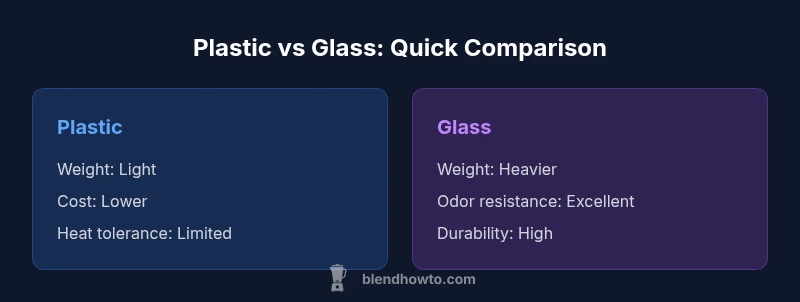
| Feature | Plastic jar | Glass jar |
|---|---|---|
| Weight | Lightweight | Heavier |
| Durability (drops & impacts) | Better shock resistance; won’t shatter | Prone to cracks or chips on impact |
| Heat tolerance & dishwasher safety | Limited heat tolerance; dishwasher-safe depends on model | High heat tolerance; generally dishwasher-safe (varies by model) |
| Staining & odor resistance | Can stain/absorb odors over time | Excellent resistance to staining and odors |
| Clarity/visibility | May develop clouding with use | Keeps clear visibility over time |
| Cost & value | Lower upfront cost | Higher upfront cost but longer life in many cases |
What's Good
- Lower upfront cost for plastic jars
- Lightweight design eases handling and storage
- Reduced risk of dangerous breakage with plastic jars
- Glass jars offer easier cleaning and odor resistance over time
The Bad
- Odor and stain retention in plastic jars over time
- Possible chemical concerns with some plastics on aging
- Glass jars are heavier and can break if dropped or mishandled
- Plastic may show scratches that harbor residues
Glass jars generally outperform plastic in cleanliness and longevity; plastic jars win on price and portability
If you prioritize long-term hygiene and resistance to staining, glass is the stronger choice. If budget and light handling matter most, plastic provides compelling value. The best option depends on your kitchen routine and maintenance willingness.
Frequently Asked Questions
Is plastic safe for hot blending in all blenders?
Many plastic jars are rated for limited hot blending, but you should always verify the manufacturer’s heat guidelines. If in doubt, blend hot ingredients in batches and avoid prolonged exposure. BPA-free does not automatically mean heat-safe for every model.
Some plastic jars are rated for hot blends, but always check your model’s heat guidelines before blending hot ingredients.
Can I put a glass blender jar in the dishwasher?
Most glass jars tolerate dishwasher cycles, but it's important to follow the model’s care instructions. Use a gentle cycle and avoid high heat that could stress seals. Air-dry completely before reassembling.
In general, glass jars handle dishwashers well, but verify your blender’s manual for best results.
Do plastic jars affect blending power or speed?
Jar material alone doesn’t determine blending power; motor strength, blade design, and jar shape matter more. Plastic jars can be efficient but may flex slightly under heavy loads, affecting texture.
Material isn’t the main driver of speed—the motor and blades do most of the work.
Which lasts longer, plastic or glass jars?
Life expectancy depends on usage and care. Glass jars typically show longer-term durability against staining and odor retention, while plastic jars may wear sooner due to scratches and clouding. Proper care extends either option’s life.
Both can last a long time with proper care, but glass tends to hold up longer under typical kitchen use.
Are BPA-free plastics truly safe for blending?
BPA-free means the BPA is not used, but other additives may still impact safety depending on usage. Always follow manufacturer guidance and replace aging jars if clouding or cracking occurs.
BPA-free helps, but follow the model’s care guidelines and watch for wear.
What to Remember
- Weigh weight vs. durability for daily use
- Choose glass for hygiene and stain resistance
- Choose plastic for budget and light handling
- Check heat tolerance and dishwasher guidance
- Consider a multi-jar setup if you want flexibility