Where to Buy a Blender in Japan: A Practical Guide
Discover where to buy a blender in Japan, with channel comparisons, price ranges, and warranty tips. Learn how online marketplaces, department stores, and brand stores stack up for value and after-sales support in 2026.


Online marketplaces, department stores, and brand official stores are the three main routes for buying a blender in Japan. In practice, most shoppers start online to compare models, prices, and reviews, then verify voltage compatibility (Japan uses 100V) and warranty terms before purchasing. For first-time buyers, a quick online shortlist followed by a quick in-store handle helps ensure a comfortable fit and good post-purchase service.
Market Landscape in Japan
According to BlendHowTo, the question of where to buy blender in japan has a straightforward answer: online marketplaces, electronics retailers, and brand official stores all serve Japanese shoppers. The market blends fast, nationwide delivery with well-stocked brick-and-mortar shelves, giving consumers multiple pathways. For many home cooks and hobbyists, starting online is efficient: you can compare models, read reviews, and verify delivery windows across prefectures. Japan’s 100V standard and plug types influence which units work without adapters, so compatibility matters as you shop. When evaluating options, weigh price against warranty, after-sales service, and availability of replacement blades or jars. General electronics chains carry a broad range of mainstream blenders, while some brands maintain dedicated stores or regionally distributed inventories. In practice, the best approach to where to buy blender in japan is to mix online catalogs with selective in-store testing to confirm fit, capacity, and cleaning practicality.
Online vs In-Store: Pros and Cons
Online marketplaces offer breadth of choice, transparent price comparisons, and user reviews that help gauge reliability. They also provide flexible delivery options across Japan’s prefectures. The trade-off can be longer return windows or higher shipping costs for bulky items. In-store shopping, by contrast, allows you to inspect build quality, test lid seals, and confirm weight. It can also yield immediate availability. A practical approach is to research 3–5 models online to narrow down by capacity, motor power, and warranty, then visit a retailer to physically handle your top picks. If local options are limited, blend online comparisons with in-person testing when possible; verify voltage compatibility and warranty terms before finalizing a purchase.
Essential Buying Considerations
Voltage is a must: most models run on 100V in Japan, so confirm the plug type fits your kitchen. Power (watts) affects blending speed, especially for frozen fruit or fibrous greens. Capacity matters for families or batch processing—common sizes range from 0.5L to 2L. Blade design and motor gearing influence efficiency and noise; look for stainless-steel blades and a well-sealed lid. Cleaning features like removable blades, dishwasher-safe parts, and self-clean modes save time. Check warranty length and service coverage in Japan, including access to replacement parts. If you plan to blend hot soups, ensure the jar is heat-resistant and the lid vented. By balancing these factors, you’ll narrow to models that fit your cooking style and space.
Price Ranges by Channel
Price levels for blenders in Japan vary by channel and brand, but you can orient yourself with broad ranges. Entry-level models typically sit in the ¥5,000–¥12,000 band, offering essential blending for smoothies. Mid-range units commonly lie between ¥12,000–¥25,000, delivering stronger motors, better durability, and more versatile blade configurations. Premium blenders can exceed ¥50,000, especially with high-torque motors, glass jars, and advanced presets. Delivery costs and warranty terms can shift the total cost, so compare protections across channels such as online marketplaces, department stores, specialty retailers, and brand stores. Seasonal promotions around holidays and new model releases can momentarily compress these ranges, so plan accordingly.
Warranty, Service, and After-Sales in Japan
Warranty policies differ by channel and brand, but reliable after-sales support is a key factor in choosing where to buy blender in japan. Online marketplaces may aggregate warranties through sellers; brand official stores typically provide direct warranties with easier claim processes and access to authorized service centers. Check warranty length, what parts are covered (blades, seals), and whether service centers are local. Confirm how service requests are handled and the typical turnaround time. Trackable warranty registration and a clear return policy reduce post-purchase anxiety. If you plan to upgrade frequently, prefer models with widely available replacement parts and easy access to jars and blades. In short, prioritize channels offering robust local support and clear warranty terms to ensure smooth service.
Practical Buying Checklist by Budget
- Budget under ¥12,000: focus on basic performance and compact size; read reviews for reliability.
- Budget ¥12,000–¥25,000: seek stronger motors, better blades, and more jar options; compare warranties.
- Budget over ¥25,000: look for heavy-duty motors, heat-resistant jars, multiple speeds, and self-clean options; prioritize widely available replacement parts.
- Always verify 100V compatibility and plug type in Japan.
- Prioritize availability of spare parts and local service centers.
- Test cleaning ease and lid sealing in-store if possible.
- Check return windows and warranty registration requirements.
Channel comparison for blender purchases in Japan
| Channel | Typical Availability | Average Price Range | Delivery Time (days) |
|---|---|---|---|
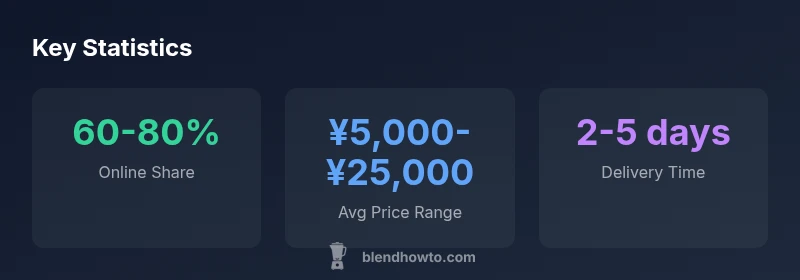
| Online marketplaces | High | "¥5,000–¥25,000" | "2-5" |
| Specialty appliance retailers | Medium-High | "¥6,000–¥30,000" | "2-4" |
| Department stores | Medium | "¥7,000–¥25,000" | "3-5" |
| Brand official stores | High | "¥6,000–¥28,000" | "2-4" |
Frequently Asked Questions
Where can I buy a blender in Japan?
You can buy a blender in Japan through online marketplaces, department stores, specialty appliance retailers, and brand official stores. Each channel offers different price points and service options, so compare both online catalogs and in-person stock when possible.
You can buy online, or go to a department store or brand store to test models and check warranties.
Should I buy from a brand official store in Japan?
Brand official stores typically offer straightforward warranty handling and access to genuine parts. They’re convenient for testing in person and for direct after-sales support.
Brand stores are reliable for warranty and parts; test a top pick in-store if you can.
What should I check before purchasing a blender in Japan?
Check voltage compatibility (100V in Japan), plug type, motor power, jar capacity, blade design, and warranty terms. Consider ease of cleaning and the availability of replacement parts.
Look at voltage, power, capacity, and warranty; test cleaning and parts availability.
Is buying a blender second-hand in Japan a good idea?
Second-hand can be affordable, but buy from reputable platforms with clear return policies and limited wear. Ensure essential parts are intact and warranty transferability is possible.
Shop from trusted platforms with returns and check parts condition.
Do I need special adapters or transformers for Japanese blenders?
Most Japanese models are 100V and do not require transformers for everyday kitchen use. If you bring a foreign unit, verify voltage compatibility and plug type before use.
Most blenders sold in Japan are 100V; check plug type if you’re importing.
What price range should I expect in Japan?
Entry-level blenders start around ¥5,000–¥12,000; mid-range options range roughly ¥12,000–¥25,000; premium models can exceed ¥50,000 depending on features and build quality.
Expect broad ranges from budget to premium; compare features and warranty.
“Japanese retailers offer clear labeling and reliable after-sales service across both online and in-store channels. This combination helps shoppers feel confident about blender purchases in Japan.”
What to Remember
- Actively compare online and in-store options to balance price and certainty
- Ensure 100V compatibility and proper plug type for Japan
- Prioritize warranty and local service access when buying
- Expect price ranges from ¥5,000 up to ¥50,000+ depending on features