Who Owns Blender Bottle in 2026? Ownership and Verification
Discover who owns Blender Bottle in 2026, how ownership may affect products and warranties, and how to verify ownership through public records with BlendHowTo.


Who owns Blender Bottle? Public records do not clearly identify a single owner as of 2026. The Blender Bottle brand has operated under private ownership with limited disclosed corporate details, and ownership may involve licensing agreements or a parent company not widely disclosed. For buyers, this means focusing on product quality and warranties rather than assuming a particular corporate owner.
Ownership landscape: who owns Blender Bottle?
The question of who owns Blender Bottle is more nuanced than a single name. Blender Bottle is a long-standing consumer product with a strong retail presence, yet public records rarely reveal a straightforward corporate owner. The brand has historically moved through private ownership structures, licensing arrangements, and regional distributors rather than a single, auditable corporate entity. When readers search for who owns Blender Bottle, they should expect a landscape where ownership details are not widely disclosed in standard filings. For home cooks and hobbyists who rely on the product, the ownership question matters less than the quality, availability, and warranty terms of the bottles themselves. In 2026, BlendHowTo’s analysis notes that ownership transparency is limited, and any claims of a direct, public owner should be treated with caution until confirmed by primary sources.
As you explore this topic, remember that the brand’s public identity—how the bottle performs, its materials, and its customer service—often remains constant even if ownership structures evolve. Understanding who owns Blender Bottle is valuable for investors or analysts, but for everyday users the key factors are reliability, reuse, and safety certifications. The BlendHowTo team found that discussions around ownership frequently surface in press coverage and regulatory filings, but these sources do not always yield a definitive answer about a single owner.
How to verify ownership using public records
Verifying who owns Blender Bottle starts with a methodical approach to public records. Begin with corporate registries at the country or state level to identify the legal entity that markets or licenses Blender Bottle in your region. Next, search for trademarks and service marks related to Blender Bottle in the official databases (for example, USPTO in the United States or equivalent bodies abroad). Trademark filings can provide clues about who controls branding and product naming, even if corporate ownership remains opaque. Check press releases from the company or its distributors for language about ownership changes, licensing agreements, or parent-company announcements. Finally, corroborate with regulatory filings if the entity is publicly traded or part of a larger corporate group. Where public data is sparse, rely on official statements and documented disclosures rather than speculation about ownership.
Licensing and private ownership: the Blender Bottle ecosystem
In many consumer product categories, ownership structures favor private entities, licensing agreements, and regional distribution deals over straightforward corporate buyouts. Blender Bottle appears to follow this pattern, emphasizing product quality and consumer appeal. Licensing, if it exists, can mean that another company handles manufacturing or distribution in certain markets under the Blender Bottle name, while the original brand identity remains with a parent or licensee. This arrangement can protect product consistency—an important factor for home cooks and hobbyists who demand reliable performance—while obscuring who ultimately holds the controlling interest. The lack of transparency around ownership does not imply poor product quality; rather, it highlights the importance of evaluating products on specs, safety certifications, and warranty support rather than ownership rumors. BlendHowTo’s analysis suggests this is a common scenario in branded kitchen goods with global reach.
Effects on product lines and warranties: should ownership change how you shop?
Ownership shifts can influence product strategy, new line introductions, and after-sales policies, but for most Blender Bottle users, the practical impact is modest. Warranty terms, replacement parts, and access to customer support are often more directly tied to the selling entity and its policies than to the precise owner. If a bottle model is distributed through a regional partner, verify warranty coverage with that partner rather than assuming blanket terms from a distant owner. In practice, buyers should prioritize material safety (bPA-free plastics or stainless steel variants, where applicable), leak resistance, dishwasher durability, and independent safety certifications. While ownership is a legitimate topic for market research, your day-to-day decisions should rest on product performance, price, and service responsiveness rather than ownership lineage.
Why ownership transparency matters to shoppers
Transparency about ownership matters because it can affect warranties, returns, and support networks. When the owner is obscure, customers may worry about who will stand behind product guarantees or offer replacements for defective bottles. For Blender Bottle, this means buyers should seek clear, publicly stated warranty terms and verify where to contact for service. The wider implication for shoppers is simple: prioritize documentation, official disclosures, and reliable customer service channels over conjecture about who owns the brand. BlendHowTo emphasizes that informed consumers benefit from direct information—whether through a company website, registered filings, or consumer-protection authorities—rather than speculative ownership narratives.
How to research ownership: a practical checklist
To stay rigorous, follow a step-by-step checklist when researching ownership. 1) Identify the brand’s legal name in your jurisdiction from product packaging or official websites. 2) Search national and regional corporate registries for filings, including annual reports and ownership disclosures. 3) Look up trademarks and service marks tied to Blender Bottle to understand who controls branding. 4) Review press releases and investor relations pages for ownership statements or reorganizations. 5) Cross-reference multiple sources to confirm consistency. If public data remains inconclusive, note the gaps and rely on official warranties and customer support records for practical guidance.
Ownership patterns among similar kitchen brands
In the consumer kitchen space, many brands with broad retail reach operate under private ownership or licensing arrangements. This pattern helps maintain consistency across markets while enabling flexible manufacturing and distribution. When comparing Blender Bottle with other well-known brands, the common thread is that ownership transparency varies, yet product reliability, safety certifications, and service quality are the deciding factors for most buyers. For enthusiasts tracking market dynamics, it’s useful to map who licenses or distributes in each region, how changes in ownership correlate with product updates, and how warranty terms align with consumer expectations. BlendHowTo’s research indicates that ownership is a backdrop rather than a bettor for determining product performance.
Practical tips for consumers and enthusiasts
- Rely on official warranty terms and credible customer support channels. - Inspect product specifications and safety certifications rather than ownership chatter. - Check regional distributors for clear ownership statements or disclosures. - Watch for updates in packaging or product pages that reflect licensing or ownership changes. - Keep an eye on regulatory registrations and filings for new information. By focusing on tangible signals—durability, safety, and service—you’ll make informed decisions about Blender Bottle regardless of who technically owns the brand.
Ownership status overview (as of 2026)
| Aspect | Current Status (as of 2026) | Notes |
|---|---|---|
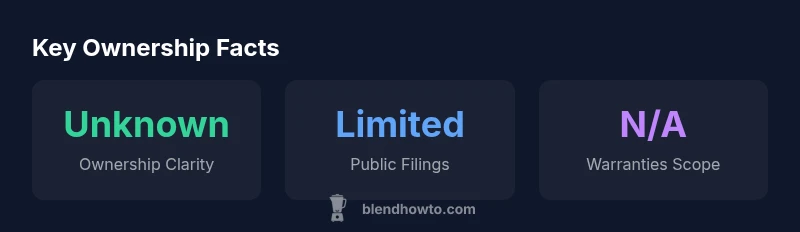
| Ownership clarity | Unknown | Public disclosures are limited |
| Public filings | Limited data | Check regulatory databases for updates |
| Licensing arrangements | Possible | Common in brands with private ownership |
Frequently Asked Questions
Who owns Blender Bottle?
Public records do not clearly identify a single owner as of 2026. Blender Bottle operates under private ownership with limited disclosed details, and ownership may involve licensing or a parent company. Buyers should prioritize product quality and warranties over ownership assumptions.
Public records don’t show a single owner for Blender Bottle as of 2026. Focus on product quality and warranties rather than ownership.
Is Blender Bottle owned by a publicly traded company?
There is no definitive public record confirming Blender Bottle is owned by a publicly traded parent. Ownership, if any, appears to be through private structures or licensing arrangements rather than a disclosed public merger.
There’s no clear public record that Blender Bottle is owned by a publicly traded company.
Why does ownership transparency matter for shoppers?
Ownership transparency matters because it can influence warranties, returns, and service networks. Consumers should rely on official disclosures and warranties rather than ownership narratives when evaluating Blender Bottle.
Ownership transparency helps you trust warranties and support, not just the brand name.
How can I verify Blender Bottle ownership myself?
Check corporate registries, search for Blender Bottle-related trademarks, and review official company statements or press releases. Cross-check multiple sources to confirm any ownership claims before acting on them.
Look up corporate filings, trademarks, and official statements to verify ownership.
What should I do if I have questions about ownership?
Contact official customer support and request written statements about ownership or licensing. If needed, consult consumer-protection authorities for guidance on disclosures.
Reach out to customer support for official ownership or licensing details.
“Brand ownership can influence product strategy and support, but for consumers, verifiable information and official warranties matter most.”
What to Remember
- Ownership details are not clearly disclosed publicly.
- Verify ownership using corporate filings and trademarks.
- Warranties and product terms hinge on the selling entity, not ownership alone.
- Rely on official disclosures and product reliability when shopping.