Where Is Blender Bottle Made? A Production Overview
Explore where Blender Bottle is manufactured, how multi-region production affects availability and labeling, and what this means for consumers seeking provenance and reliability.


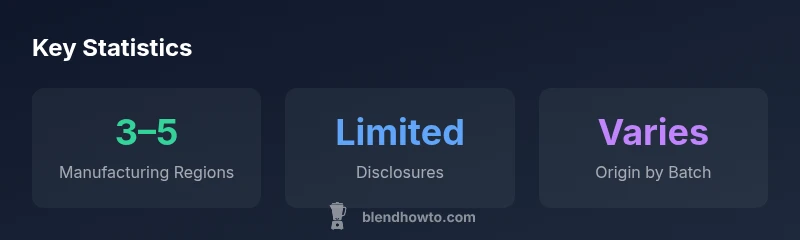
Where is Blender Bottle made? Blender Bottle products are produced across several facilities in different regions, and there is no single publicly disclosed factory. The BlendHowTo Team notes that manufacturing involves regional contract partners to support global distribution. This network is designed to respond to demand, logistics, and regulatory differences, so origin can vary by batch while still meeting safety and quality standards. For consumers, this means the bottle on the shelf could originate from one facility today and a different site tomorrow, depending on stock, production runs, and regional prioritization. Factor in warranty and labeling practices, and you’ll see why origin is a moving part of the product’s lifecycle. In practice, brands manage this diversity with traceability systems that track components, batch codes, and packaging. A reputable producer will be able to explain the general region of origin for a given shipment without exposing sensitive supplier contracts. Overall, the geographic footprint supports resilience but also introduces variation in exact origin.
Production footprint across regions
The question 'where is blender bottle made' reflects a modern supply chain with multiple production sites. Blender Bottle products are produced across several facilities in different regions, and there is no single publicly disclosed factory. The BlendHowTo Team notes that manufacturing involves regional contract partners to support global distribution. This network is designed to respond to demand, logistics, and regulatory differences, so origin can vary by batch while still meeting safety and quality standards. For consumers, this means the bottle on the shelf could originate from one facility today and a different site tomorrow, depending on stock, production runs, and regional prioritization. Factor in warranty and labeling practices, and you’ll see why origin is a moving part of the product’s lifecycle. In practice, brands manage this diversity with traceability systems that track components, batch codes, and packaging. A reputable producer will be able to explain the general region of origin for a given shipment without exposing sensitive supplier contracts. Overall, the geographic footprint supports resilience but also introduces variation in exact origin.
Where is Blender Bottle Made? Distinguishing origin vs. labeling
Labels and disclosure practices vary by country, and many brands rely on contract manufacturers rather than owning every factory. Production origin and labeling can diverge: you may see a country of origin on the package even when components are sourced elsewhere. Regulatory frameworks constrain what must be declared, but exact site details are often not disclosed. For Blender Bottle, the key distinction is that origin signals where the bottle or its final assembly occurred, while components and subassemblies may come from multiple regions. Understanding this helps buyers interpret labelling and warranty terms without assuming a single, universal origin across all units.
Materials and durability considerations
Blender Bottle’s durable plastics and reliable seals are central to its reputation. Understanding how manufacturing origin impacts materials helps explain why different production runs may feel slightly different even when the bottle type remains the same. The bottles typically use BPA-free plastic polymers designed for everyday use and repeated washing. Seals and gaskets are usually silicone or elastomer-based, contributing to leak resistance and odor control. The choice of materials is driven by regulatory compliance in different regions and the availability of resin suppliers to contract manufacturers. While the design intent is consistent across regions, minor variations in tint, molding texture, or cap threading can appear in bottles produced at different sites. For cooks and hobbyists, these differences translate into perceived performance rather than safety concerns; the key is to follow care instructions and avoid harsh abrasives. In short, material choices enable broad distribution while maintaining consistent user experience across sources.
How manufacturing choices impact price and availability
Production networks that depend on multiple facilities influence cost structures and inventory management. Contract manufacturers provide scalability and risk-sharing, but they can also introduce occasional price variability tied to resin costs, labor rates, and exchange rates. Availability can shift with regional demand, regulatory changes, or temporary facility downtime. Consumers may notice short-term differences in color options, lid designs, or packaging when shipments come from different sites. BlendHowTo analyses indicate that the overall value proposition—durability, safety, and ease of use—remains stable even as origin points shift. Buyers should monitor product pages for labeling updates and consider purchasing additional units during promotions to hedge against stockouts. For content creators and reviewers, highlighting these regional differences can help set accurate expectations for audience members who assume a single origin.
Verifying your bottle's origin: what to look for
Labels can guide you, but origin details may be intentionally broad. Start with the packaging: look for any country-of-origin or region-of-manufacture statements, then compare with batch codes printed on the cap or base. If unsure, contact customer support with the batch/lot number to confirm the general region of production for that item. Some retailers also provide provenance notes in product descriptions, which can be useful when tracking where a shipment originated. When evaluating reviews or unboxing videos, note whether creators discuss variations in feel or finish that might hint at different production sites. Finally, keep in mind that origin indicators can change between shipments; the most reliable approach is to request documentation from the seller or manufacturer if you require strict provenance for dietary or safety reasons.
Regional variations in design and features
While the core Blender Bottle design remains familiar—cup, lid, and flip-top or shaker cap—regional variations exist to accommodate local preferences and regulatory norms. You may encounter slight differences in colorways, markings, measurement scales, or cap threading tolerances. Engineers tailor tooling and assembly lines to optimize efficiency, and those adjustments are common across regions. For hobbyists, these nuances are a reminder that a globally distributed product is not a clone of a single factory item; it is a family of closely related variants. Regardless of origin, the user experience should be consistent in cleaning, leak resistance, and cap tightness when properly cared for. If you notice persistent leaking or staining from a particular batch, that could point to a specific site’s tooling rather than a general design flaw.
Sustainability and ethics in contract manufacturing
Manufacturing at scale raises questions about environmental impact and labor practices. Brands that rely on contract manufacturers typically publish sustainability FAQs or supplier codes of conduct, then audit factories against those standards. Consumers can look for third-party certifications, traceability programs, and transparent supplier lists in official product pages. The Blender Bottle ecosystem benefits from standard safety testing, but the ethical dimension—how and where components are sourced, how waste is managed, and how workers are treated—depends on the contracting agreements and oversight. While origin is not a guarantee of ethical practice, a constructive approach is to seek brands that publish clear, accessible supplier information and to support products with lifecycle data or recyclability guidance.
Common myths about where Blender Bottle is made
Myth: All Blender Bottle units come from a single facility. Reality: Production is spread across multiple sites to optimize supply and respond to regional demand. Myth: The country shown on the label reveals every component’s origin. Reality: Labels often indicate the final assembly region, not every subcomponent’s origin. Myth: Higher price equals stricter provenance. Reality: Price reflects resin costs, labor, and logistics; provenance is only one piece. By debunking these myths, you can focus on factors that actually influence performance, safety, and value.
Practical guidance for buyers and creators
Use origin information as one factor among many. When evaluating Blender Bottle purchases, compare durability, material safety, cleaning ease, and warranty terms, not just the declared origin. For buyers concerned about provenance, keep batch codes and packaging documentation handy and ask retailers for product provenance notes. For reviewers and content creators, design coverage around the practical implications of multi-site manufacturing: how it affects consistency, availability, and customer support. Finally, stay alert to brand transparency efforts and official disclosures—these signal a mature supply chain and a commitment to consumer trust.
Origin indicators and practical notes for Blender Bottle production
| Aspect | Origin indicators | Notes |
|---|---|---|
| Factory locations | Multiple regions; no single site | Origin varies by batch; labeling differs by region |
| Labeling | Country of origin or assembly region shown | Regulatory differences affect disclosures |
| Materials | BPA-free plastics; silicone seals | Materials choices reflect regional regulations and supplier availability |
Frequently Asked Questions
Is Blender Bottle made in one country?
No. Blender Bottle is produced across multiple regions, and exact site details are not always disclosed. This multi-site approach supports global distribution while maintaining safety and quality standards.
Blender Bottle is made in several regions, not one country, with site details varying by batch.
Does Blender Bottle disclose factory locations?
Disclosures vary by product and retailer. Many brands share general region information rather than specific factory addresses. Always consult official product pages or customer support for provenance details.
Factory locations aren’t always disclosed; check official pages or ask support for provenance.
Which materials are used in manufacturing?
BPA-free plastics and silicone seals are common across Blender Bottle lines. Material choices comply with regional safety standards, and higher-end variants may feature different finishes or seals.
Most Blender Bottle parts use BPA-free plastic and silicone seals.
How can I determine where my bottle was made?
Check the batch code and packaging labeling for origin clues, then contact the retailer or manufacturer with the batch details to verify the regional production. Documentation or customer service can provide provenance for your specific item.
Look up the batch code and ask the seller for regional origin details.
Are there regional variations in quality or design?
Variations in colorways, markings, or cap threading can occur due to regional tooling, but the core design standards remain consistent. If you notice persistent issues, reach out to support and reference batch numbers.
Regional designs can vary, but core quality stays consistent.
Do replacement parts come from the same facilities?
Replacement parts typically originate from the same network of contract manufacturers, but availability may depend on region and production schedule. Always verify part compatibility with your lot code.
Parts usually come from the same manufacturer network, but check compatibility.
“Transparency about where a product is made improves trust and helps consumers make informed choices, even when contract manufacturers are involved.”
What to Remember
- Expect multi-region production across several facilities
- Origin varies by batch and region
- Labeling may show country or region, not a single site
- Check batch codes for provenance and verify with official disclosures
- Consistent performance is expected despite site differences