Emergency Troubleshooting: Blender Is Smoking
If your blender is smoking, act fast and safely. This guide covers immediate safety steps, common causes, diagnostic flow, a step-by-step repair plan, and prevention tips to keep your kitchen blending safely.


If your blender is smoking, unplug it immediately and stop using it. Most likely causes are motor overload, a jammed blade, or wiring damage. Let the unit cool, remove the jar, and inspect for obstructions. If smoke continues or you smell burning, replace the blender or have it professionally serviced.
Why blender is smoking: Safety First
When you notice blender is smoking on the counter, safety comes before everything else. Electrical components and hot moving parts can cause burns or fire. Unplug the appliance at the wall socket before touching anything. Do not pull the cord from the outlet while the device is still energized. Once the smoke dissipates, give the unit time to cool completely before any inspection. If you see visible damage, a strong burning odor, or repeated smoking, discontinue use and seek replacement or professional service. This guidance helps home cooks and hobbyists manage a dangerous moment with calm and clarity, reducing risk to people and property. The BlendHowTo team emphasizes safety as the first step in every troubleshooting flow.
Key safety actions to remember include pulling the plug, keeping hands away from the blades, and avoiding water around an electrical appliance while it’s powered. In many households, a smoking blender results from a preventable combination of overfilling and improper loading. By understanding the likely causes—motor overload, blade jam, or wiring problems—you can act quickly and avoid escalating damage to the motor or circuitry.
Immediate Safety Steps You Must Take
If you ever see blender is smoking, take decisive safety steps to protect yourself and others. Start by unplugging the blender from the wall outlet to cut power immediately. Do not attempt to unplug it by pulling on the cord near the unit; grip the plug itself. Move away any flammable objects from the counter, and keep children and pets at a safe distance. If you can do so safely, remove the jar and inspect for obvious jams or obstructions. Allow the base to cool before touching it. Do not use water to rinse a hot motor or base while it’s plugged in. If smoke returns or you notice a burnt odor, the safest option is to retire the current unit and pursue replacement or professional assessment. Finally, check the outlet and power cord for any signs of damage before attempting to plug in a different blender.
These steps reduce risk and set the stage for a structured diagnostic flow that pinpoints the problem without guessing.
Common Causes Behind a Smoking Blender
Understanding why blender is smoking helps you decide whether you can fix it safely or if replacement is necessary. Common causes include motor overload from overloading the blender with dense or fibrous foods, a jammed blade or foreign object that creates resistance, and faulty wiring or damaged power cords. Less frequent but serious causes are overheated windings, worn bearings, or a damaged housing that exposed live components. Venting clogs or a dirty motor base can also trap heat. By recognizing these scenarios, you can tailor your next steps—whether clearing a jam, reducing load size, or seeking professional repair. In most households, motor overload and blade jams account for the majority of smoking incidents, according to BlendHowTo analysis, with wiring faults being a smaller but critical risk.
To reduce future occurrences, practice portion control, avoid blending hard, non-food items, and perform regular maintenance like cleaning vents and inspecting blades for nicks.
How to Inspect Without Risk: A Quick Check
Before you begin any hands-on inspection, ensure the appliance is unplugged and cooled. Remove the jar and visually inspect the blade area for bends or blockages. Gently rotate the blade by hand to check for freedom of movement without the motor engaged. Inspect the motor base and vent openings for dust, grease, or debris that could trap heat. If you notice melted plastic, a burnt smell, frayed cords, or scorch marks inside the housing, do not attempt a repair. In those cases, replace the unit or take it to a qualified technician. Remember, never use tools inside the blender while power is connected, and never plug in the unit if you see exposed wiring.
Diagnostic Flow: Symptom → Diagnosis → Solutions
This section offers a practical, step-by-step decision tree to move from symptom (blender is smoking) to a safe, effective fix. Start by confirming safety, then test for jams, overload, or wiring faults. If the smoke returns after basic checks, the issue is likely electrical or motor-related and the unit should be replaced or professionally repaired. Always document what you observe (smell, texture, noises) to share with a technician. The following flow helps you distinguish between safe, DIY-friendly fixes and situations requiring professional service.
Step-By-Step: Fixes for the Most Common Cause
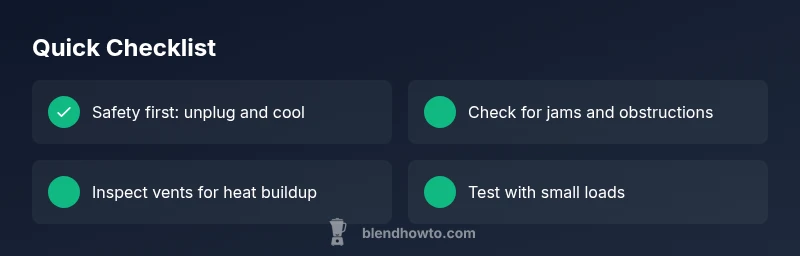
- Power Down and Unplug: Immediately unplug from the wall and let the unit cool for at least 15 minutes.
- Remove and Clear the Jar: Take off the lid, remove the jar, and inspect for obvious jams or hard-to-blend ingredients.
- Inspect the Blade Assembly: Check for hairline cracks, dull edges, or obstructions; replace the blade if damaged.
- Clean Vents and Base: Wipe away dust or residue around vents that could impede cooling; ensure no food is stuck in the splash guard.
- Reinstall with Small Load: Reassemble with a small amount of liquid and soft ingredients to test without overheating.
- Test in Short Bursts: Run the blender for 10–15 seconds at a time, with pauses to cool, and observe for any burning smells or smoke.
- Decide on Replacement or Professional Repair: If there is any recurring smoke, burn smell, or motor heat after these steps, do not continue using the unit and pursue replacement or a professional evaluation.
Tip: When testing, use dry runs without blades if model allows, and always unplug before rechecking components.
Tips, Warnings, and Prevention to Avoid Future Overheating
- Always unplug before cleaning or inspecting a hot appliance; never reach into the base while connected.
- Avoid overfilling the jar; leave room for blades to circulate ingredients.
- Use the right speed and pulse settings for different foods to minimize motor strain.
- Regularly clean vents and the blade assembly to prevent heat buildup.
- If you notice melted plastic, a burnt odor, or discoloration, replace the unit rather than attempting a risky repair.
- Consider upgrading to a higher-capacity motor if you frequently blend tough ingredients like ice, frozen fruit, or fibrous greens.
- Schedule periodic maintenance checks and store the blender in a cool, dry place to extend its life.
What If You Can't Fix It? Next Steps and Safety Net
If you reach the point where blender is smoking despite following steps, the safest course is to stop using the unit and replace it. A smoking blender may indicate internal insulation failure, faulty windings, or structural damage that professional repair cannot guarantee. Check warranty coverage and service options with the manufacturer. For anyone who is not comfortable disassembling or testing electrical components, seek a licensed appliance technician. Your safety is the priority, and a professional assessment can prevent fires and electrical hazards.
Steps
Estimated time: 45-60 minutes
- 1
Power down and unplug
Immediately disconnect from the wall, then wait for the unit to cool before handling. Do not pull the plug while the blender is powered.
Tip: Always have a dry surface and away from water when handling a live outlet. - 2
Remove the jar and inspect
Take off the lid and jar to look for jams or foreign objects that could be causing resistance.
Tip: Do not force the blade or jar; use safe tools to remove obstructions. - 3
Check the blade and housing
Examine blade edges for damage and ensure the blade spins freely when unpowered.
Tip: Damaged blades can cause imbalance and overheating. - 4
Clean vents and base
Clear any dust, grease, or debris from cooling vents and splash guard to restore airflow.
Tip: Blocked vents are a common overheating culprit. - 5
Test with a small load
Reassemble with only a small amount of liquid and soft ingredients to test operation in short intervals.
Tip: Start with 10–15 seconds on, with rest periods. - 6
Monitor for burning smells
If you detect burning odor or smoke returns, stop immediately and do not continue testing.
Tip: Persistent smoke indicates a fault beyond a simple jam. - 7
Decide on replacement
If issues persist after these steps, replace the blender or seek professional repair.
Tip: Keep receipts and warranty info handy for service decisions.
Diagnosis: Blender is smoking or smells burning during operation
Possible Causes
- highMotor overload from overfilling or blending dense ingredients
- mediumJammed blade or foreign object causing resistance
- lowWorn bearings or overheated windings
- lowDamaged power cord or electrical short
Fixes
- easyUnplug, let cool, remove jar, and clear obstructions
- mediumInspect blade for blockages; reseat or replace if jam persists
- easyCheck power cord/plug for damage; replace if any signs of wear
- hardIf internal motor damage is suspected, do not repair; seek professional service
Frequently Asked Questions
Why is my blender smoking when blending soft fruits and liquids?
Even with soft ingredients, a motor can stall if overfilled or if the blades jam. Check the jar capacity and blade movement after unplugging, and avoid forcing the motor.
A stall or jam can cause overheating even with soft foods. Unplug, inspect, and test with small loads.
Can smoke from a blender cause a fire?
Yes, there is a potential fire risk if wiring is damaged or the motor overheats extensively. Always unplug and seek professional repair if you see damage or persistent smoke.
There is a real fire risk with damaged wiring. Unplug and consult a professional if problems persist.
Is it safe to continue using a blender after the smoke stops?
No. If smoke occurs, treat it as a warning sign. Inspect for damage, test only after cooling, and replace if you notice any scorch marks or burnt smells.
No, don’t keep using it after smoke. Inspect thoroughly and consider replacement if you see damage.
Should I disassemble a blender to fix it myself?
Only if you have electrical repair experience. For most home users, internal motor work should be handled by a professional to avoid shock or fire hazards.
Disassembling a blender is risky. Seek professional help unless you’re trained in appliance repair.
What should I check first if my blender smells burning?
Power off immediately, unplug, and examine for burnt wiring, melted plastic, or scorch marks on the base and plug. Do not reassemble until all damage is assessed.
If you smell burning, unplug and inspect for damage before attempting another run.
How often should I replace my blender motor?
Motors wear with use. If you experience frequent overheating or smoking, consider replacement or upgraded models with higher current rating.
If overheating recurs often, it’s time to replace with a model designed for heavier blending.
Watch Video
What to Remember
- Unplug immediately if blender is smoking.
- Most smoking incidents come from overload or jams.
- Venting and blade condition are common prevention targets.
- Replace or repair if smoke recurs after safe checks.
- Maintain blades and vents to extend life.