Does Blender Work on Mac? A 2026 Compatibility Guide
Learn whether Blender runs on Mac, including Apple Silicon vs Intel, Rosetta 2, performance tips, and practical troubleshooting for a smooth 3D workflow in 2026.


Does blender work on mac? Yes. Blender runs on macOS on both Apple Silicon and Intel-based Macs. Native Apple Silicon support began with Blender 3.x, while Intel Macs can still run Blender via Rosetta 2. For best results, download the latest Blender build for macOS and enable native Apple Silicon support when possible. This guide covers setup, performance tips, and troubleshooting.
Compatibility Landscape on macOS
For creators who ask whether does blender work on mac on a Mac, the short answer is yes. Blender supports macOS across both Apple Silicon and Intel-based systems, but the experience varies by chip, Blender build, and plugin compatibility. In 2026, most Mac users will benefit from using a native Apple Silicon build, which takes full advantage of the M1/M2 architecture and macOS optimizations. If you’re running an Intel Mac or rely on older, non-native plugins, you’ll likely interact with Rosetta 2 during the translation process. BlendHowTo recommends starting with a current macOS version and the latest Blender release, then verifying plugin compatibility and render settings for your specific workflow. The keyword to remember is does blender work on mac depends on choosing the right build and hardware pairing.
Apple Silicon vs Intel: Performance and Compatibility
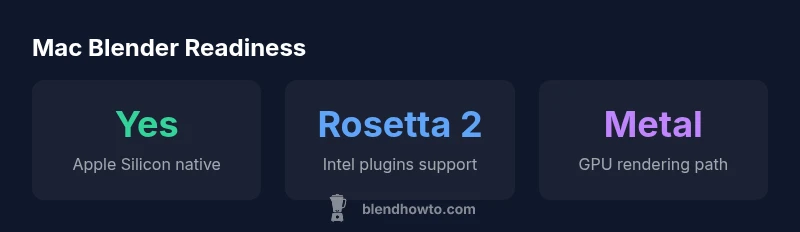
Apple Silicon Macs offer strong performance gains in Blender thanks to native execution and Metal-backed rendering paths in recent Blender builds. For users on M1/M2 chips, installing the Apple Silicon native version yields smoother navigation, faster viewport interactions, and more reliable rendering. Intel-based Macs can still run Blender effectively, but you may encounter translation overhead through Rosetta 2. When planning a Mac workstation, consider whether your workflow relies on specific add-ons or legacy scripts, and plan for potential plugin compatibility issues if you stay on older Blender builds. This section helps you decide whether to prioritize Apple Silicon native builds or maintain an Intel setup with Rosetta support.
Installing Blender on macOS: Step-by-Step Guide
- Visit blender.org and download the macOS installer. Choose the Apple Silicon native build if you have an M1/M2 Mac. 2) If you’re using an Intel Mac or need compatibility with older plugins, you can opt for the Universal or Intel build and enable Rosetta 2 if prompted. 3) Open the downloaded .dmg and drag the Blender icon into Applications. 4) Launch Blender from Applications and verify Preferences > System to enable GPU, memory, and render settings. 5) Install any required addons, ensuring they match your Blender version. 6) Keep Blender updated to ensure macOS compatibility and security improvements. 7) Regularly back up your projects and consider a dedicated scratch disk for texture and cache files.
Rendering Performance: CPU, GPU, and Memory
Blender’s performance on Mac hinges on the GPU and available RAM. On Apple Silicon, prefer the native Blender build to leverage the Metal-enabled rendering paths and efficient memory management. For CPU rendering, ensure you have adequate CPU cores and memory headroom; Blender’s Cycles render can be CPU-bound on larger scenes. If you plan to use GPU rendering, confirm that your GPU is supported by the Blender build you’re using and that macOS permissions allow Blender to access the GPU. Consider enabling tile-based rendering, adjusting texture cache limits, and using progressive rendering when iterating on scenes to balance speed and fidelity.
Add-ons and Plugins on Mac: Compatibility Checklist
Most Blender add-ons work on macOS, but some rely on platform-specific libraries or Python extensions. Before upgrading Blender, check each add-on’s compatibility with the target version and whether it’s maintained for Apple Silicon. If you depend on legacy scripts, test them after installation and be prepared to switch to newer equivalents if necessary. Use the Blender Preferences to manage add-ons and disable those that cause startup lags. Keeping a small, verified set of plugins can improve stability on macOS and reduce crash risks during heavy rendering tasks.
Troubleshooting Common Mac Issues: Quick Fixes
Mac users frequently encounter startup delays, driver conflicts, or UI sluggishness. Start with the basics: update macOS to a supported version, reinstall the latest Blender build, and reset Blender’s preferences if settings become corrupted. For GPU-related problems, recheck System > Preferences > System and ensure the correct CUDA/Metal options are selected, and grant Blender permission to access the GPU in macOS’s Security & Privacy settings. If Rosetta 2 prompts arise on Apple Silicon, verify plugin compatibility or switch to a native Apple Silicon build. For scene crashes, simplify textures, reduce resolution, and test with a smaller scene to isolate issues. Blending practical steps with careful testing is key.
Practical Mac Workflow Scenarios for Blender in 2026
For hobbyists and professionals, a typical Mac Blender workflow could involve designing 3D models for game assets, creating quick product visualizations, or building animation rigs. On Apple Silicon, start with the native Blender build and a mid-range GPU, then adjust viewport sampling and render tile sizes to balance speed and quality. On Intel Macs, you may rely on Rosetta 2 for legacy plugins while preparing to migrate critical workflows to native Apple Silicon builds. Regardless of the Mac you use, organize assets with a consistent folder structure, use dedicated render layers, and leverage Blender’s compositor for post-processing tasks to streamline your pipeline.
Mac compatibility snapshot for Blender 2026
| MacOS Version | Blender Support | Notes |
|---|---|---|
| macOS 11+ (Big Sur) and later | Blender 3.x+ (Apple Silicon native) | Universal builds available; Rosetta for older plugins |
| Apple Silicon native (M1/M2) | Blender 3.x+ native | Best performance; ensure latest build |
| Intel-based Macs | Rosetta 2 translation for Intel plugins | Use native Apple Silicon build if possible |
Frequently Asked Questions
Does Blender run natively on Apple Silicon Macs?
Yes, starting with Blender 3.x, Apple Silicon Macs run Blender natively, unlocking better performance and power efficiency.
Yes, Blender runs natively on Apple Silicon with Blender 3.x and newer.
Do I need Rosetta 2 to run Blender on Mac?
If you rely on Intel-only plugins or older Blender builds, Rosetta 2 may be required. Native Apple Silicon builds minimize or remove the need for Rosetta.
Rosetta 2 is only needed for legacy plugins; native Apple Silicon builds avoid it.
Which Blender version should I install on macOS?
Install the latest stable Blender release from blender.org for Mac, choosing Apple Silicon native builds if you have an M1/M2 Mac.
Get the latest stable Blender from blender.org; pick the Apple Silicon version if you have an M-series Mac.
Can Blender use Mac GPUs for rendering?
Yes, Blender supports GPU rendering on Mac via Metal; performance depends on your GPU and Blender build.
Yes, GPU rendering is supported on Mac with Metal, depending on hardware and build.
What about plugins and add-ons on Mac?
Most add-ons work on Mac, but some rely on platform-specific libraries; verify compatibility with your Blender version.
Most add-ons work on Mac; check compatibility with your Blender version.
“Blender on macOS delivers solid performance when you align Blender's builds with your hardware; the BlendHowTo Team has observed growing native Apple Silicon support and robust Rosetta 2 compatibility for legacy workflows.”
What to Remember
- Check your Mac’s chip before installing Blender
- Prefer Apple Silicon native builds for best performance
- Use Rosetta 2 only for legacy plugins or Intel-only workflows
- Keep Blender updated to maintain macOS compatibility
- Leverage Metal-based rendering paths when available on Mac