How to Get Rid of a Blender: Safe Disposal Guide
A practical, step-by-step guide to responsibly dispose of your blender. Learn when to donate, how to recycle components, and how to navigate local e-waste rules to minimize environmental impact.


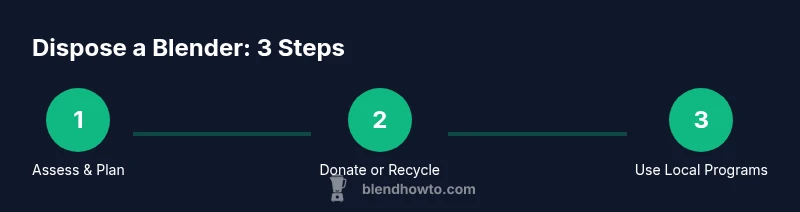
By following a responsible plan, you can get rid of a blender without harming the environment or breaking local rules. Start by identifying whether the blender still works; donate it if usable. If not, recycle the components or schedule a bulky-item pickup per your city guidelines. Always unplug and clean before disposal.
What counts as a blender and why disposal matters
Blenders come in many forms: countertop models with glass jars, plastic jars, immersion blenders, and compact personal blenders. The disposal approach changes with form and condition; a working blender may be donated, a damaged one recycled, and a broken motor handled as electronic waste. Before you decide, search for local rules about electronics recycling. The phrase how to get rid of a blender is often answered by a plan that prioritizes reuse, then recycling, then safe disposal. In BlendHowTo’s guidance, the best outcomes minimize landfill waste and maximize chance that usable parts find a new home. Check whether any parts are detachable and reusable—these can extend the life of a functioning unit. Also identify whether your city offers bulky-item pickup, a municipal drop-off, or a certified electronics recycler. With ready information, you can choose a path that protects the environment and your wallet.
Donating a working blender
If your blender still runs smoothly, donating it can give it a second life and help someone who needs affordable hardware. Start by cleaning all parts and removing personal residue; a little soap and warm water goes a long way toward making a donation feasible. Next, research local charities, shelters, maker spaces, or thrift stores that accept small kitchen appliances. Always include the cord, lid, and blade assembly if possible, and provide any basic usage notes. If you have a receipt or a brand warranty card, include it as it helps the recipient. When you donate, ask for a simple donation receipt for tax purposes if applicable in your area. If pickup services exist, schedule a time and ensure the appliance is accessible.
Recycling blender components
Many blender parts can be recycled, but the pathways vary by material. The jar is typically plastic or glass, the blades are metal, the lid and non-metal components are plastic or rubber, and the power cord is copper or other metals. Contact your local recycling facility to confirm acceptance of small home appliances, or use a national directory to locate an electronics recycling center. Separate the jar from the base if the base is metal; do not force electrical components into recycling streams that require separation. Clean components and remove non-recyclable attachments before drop-off. If you’re unsure, designate a bag for later inquiry and avoid mixing materials that could contaminate a recycling batch. Proper labeling helps facility staff route your blender correctly for processing.
Preparing your blender for disposal
Preparation reduces friction at the disposal point. Unplug the blender from the wall and unplug any detachable power cords. Remove the jar and lid, then assess whether the blades are removable safely; if so, wear cut-resistant gloves and place blades in a rigid container to prevent injury during transport. Separate the jar from the base and wrap sharp edges to prevent cuts. If you can’t remove blades safely, leave the unit intact and follow the local drop-off or pickup instructions for whole appliances. Always verify whether the base contains restricted components such as sealed motors, which may require special e-waste handling.
Safe disassembly and blade handling
Handling blades requires extra caution due to risk of cuts. Wear cut-resistant gloves and use pliers to grip blades if they must be removed. Do not attempt to open the motor housing, as this can expose capacitors or other dangerous components. Store blades in a shrouded container with a tight lid, and label it clearly as “blades.” If you’re not comfortable removing blades, package the entire unit as an appliance and leave disassembly to the recycling facility. When in doubt, consult the recycling center’s guidelines before proceeding. Protect your hands, eyes, and fingers throughout the process.
Finding disposal options by location
The best path depends on where you live. Check municipal waste services for bulky-item pickup schedules or dedicated e-waste days. Many cities partner with third-party recyclers or host periodic appliance collection events. You can also search nationwide databases by zip code to locate local e-waste facilities. If your blender is still usable, consider sharing it via community boards or repair cafés. Always keep a copy of any pickup confirmation or recycling receipt for your records.
Special cases: immersion blenders vs countertop blenders
Immersion blenders and countertop models differ in how they’re disposed. Immersion units often come with shorter cords and smaller bases, which means they may be accepted more broadly by e-waste programs. Countertop models with heavy glass jars may require more careful handling due to the jar’s weight and breakage risk. In both cases, separate the jar, blade, and motor when possible, and follow local guidelines. If a facility only accepts whole appliances, keep the parts together until you reach the drop-off.
What not to do when disposing
Do not throw a blender into regular household trash if local regulations treat electronics as hazardous waste. Do not attempt to repair or modify the sealed motor housing, as this can create a safety hazard. Avoid disposing of blades in an open landfill or in household recycling streams that aren’t equipped to handle sharp objects. Do not wrap sharp blades loosely; always secure them in a rigid container. Finally, don’t rely on vague “local guidelines” without verifying them; contact the disposer to confirm accepted methods.
Cost considerations and timing
Disposal costs can vary widely. Some municipalities offer free bulky-item pickup, while others charge a small fee for e-waste processing. If you choose a professional recycler, expect a fee that covers transportation and material processing. Plan ahead to avoid last-minute disposal costs, especially if your city’s pickup window is limited. If you donate, you may incur minimal costs for cleaning or minor repairs, but this is often offset by the benefit to the recipient.
Bonus care: repurposing parts or alternatives
Even when you don’t want to discard the blender altogether, you can repurpose parts. The lid or blades can be salvaged for other kitchen tasks or art projects, while the base can become a power supply project if you’re into electronics. Consider upcycling ideas such as using the jar as a storage container, or the motor housing for a small DIY project with proper safety controls. If repurposing isn’t feasible, the disposal options above will ensure responsible end-of-life handling.
Tools & Materials
- Gloves (cut-resistant)(Protect hands when handling blades and sharp parts.)
- Sturdy box or container(For transporting disassembled parts safely.)
- Trash bags(Contain smaller pieces and prevent spills.)
- Marker and tape(Label the box as recyclable or donation-ready.)
- Screwdriver set(Only needed if you plan to disassemble the motor housing.)
- Packing material (bubble wrap, old towels)(Wrap sharp components when transporting.)
- Local e-waste information (printout)(Helpful to confirm facility acceptance.)
Steps
Estimated time: 60-90 minutes
- 1
Assess condition and choose disposal path
Start by evaluating whether the blender still works. If it powers on and blends smoothly, donation is often the best option. If it’s defective, make a plan to recycle or legally dispose of the unit. This step sets the route for the rest of the process.
Tip: Document the model and condition in case the recipient asks about warranty or usability. - 2
Unplug and prepare the blender
Unplug the unit from the wall and remove any detachable power cord. Clear the workspace and gather your safety gear. This prevents accidental activation and protects you during handling.
Tip: Keep the cord separated in a labeled bag to avoid confusion later. - 3
Disassemble non-motor parts safely
Remove the jar and lid if possible. If blades can be removed safely, wear gloves and place them in a rigid container. Do not attempt to open the motor housing unless you are trained to handle electrical components.
Tip: Never pry at sealed parts with force; consult the facility if you’re unsure. - 4
Decide between donation and recycling
If the blender still works, reach out to local charities or maker spaces to donate. If it’s non-working, contact an electronics recycler or your city’s e-waste program for guidance.
Tip: Take photos of the unit for donation listings or recycling records. - 5
Find a local disposal option
Use official city resources or a nationwide recycling directory to locate an e-waste facility or bulky-item pickup. Confirm hours, required documents, and whether you must transport the item yourself.
Tip: Call ahead to verify acceptance of blenders and any fees. - 6
Package and transport parts
Wrap sharp components and place them in a rigid container inside a sturdy box. Label the package clearly and secure it to prevent shifting during transport.
Tip: Add a note on the box with the category: electronics or appliance recycling. - 7
Drop off or schedule pickup
Take the item to the chosen facility or await your scheduled pickup. Keep the receipt or confirmation until you’re sure the item has been processed.
Tip: Ask for a waste-tracking receipt if available. - 8
Document the disposal
Record the disposal method and location for personal records or tax purposes if donating. This helps build a simple, traceable environmental footprint.
Tip: Store digital copies of receipts or confirmation emails. - 9
Reflect and plan future purchases
Consider buying fewer appliances or choosing modular designs that are easier to recycle. Favor brands with take-back programs when you replace old blenders.
Tip: Shortlist brands that offer recycling or trade-in options. - 10
Review local resources
Keep a note of your city’s guidelines for future reference. Bookmark eco-friendly recycling sites and charity options to simplify next disposal.
Tip: Set a reminder for annual appliance disposal check-ins.
Frequently Asked Questions
Can I throw away a blender with regular trash?
In many areas, blenders are considered electronics and should not go in regular trash. Check local e-waste guidelines or bulky-item programs instead.
Blenders often require e-waste handling or donation rather than regular trash. Check your local rules.
How do I safely remove blender blades?
Wear cut-resistant gloves, use pliers if needed, and place blades in a rigid container. Do not touch exposed blades with bare hands.
Put on gloves and use pliers to handle blades, then store them safely.
Is it safe to take apart the blender’s motor?
No. The motor housing can contain hazardous materials and capacitors. Leave motor parts to a trained electronics recycler.
Do not open the motor; let professionals handle it at the recycling facility.
Are there programs that take old blenders back?
Some manufacturers and retailers offer take-back programs. Check brand websites or local recycling events for participation details.
Look for brand take-back options or community recycling events.
How long does disposal usually take?
Process times vary widely by location. It can range from same-day drop-off to a couple of weeks for bulky-item pickup.
Timing depends on your city’s schedules and facility processing times.
Where can I find local e-waste facilities?
Use official city websites or national recycling databases to locate nearby electronics recyclers and drop-off points.
Search your city’s waste management site or Earth911 for nearby options.
Watch Video
What to Remember
- Identify condition first to choose disposal path
- Donating working units supports reuse
- Separate and securely package sharp parts
- Use official recycling or bulky-item programs
- Document disposal for records and future reference