How to Know If Your Blender Is Heat Safe
Learn how to determine if your blender jar is heat safe, including labeling checks, material insights, safe testing, and practical alternatives for hot blending.


By the end, you’ll know whether your blender jar and lid can safely handle hot liquids, how to read heat ratings, and the steps to confirm safety without risking damage. Start with the label, model specs, and material type, then verify temperature guidance from the manufacturer. If in doubt, use a heat-safe jar from the same line.
Understanding how to know if blender is heat safe
The phrase how to know if blender is heat safe refers to whether a blender's jar, lid, and seals are designed to withstand hot liquids without warping, leaching chemicals, or degrading. In practice, it means checking official guidance from the manufacturer and inspecting the jar material, age, and condition. For home cooks and hobbyists, this matters because hot blending is common when making soups, sauces, or hot beverages. A heat-safe setup helps prevent cracks, leaks, or odors and keeps blending performance consistent. This section explains what heat safety entails and how to interpret the guidance you find in product manuals and on labels. The BlendHowTo team emphasizes starting with the manufacturer’s specifications—they are the most reliable source for your exact jar model.
How to read labeling and manufacturer specifications
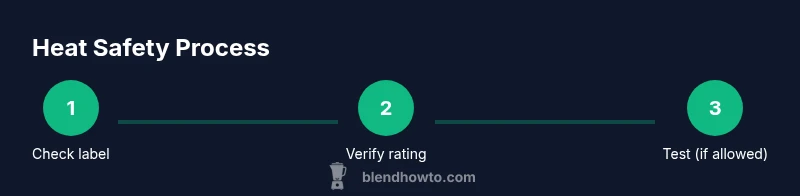
Labeling and official specifications are your first stop when assessing heat safety. Look for explicit phrases like heat resistant, heat safe, or a temperature rating on the jar and lid. If the label is worn, check the model number on the base or neck of the jar and visit the brand’s website to download the current manual. Manufacturers often publish a product line table showing compatible liquids and temperatures. Save the PDF or take screenshots for quick reference. If the exact jar isn’t listed, use the model number to contact customer support with proof of purchase. In some cases, the warranty page will note heat-related usage limits, which is another important data point to protect your investment.
Materials matter: plastics, glass, and metals used in jars
Blender jars come in a range of materials, including glass, Tritan (a BPA-free plastic), polycarbonate, and other polymers. Each material reacts differently to heat and rapid temperature changes. Glass jars tend to tolerate high temperatures but can crack if exposed to sudden temperature shifts. Tritan and other plastics may resist heat only up to a specified range, and older plastics can leach flavor or degrade over time. Check for signs of wear such as clouding, cracking, or warping. If the jar has sustained chips or deep scratches, replace it rather than risk failure during hot blending. The material choice often correlates with weight, lid design, and overall durability for hot liquids.
Temperature guidelines and what to look for on the label
A clear heat-safety label will outline acceptable liquids and any temperature limits. Look for a maximum safe temperature rating and whether it applies to the jar, lid, and gasket. Some brands differentiate between “cold processing” and “hot blending” modes, with separate limits. Pay attention to recommended usage scenarios—pureeing hot soups, sauces, or hot beverages may be explicitly discouraged for certain jars. Also check whether the vented lid is required when blending hot liquids to release steam safely. If the label specifies no hot liquids, do not attempt to heat foods in that jar. Always follow the manufacturer’s wording rather than making assumptions based on appearance.
Safe testing approaches you can perform at home
If you have a clear heat rating, you can perform a manufacturer-approved test with cautious steps. Start by ensuring the blender is unplugged, then fill the jar with a small amount of hot (not boiling) liquid, and attach the lid loosely to allow steam to escape. Run the blender at a low speed briefly while monitoring for any unusual noises, odors, or material deflection. Do not seal tightly or run at full power with hot liquids. If you notice warping, cracking, or unusual smells, stop immediately and discontinue use of that jar with hot liquids. For many users, the safest path is to rely on official ratings rather than attempting experiments at home.
Alternatives if your jar isn't heat-safe
If the official guidance indicates heat safety is not supported for your jar, consider alternatives. Use a separate pot or pan and blend the contents in the pot after cooking, then return to the blender for finishing steps if needed with cooled liquid. Some brands offer heat-safe replacement jars or different product lines designed for hot blending. Another option is to use an immersion blender for hot soups and sauces, which minimizes risk to the jar. Always verify compatibility before blending hot liquids to avoid damage and potential safety hazards.
Cleaning and maintenance after exposure to heat
After any heat-related blending, rinse promptly with warm water to remove food residues that can bake onto plastic or glass. If the jar shows signs of heat stress, run a gentle cleaning cycle with soap and water (or a vinegar-water solution if allowed by the manual) to prevent odors. Avoid harsh cleaners that can degrade plastic seals. Check the gasket and lid for tightness and replace any parts showing wear. Regular maintenance helps preserve heat resistance and prevents degradation that could compromise safety in future uses.
Common myths about heating with blenders
A frequent myth is that all blender jars are equally heat-safe; in reality, many jars are designed for cold or warm ingredients only. Another myth is that a short heat exposure won’t cause damage; even brief overheating can alter the plastic or glass and reduce future safety. Some users assume glass jars can handle boiling liquids; while glass is robust, rapid changes in temperature can cause thermal shock and cracks. The BlendHowTo team cautions against relying on appearances—always check the official heat rating for your jar model.
Quick checklist before blending hot liquids
- Confirm the jar model and heat rating from the manual or label.
- Ensure the lid has a vent or is loosened to allow steam escape.
- Use hot liquids only within the rated temperature range.
- Never run the blender unattended with hot liquids.
- Inspect the jar for cracks, clouding, or warping before use.
- If in doubt, choose a heat-safe jar or alternative method.
Authoritative guidance and references
For trusted guidance on plastics safety and heat exposure, refer to official resources such as the U.S. FDA on food contact materials and the EPA guidelines for consumer products. While these sources don’t discuss every blender model, they provide general principles about safe temperatures, material safety, and labeling practices that can help you evaluate your own equipment. Always prioritize manufacturer specifications for your exact model.
Final practical recommendations
In practice, always verify the exact model’s heat rating before attempting hot blending. If the jar isn’t explicitly rated for heat, do not use it with hot liquids; seek a heat-safe jar or a blender designed for hot ingredients. Maintain your equipment by performing routine inspections and storing it properly to prevent damage that could compromise safety.
Tools & Materials
- Model number & manual(Locate model number on the base/jar; download the official manual.)
- Jar and lid with legible markings(Ensure you can read all heat-related markings clearly.)
- Food-grade thermometer(Essential for checking liquid temperatures during tests.)
- Heat-resistant gloves(Protect hands when handling hot components or liquids.)
- Timer or stopwatch(Track test durations and cooling intervals.)
- Access to manufacturer support or website(Use for verifying exact heat ratings and compatibility.)
Steps
Estimated time: Estimated total time: 20-40 minutes
- 1
Identify model and version
Locate the exact model number on the blender base or jar. Record it and download the latest manual to ensure you’re checking the correct heat specifications for your jar.
Tip: A precise model match prevents misreading heat ratings. - 2
Check official heat-safety guidance
Open the manual or brand site and search for “heat safe,” “temperature rating,” or “hot blending.” Note any explicit temperature limits and whether they apply to the jar, lid, and gasket.
Tip: If you can’t find a rating, contact customer support with photos of the jar. - 3
Inspect jar materials and condition
Assess jar material (glass, Tritan, polycarbonate, etc.). Look for cracks, clouding, or warping which can undermine safety when heated.
Tip: Replacing worn jars is safer than testing against unknown limits. - 4
Identify the maximum safe temperature on the label
Read the label or manual to locate the maximum safe liquid temperature. Ensure you understand that this rating covers the jar and associated seals.
Tip: Keep a photo of the rating for quick reference. - 5
Set up a manufacturer-approved test
Prepare a small amount of liquid within the rated temperature range and the blender jar. Loosen the lid to allow steam escape and avoid sealing the lid tightly during heat tests.
Tip: Never test with boiling liquids or seal the lid during heating. - 6
Run a controlled test and observe
Operate at low speed for short bursts, watching for leaks, cracks, or unusual odors. If anything seems off, stop immediately and discontinue use with hot liquids.
Tip: Keep hands away from the jar during operation; use gloves. - 7
Decide on next steps based on results
If the jar passed the test per the manual, you may proceed with cautious hot blending within the rating. If not, stop using that jar with hot liquids and seek a heat-safe replacement.
Tip: Prioritize safety—don’t push beyond rated limits. - 8
Document findings and plan replacements
Record model, rating, and test outcomes. If you needed to replace components, note part numbers and expected timelines for delivery.
Tip: Documentation helps future sanity checks and warranty claims.
Frequently Asked Questions
What does 'heat safe' mean for blender jars?
Heat safe means the jar, lid, and seals are designed to withstand hot liquids without warping or releasing harmful substances. Always rely on the official manufacturer rating for your exact model.
Heat safe means the jar and lid are designed to handle hot liquids as specified by the manufacturer. Check the official rating for your exact model.
Can I use a non-heat-safe blender for hot soups?
It is not recommended. Using non-heat-safe jars with hot liquids can cause warping, cracking, leaks, or chemical exposure. Use a jar rated for heat or a dedicated hot-blend appliance.
No, you should not use a non-heat-safe blender for hot soups. Replace with a heat-rated jar or a different appliance.
How do I know if my blender is heat safe if there is no label?
Search the model number on the manufacturer’s site or contact customer support for the official heat rating. If you can't confirm, treat the jar as not heat-safe.
If there’s no label, check the model online or contact support for the official heat rating.
What should I do if the jar cracks after heating?
Stop using the jar with hot liquids immediately. Do not attempt to repair cracks; replace with a heat-safe jar and verify compatibility before next use.
If it cracks after heating, stop using it and replace the jar with a heat-safe option.
Is glass always heat-safe for hot blending?
Glass can handle heat but is susceptible to thermal shock from rapid temperature changes. Always confirm the rated use from the manual and avoid sudden temperature shifts.
Glass can handle heat, but it can crack if subjected to rapid temperature changes. Check the rating and avoid quick temperature shifts.
Should I perform a home test if unsure about heat safety?
Only if the manufacturer explicitly allows testing and provides steps. When in doubt, avoid home testing and contact support for guidance.
Only test at home if the manufacturer approves and provides steps. If unsure, contact support instead.
What items should be checked during routine maintenance?
Regularly inspect seals, gaskets, and the jar for wear. Replace worn parts to maintain heat safety and blending performance.
Check seals and jars regularly and replace worn parts to maintain safety.
Watch Video
What to Remember
- Verify exact model heat rating before hot blending
- Read official labels and manuals for safe limits
- Inspect jar materials and wear before testing
- Use manufacturer-approved testing and never seal lid tightly with hot liquids
- Have a heat-safe replacement plan ready