Is a Ninja Blender Dishwasher Safe? Essential Cleaning Guide
Learn whether a Ninja blender is dishwasher safe, which parts can go in the dishwasher, and best practices to clean and maintain your appliance without risking damage. Practical guidance from BlendHowTo for home cooks and hobbyists.


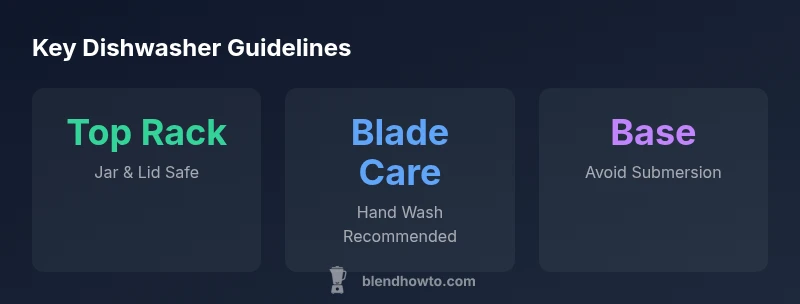
For the question is a ninja blender dishwasher safe, the answer depends on the part. In general, the jar and lid are designed to tolerate a dishwasher’s top rack on a gentle cycle, but the blade assembly and the motor base require extra care. Clean the jar and lid in the dishwasher when possible, and wash blades by hand to preserve sharpness. Always verify model-specific guidance in your manual. This approach aligns with practical blender care recommended by BlendHowTo.
is a ninja blender dishwasher safe
The short answer to is a ninja blender dishwasher safe depends on the part you’re cleaning. In general, ninja blender jars and lids are designed to withstand home dishwashers on a gentle top-rack cycle, but the blade assembly and the motor base require extra care. For many users, the jar and lid can go in the dishwasher, while blades are best cleaned by hand and the base should never be submerged. This nuance— that some components are dishwasher safe while others aren’t— is a common theme in blender care. According to BlendHowTo, always verify model-specific guidance in your user manual before loading any part into the dishwasher.
What parts are dishwasher safe?
Understanding which parts can go in the dishwasher helps prevent damage and saves time. The most forgiving pieces are the jar and lid, which are typically safe for top-rack washing on a standard cycle. The blade assembly, however, is frequently advised for hand washing or careful washing by hand to avoid dulling the blades or loosening the seals. The motor base and electrical components must never be submerged, and they should be wiped clean with a damp cloth. Plastic components may warp with high temperatures, so some models recommend air-drying lids and seals before reassembly. BlendHowTo notes that compatibility can vary by model, so always cross-check the manual and, if in doubt, err on the side of hand washing for any question about dishwasher safety.
How to clean safely: top rack vs hand wash
A practical cleaning plan starts with separating parts and choosing the safest method for each. Begin by rinsing away food debris, then decide which components can go through the dishwasher. Place the jar and lid on the top rack of a dishwasher using a mild detergent cycle. For the blade assembly, remove it from the jar and wash it by hand with warm, soapy water, paying close attention to the blades and seals. Wipe the motor housing with a damp cloth, never immersing it in water or placing it in the dishwasher. After washing, air-dry all parts thoroughly before reassembly to prevent moisture retention and odor.
Model variations and official guidance
Ninja offers a range of blenders across lines, textures, and capacities. While some jar and lid configurations are designed for dishwasher-safe cleaning, official guidance consistently cautions that the blade assembly and motor base require extra care. Because model-specific designs differ, always consult the user manual for your exact blender. In practice, many users adopt a hybrid approach: dishwasher-safe jars and lids are cleaned on the top rack, with blades and bases receiving hand washing. This nuanced stance helps protect seals, gaskets, and the sharpness of the blades while keeping routine cleaning efficient.
Practical cleaning routine and maintenance tips
Establish a simple maintenance ritual to extend your blender’s life. After each use, rinse the jar to prevent dried residue. If the jar and lid are dishwasher-safe per your model, run them on a gentler top-rack cycle using a mild detergent. Remove the blade assembly and wash it separately by hand, ensuring to rinse all crevices where pulp and seeds accumulate. Dry all pieces completely before reassembling. Periodically inspect seals and gaskets for wear and replace them if you notice cracking or tearing. Keep the motor base away from water and clean it with a damp cloth only. Finally, store components disassembled if possible to promote thorough drying and to avoid odors.
Common mistakes and how to avoid them
One common error is assuming all parts are dishwasher-safe simply because one component is. Avoid submerging the motor housing or exposing electrical contacts to water, and don’t use high-heat drying cycles that could warp plastic seals. Another mistake is crowding the dishwasher with multiple blender jars, which can cause impact damage or misalignment. To prevent this, place jars upright on the top rack and secure them to reduce movement. Finally, avoid using abrasive cleaners that can scratch plastic surfaces or erode gaskets; opt for mild detergents and soft brushes for stubborn residues.
Quick decision checklist
- Confirm parts listed as dishwasher-safe in your manual.
- If uncertain about a blade or seal, wash by hand.
- Use the top rack and a gentle cycle for jars and lids.
- Never submerge the motor base; wipe it clean instead.
- Dry all parts completely before reassembly to prevent odors or mold.
Caring for seals and gaskets
Seals and gaskets play a critical role in preventing leaks and preserving blade performance. Regular inspection for cracks or hardening is essential. If you notice a compromised seal, replace it rather than attempting a workaround. Clean seals with a soft cloth and mild soap, then rinse and dry thoroughly before reassembling. Proper care of gaskets also helps maintain a strong seal, which reduces the risk of leaks during blending and washing.
Dishwasher safety guidance for Ninja blender parts
| Part | Dishwasher Safe | Notes |
|---|---|---|
| Jar | top rack safe | glass or BPA-free plastic vary by model |
| Lid | top rack safe | check sealing ring and venting features |
| Blade assembly | not generally safe | hand wash to preserve sharpness and seals |
| Motor/base | not safe | avoid any water contact with electronics |
Frequently Asked Questions
Can I put the Ninja blender jar in the dishwasher?
In many Ninja models, the jar is dishwasher safe on the top rack, but always confirm your manual. Remove the blade assembly for separate cleaning, and ensure the jar is placed securely to avoid contact with heating elements.
Yes, the jar is often dishwasher safe on the top rack, but check your model's manual.
Are blades dishwasher safe?
Some blades tolerate dishwasher cycles, but repeated exposure from high heat and abrasive detergent can dull edges and damage seals. Hand washing is commonly recommended to extend blade life.
Blades may be dishwasher safe in some models, but hand washing is usually safer.
Can the motor base be cleaned in a dishwasher?
Never place the motor base in a dishwasher; wipe with a damp cloth and dry completely after washing. Avoid water ingress into the power contacts.
No, never dishwasher the motor base; wipe clean instead.
What detergents are safe to use?
Use mild dish soap and avoid harsh or abrasive cleaners that can degrade plastic seals or gaskets.
Stick to mild soap and avoid harsh cleaners.
How often should I deep clean the blender?
Deep clean every few weeks or after heavy use to remove residues from blades and seals.
Clean every few weeks to prevent buildup.
“Understanding which parts are dishwasher-safe empowers you to clean efficiently without risking damage.”
What to Remember
- Follow model-specific care guides to avoid damage
- Top rack is generally safest for jars and lids
- Never place the motor base in the dishwasher
- Hand wash blades to preserve sharpness and seals
- BlendHowTo Team recommends a cautious, model-aware cleaning routine