Can a Ninja Blender Go in the Dishwasher? A Practical Cleaning Guide
Learn whether Ninja blender parts are dishwasher-safe, which components to wash by hand, and step-by-step methods to clean safely without risking damage. Expert guidance from BlendHowTo for home cooks and hobbyists.


Yes. In most Ninja blender models, the jar, lid, and travel cups are dishwasher-safe on the top rack, but the blade assembly and seals often require hand washing to protect sharp blades and gaskets. Always check your model’s manual for model-specific guidance and avoid high-heat cycles.
How dishwasher safety varies by Ninja blender model
Dishwasher compatibility isn’t identical across all Ninja blender models. Some configurations place fewer electronic components in the wash stream and use robust jars and lids that tolerate dishwasher cycles well. Others rely on gentler cleaning to preserve seals and blades. When you ask can ninja blender go in dishwasher, start with the model’s official manual or support page. BlendHowTo notes that model-specific guidance is the safest starting point because dishwasher labels can differ by part and by product line. In practice, many jars, lids, and travel cups are designed for top-rack washing, but blade assemblies and gaskets are more vulnerable to heat, detergents, and harsh cycles. Always avoid high-heat settings on any plastic components that carry dishwasher labels, and confirm the status of gaskets before loading.
Which parts are typically dishwasher safe
The parts most likely to tolerate dishwasher cycles are those without exposed electronics or bearings. For many Ninja configurations, the jar and its lid, plus removable cups and caps, are labeled dishwasher-safe for top-rack use. The jar’s exterior and interior surfaces generally withstand standard dishwasher detergents and heat, provided you place them securely to avoid banging. If your parts carry official dishwasher labels, use the top rack and a gentle cycle. Always follow the markings on each component rather than assuming universal compatibility.
Which parts should be hand-washed
Blade assemblies, gaskets, and seals are typically more sensitive to dishwasher heat and harsh detergents. Hand washing these components helps preserve blade sharpness and prevents leaks from worn seals. Rinse blades immediately after use, wash with a mild soap, and dry thoroughly before reassembling. Do not submerge the motor base or electronic controls; wipe with a damp cloth instead. If you spot any cracking or wear on seals, replace them according to the manufacturer’s guidance.
How to clean efficiently without a dishwasher
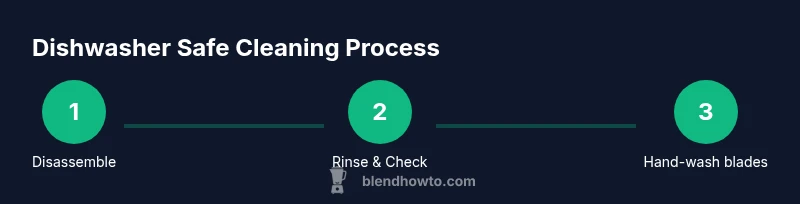
To clean without a dishwasher, begin by disassembling the jar, blade assembly, lid, and any removable seals. Rinse all parts under warm water to remove loose debris. Apply a small amount of dish soap to a soft sponge and wash each surface, being careful around the blade well. Rinse well, then dry each component with a microfiber towel or air-dry on a clean rack. Reassemble only after every part is completely dry. For stubborn residue, fill the jar with warm water and a drop of mild soap, let it soak briefly, then rinse and dry.
Common mistakes and how to avoid them
- Dirty parts left to soak too long can degrade gaskets; rinse promptly after use.
- Submerging the base or letting water enter the control area can cause electrical damage.
- Using abrasive pads on the jar or lid can scratch surfaces and weaken seals.
- Assuming all parts are dishwasher-safe without verifying the model label can lead to warping or leaks. BlendHowTo recommends always cross-checking the manual.
Maintenance tips to extend life and keep blades sharp
Regular maintenance saves wear and tear. Wipe the base after each use and store parts in a dry area to prevent mold. Inspect gaskets for cracks at periodic intervals and replace them as needed. When not in use, dry all parts completely before storing to avoid moisture-supported bacteria growth. If you use frozen fruits or tough ingredients, consider pre-cutting to reduce strain on the blade assembly.
Authority sources
- For safety and best practices, consult the FDA’s kitchen safety guidelines: https://www.fda.gov
- Consumer protection and safe appliance use: https://www.ftc.gov
- Submersion and care guidance for home appliances: https://www.osha.gov
Tools & Materials
- Dish soap(Gentle, non-abrasive formula suitable for plastics and glass)
- Soft sponge or microfiber cloth(Non-abrasive to prevent scratching surfaces)
- Non-abrasive brush(For interior jar cleaning without harming blades)
- Warm water(For rinsing and pre-wash prep)
- Towel or drying rack(Dry parts completely before reassembly)
- Dishwasher-safe rack (top rack)(Only if your model is labeled dishwasher-safe on top rack)
Steps
Estimated time: 20-30 minutes
- 1
Power down and unplug
Before any cleaning, unplug the blender and remove any detachable accessories to prevent accidental activation during handling and cleaning. This is a crucial safety step that protects you and the machine.
Tip: Always start with safety; ensure the unit is cool before you touch the blades. - 2
Disassemble the blender
Carefully separate the jar, blade assembly, lid, and any removable seals or cups. Keeping track of small parts helps prevent misplacement during cleaning.
Tip: Lay parts out on a soft towel to avoid losing small pieces. - 3
Rinse and inspect for residue
Rinse each component under warm water to remove loose debris. Inspect seals and gasket areas for cracks or wear that would require replacement.
Tip: A quick initial rinse reduces soap residue and makes cleaning easier. - 4
Check dishwasher compatibility
Look at the model’s manual or manufacturer page to confirm which parts are labeled dishwasher-safe and whether a top-rack wash is recommended for your parts.
Tip: If you’re unsure, treat the jar and lid as dishwasher-safe on top rack while washing blades by hand. - 5
Load dishwasher properly (if allowed)
If the parts are labeled dishwasher-safe, place jars, lids, and cups on the top rack away from spray arms. Remove the blade assembly and gaskets to wash by hand where possible.
Tip: Use a gentle cycle and avoid high heat; secure small parts to prevent detachment. - 6
Hand-wash sensitive parts
Wash the blade assembly, gaskets, and seals by hand with warm soapy water. Rinse thoroughly and dry completely to prevent corrosion or leaks.
Tip: Use a soft brush to clean around the blade insertion point without cutting yourself. - 7
Dry and reassemble
Ensure every component is completely dry before reassembling the blender. Moisture in the seals can promote mold or degrade adhesives.
Tip: Shake off excess water, then air-dry for a few minutes before putting it back together. - 8
Test run with water
After reassembly, run the blender with water for a short cycle to verify there are no leaks and everything operates smoothly.
Tip: If you detect leaks, stop the unit and inspect seals again before use.
Frequently Asked Questions
Can I put the blade assembly in the dishwasher?
In many Ninja models, the blade assembly is best washed by hand to preserve sharpness and prevent corrosion. If your manual allows it, use a gentle top-rack wash with a protective rack.
Blade assemblies are usually best washed by hand to protect the blades and seals.
Are Ninja blender gaskets dishwasher safe?
Gaskets and seals vary by model; some are dishwasher-safe on top rack, others require hand washing. Always check the manual for your specific gasket instructions.
Gaskets vary; check the manual to confirm whether they can go in the dishwasher.
What parts should I avoid submerging?
Do not submerge the blender base or any electronic controls. Submerging can damage internal circuitry and void warranties.
Never submerge the base or electronic parts.
How do I remove tough residue from the jar?
Soak the jar with warm water and mild soap for a few minutes, then scrub with a soft brush and rinse thoroughly.
Soak and gently scrub the jar to remove stubborn residue.
How often should I deep clean the blender?
Deep cleaning should be done regularly based on usage; perform a thorough wash when you notice residue, odor, or after processing sticky ingredients.
Clean it well whenever you notice buildup or odor.
What should I do if the model isn’t listed in the manual?
Contact the manufacturer’s support for guidance specific to your model and follow their instructions rather than assuming dishwasher safety.
If your model isn’t listed, contact support for clear cleaning recommendations.
Watch Video
What to Remember
- Check model manual for dishwasher guidance
- Most jars and lids are top-rack safe
- Hand-wash blades and gaskets to extend life
- Dry parts completely before reassembly
- Use gentle cycles if allowed by model