How to Use a Ninja Blender: A Practical Guide
Learn how to use a Ninja blender with step-by-step instructions, safety tips, and maintenance guidance. This beginner-friendly guide covers setup, blending patterns, texture control, and cleaning for consistent results.


With a Ninja blender, you can whip smoothies, soups, and sauces quickly and consistently. This steps-focused guide walks you through choosing the right jar, assembling the blades, loading ingredients, selecting speeds, and safe cleanup. Mastering the technique minimizes chunkiness and protects the blades and motor for long-term performance. Follow along and you’ll blend like a pro in minutes.
how do you use a ninja blender effectively
If you're exploring how do you use a ninja blender effectively, this guide covers the essentials for home cooks and hobbyists. A Ninja blender is a versatile tool, but achieving smooth textures and reliable results starts with proper setup and mindful blending. In this section we’ll outline the core concepts: selecting the right jar, ensuring the blade assembly is secure, loading ingredients in the correct order, and choosing speeds that match your target texture. By following these practical steps, you’ll minimize chunks, prevent motor strain, and extend the life of your machine. BlendHowTo frequently emphasizes that successful blending isn’t magic—it’s technique. The BlendHowTo team recommends starting simple: small batches, moderate liquids, and steady checks as you go. With patience and practice, even tough greens and frozen fruit become creamy, even on busy mornings. The objective is repeatable results you can rely on, not guesswork or guess-friction.
Understanding Ninja blender components and safety
The Ninja blender consists of a jar with a blade assembly, a sturdy base, and a sealed lid with a center cap. Knowing each part helps you assemble correctly and avoid leaks or injuries. Safety always comes first: unplug the unit before any assembly, never operate a damaged cord or cracked jar, and keep fingers away from the blades. According to BlendHowTo, ensuring the gasket seats properly prevents leaks and reduces vibration. Check that the blade is firmly attached and the jar locks securely to the base before you begin. If you notice unusual noise or heat, stop and inspect the motor—bluntly, safety is non-negotiable. This is why we stress a calm, methodical approach, especially when you’re new to blending.
Preparations: ingredients, portions, and prep steps
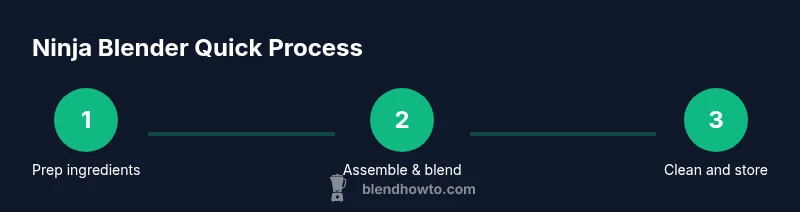
Successful blending starts before you press a button. Gather ingredients and measure portions, then prep items into uniform sizes for even blending. Liquid ingredients should form the base, followed by soft fruits or vegetables, then tougher items like ice or frozen fruit. Do not exceed the max fill line, and never attempt to blend dry grains or seeds that aren’t recommended for your model. By organizing ingredients, you minimize the need for stopping to scrape sides and reduce the risk of motor strain. BlendHowTo suggests washing prep tools as you go so you finish with a clean workspace.
Basic blending techniques for different textures
There are several core techniques you can adapt with a Ninja blender depending on texture goals. Start with a low speed, then gradually increase; use the pulse setting for chunkier blends and to control texture. For creamy smoothies, blend continuously until the mixture is uniformly smooth, stopping to scrape as needed. For sauces, run at a moderate speed with a steady pour of liquids to maintain body without breaking emulsion. For soups, you can blend in stages—blend soft ingredients first, then add broth and continue until you reach the desired consistency. The key is listening to the sound and texture rather than chasing a timer.
Texture control: smoothies, sauces, and soups
Texture control is about balancing liquid content and ingredient size. For smoothies, aim for a thick, pourable consistency and consider adding ice or frozen fruit gradually. Sauces should be silky and not split; if emulsions break, a quick pulse can help re-emulsify. Hearty soups can be blended to smooth or leave small chunks for body. If you want ultra-smooth results, strain after blending or use a higher blade speed for a longer period. Personal preference matters, so adjust thickness to your taste while keeping safety in mind.
Cleaning and maintenance tips
After blending, rinse the jar to prevent food from hardening on the blade. Disassemble the jar and blade assembly, rinse with warm soapy water, and scrub with a soft brush. Avoid submerging the motor base; wipe it with a damp cloth. Dry all components completely before reassembly to prevent rust or mold. Store the blade assembly in a safe place away from children. Regular maintenance, including checking gaskets for wear and replacing them when needed, can extend life and maintain performance. BlendHowTo notes that safe cleaning habits protect both your blender and your kitchen.
Common mistakes and fixes
Common mistakes include overfilling the jar, adding very hot liquids without venting, and relying on high speed to compensate for thick textures. The fix is to work in batches, use the pulse function for control, and add liquids slowly while blending. Another frequent error is neglecting to scrape the sides, which leaves patches of unmixed material. A quick stop to scrape and reblend usually resolves it. If you notice a burnt smell or smoke, turn off immediately and unplug the unit to prevent damage.
Advanced tips for ice, frozen fruit, and hot liquids
Ice and frozen fruit require careful handling. Start with crushed ice or small chunks and blend in bursts to avoid stalling the motor. For hot liquids, vent the cap or blend in intervals and use the lowest safe setting to prevent pressure buildup. If your model includes preset programs, use them as a guide but adjust to texture. Balance liquids and solids to avoid watery results. The more you blend with practice, the better you’ll predict how the Ninja handles each ingredient.
Authority sources and safety notes
For further reading on safe kitchen appliance use, consult authoritative sources such as the Consumer Product Safety Commission and the FDA. General safety principles, like keeping blades away from hands and unplugging before cleaning, are universal. BlendHowTo also emphasizes checking gaskets and seals regularly to prevent leaks and to protect the motor from overheating. Visit these sites for official guidance and updates: https://www.cpsc.gov, https://www.fda.gov, https://www.osha.gov
Tools & Materials
- Ninja blender jar with blade assembly(Ensure compatibility with your model; confirm blade is sharp and gasket is intact.)
- Lid with center cap(Center cap helps you add ingredients mid-blend without spills.)
- Measuring cups or kitchen scale(Accurate portions improve texture and flavor consistency.)
- Spatula or silicone scraper(Used to scrape sides and ensure even blending.)
- Dish soap and warm water(Helpful for cleaning, not required to start blending.)
Steps
Estimated time: 25-35 minutes
- 1
Check and assemble the jar and blades
Unplug the unit, inspect the jar, attach the blade assembly securely, and ensure the gasket sits properly. Reattach the jar to the base with a firm, clockwise twist. A loose blade can cause leaks or injury.
Tip: Always handle blades with care; wear cut-resistant gloves if you’re new to assembling. - 2
Add ingredients in the correct order
Pour liquids first, followed by soft ingredients, then harder items. Do not exceed the max fill line to avoid spills or motor strain.
Tip: Liquid-first helps start the blending process smoothly and reduces air pockets. - 3
Secure the lid and center cap
Place the jar on the base, align notches, and firmly close the lid. Remove the center cap if you plan to add ingredients mid-blend.
Tip: Keep the center cap accessible for quick additions during blending. - 4
Choose the correct speed and pattern
Begin at a low speed to break down ingredients, then gradually increase. Use pulses for chunkier textures and to control consistency.
Tip: If your model has a Pulse mode, use short bursts to control texture precisely. - 5
Check texture and adjust
Pause to inspect texture; blend longer if needed or add more liquid for a smoother result. Avoid over-blending, which can create heat.
Tip: Small batches blend more consistently than attempting one large batch. - 6
Finish, unplug, and clean
Turn off, unplug, and remove the jar. Rinse promptly to prevent residue from sticking. Disassemble blades for thorough cleaning.
Tip: Dry components completely before reassembling to prevent rust.
Frequently Asked Questions
Can I blend hot liquids in a Ninja blender?
Yes, but consult your model’s manual. Vent the cap and start on a low setting, watching for pressure buildup. Do not seal the jar tightly during hot blends.
You can blend hot liquids if you vent the cap and start slowly; always follow your model’s manual for safety.
What is the best way to achieve a smooth texture?
Blend in stages, start with liquids, then add solids gradually. Scrape the sides periodically and avoid overfilling. Adjust speed and duration based on texture.
Blend in stages and scrape the sides for a consistently smooth texture.
Can I crush ice in a Ninja blender?
Yes, many Ninja models handle ice well. Use the ice crush setting if available and avoid overloading the jar.
Yes, you can crush ice; use the ice setting and blend in short bursts for best results.
How do I clean the blender safely?
Disassemble the jar and blade, rinse with warm soap and water, and avoid soaking the motor base. Dry thoroughly before reassembling.
Unplug, disconnect the jar, wash the parts, and dry completely before putting it back together.
Why is my blender leaking or smelling burnt?
Leaks can indicate a worn gasket or loose blade; burnt smells suggest motor strain or overuse. Check seals, avoid overfilling, and allow cooling between heavy blends.
Leaks or burnt smells mean check seals and avoid overworking the motor.
Watch Video
What to Remember
- Assemble blades securely before blending.
- Layer ingredients for even texture and flavor.
- Use pulses and low speeds to control texture.
- Clean promptly to protect blades and motor.