Replacement Blender Cup Guide: Find, Fit, Replace Parts
Learn to identify, choose, and install a replacement blender cup safely. This guide covers compatibility checks, material options, and a step-by-step process for a leak-free blend, plus maintenance tips and FAQs.


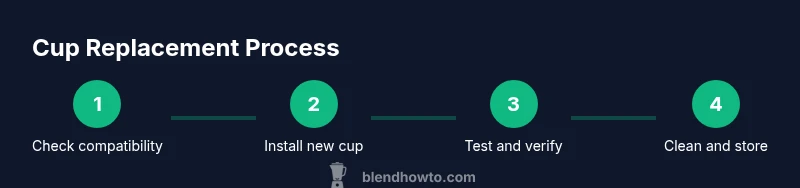
You can replace a blender cup by first confirming your model compatibility, then installing a BPA-free cup that fits your pitcher, and testing the fit with the blade assembly. You’ll need a clean workspace and the replacement cup, plus a soft cloth for wiping. This quick guide helps home cooks and hobbyists avoid leaks and performance issues.
What a replacement blender cup is and when you need one
A replacement blender cup is the pitcher you attach to the blender base, excluding the blade assembly. It is designed to replace a cracked, warped, or leaky cup without replacing the entire machine. In daily kitchen use, the cup is the part most exposed to impact, heat, and food acids, so wear is common. If you notice streaks of color in blends, cracks along the lip, or the cup warping after a wash, it’s time to replace it. In this guide, you’ll learn how to identify compatibility, choose the right material, and install the new cup safely. According to BlendHowTo, starting with the correct model ensures you avoid misfit seals and leaks, saving time and money. This is especially important for home cooks who rely on their blender for smoothies, sauces, and nut milks. A good replacement blender cup should feel sturdy, resist staining, and be easy to clean. Look for cups marketed as BPA-free or made from Tritan for durability. Always check the blender’s warranty terms; using non-official parts can void coverage. With the right cup, your blender performs as well as new and can continue to blend with confidence.
How to verify compatibility with your blender model
Compatibility starts with the model number and the pitcher opening diameter. Find the model name on the blender base or under the motor housing, then cross-check against the replacement cup’s listed models. If you’re unsure, contact the manufacturer’s support or consult official parts listings. Measure the pitcher diameter at the top opening and compare it to the new cup’s mouth. Some brands use a blade assembly that requires you to detach and reattach during the swap, so note whether the blade needs to be swapped as part of the cup replacement. BlendHowTo recommends checking both the cup threading and the blade coupling to prevent leaks and wobble. If the new cup matches the model and has the same seal-type, you’re likely good to go. Always verify warranty terms because using non-official parts can affect coverage and support. By verifying compatibility first, you avoid returns, delays, and potential damage to the blender.
Materials to look for: BPA-free, durable plastics vs glass
Durability and safety are the two pillars when choosing a replacement blender cup. BPA-free plastics, especially Tritan or similar copolymers, resist staining, are impact-resistant, and withstand dishwasher heat better than older polycarbonates. Glass cups look premium and clean easily but can be heavier and more prone to breakage if dropped. When evaluating materials, also check for temperature tolerance and chemical resistance to avoid warping or crazing. BlendHowTo notes that Tritan cups balance toughness with clarity, making it easier to monitor blending progress. If you blend hot soups, look for heat-resistant cups that won’t deform under rapid temperature change. For home cooks, a BPA-free, dishwasher-safe cup is typically the most practical choice, provided that the seal and blade mesh are compatible with the cup’s geometry. Always confirm that the seal material is still intact; a worn gasket defeats the purpose of a new cup and can cause leaks.
Measuring and identifying the cup size
Accurate measurements save time and prevent mismatches. Start by measuring the cup’s mouth diameter and compare it with the blender’s pitcher opening. If the model has a standard 2.5-3 inch mouth, ensure your replacement cup matches that dimension. Also note the cup’s capacity (in ounces or milliliters) and ensure it aligns with your blending volume needs. Some cups are sold by capacity but use different thread sizes or sealing rings; reading the product description carefully helps you avoid compatibility pitfalls. If you’re unsure, bring the old cup to a parts retailer to compare dimensions directly. A correct fit means the lid seals properly and the pitcher couples smoothly to the base, delivering consistent blends without leaks.
Safety considerations and warranty implications
Safety comes first when handling blades and hot or sharp components. Always unplug the blender before inspecting or disassembling any parts and wear gloves if you need to handle the blade assembly. Never force a cross-threaded connection; if the new cup doesn’t engage smoothly, re-check the orientation and compatibility. Replacing the cup can affect warranty terms; some manufacturers require official replacement parts to maintain coverage. Check the warranty documentation or contact customer support before you begin. When in doubt, use an approved retailer or the brand’s official parts site to preserve warranty rights and ensure safety standards are met. Proper installation reduces the risk of leaks, misalignment, and injury.
Where to buy replacement blender cups
Start with the blender manufacturer’s official parts store, especially if you’re replacing a cup for a high-use model. Authorized retailers often carry the exact cup design, ensuring correct threading, lid compatibility, and gasket style. If official parts are out of stock, look for reputable third-party sellers with clear compatibility lists and return policies. Be wary of ultra-cheap cups that lack proper seals or have inconsistent threads; counterfeit parts can cause leaks or damage. Read customer reviews about fit and longevity, and verify the cup’s material claims (BPA-free, Tritan, etc.). If you rely on online marketplaces, filter results by model compatibility and seller rating. Keeping your shopping focused on compatible parts minimizes the risk of receiving a cup that doesn’t fit or functions poorly.
How to install a replacement cup
Installing a replacement cup is a precise process that begins with confirming the blade assembly is compatible. Align the cup with the blade hub and pitcher base, then thread or snap the cup into place according to your model’s design. After securing the cup, reattach any locking rings or seals and hand-tighten to avoid cross-threading. Before power-up, wipe away any packaging residue and verify the seal sits evenly around the rim. A test run with a small amount of water confirms a leak-free seal and smooth blade action. If you notice wobble or leakage, recheck alignment and gasket seating. Rookie mistakes—like overtightening—can strip threads or crack the cup, so proceed with care.
Maintenance tips to extend life of your cup and blender
Regular cleaning after blending is essential. Rinse the cup immediately after use to prevent staining from fruit acids or coffee oils. Use warm water and mild dish soap; avoid harsh abrasives that could scratch the cup. Dry thoroughly before storage to prevent mold and odor buildup. Periodically inspect the gasket and thread areas for cracks or warping, and replace as needed. If you use the blender frequently, consider a light coating of food-safe mineral oil on metal threads to prevent seizing. Finally, always store the cup with the lid loosely in place or removed to preserve seal integrity and prevent cracks during transport.
Quick summary of what to do next
- Confirm compatibility with your blender model and the replacement cup’s listed models.
- Choose a BPA-free cup (Tritan preferred) for durability and safety.
- Follow proper disassembly and reassembly steps, testing the seal before full use.
- Clean and inspect seals regularly to prevent leaks and preserve performance.
- Keep a small spare bottle brush handy for deep-cleaning the cup.
Tools & Materials
- Replacement blender cup(Must be compatible with your blender model and opening diameter)
- Replacement blade assembly (if required by model)(Some cups share the blade; verify compatibility)
- Soft cloth(For drying and wiping sealing surfaces)
- Mild dish soap(Use for gentle cleaning of the cup and blade area)
- Gloves (optional)(Protect hands when handling sharp components)
- Ruler or caliper(Useful for verifying diameter and capacity)
- Isopropyl alcohol or sanitizer(Sanitizes surfaces if needed, avoid contact with food-contact parts)
Steps
Estimated time: 30-45 minutes
- 1
Identify model and compatible cup
Locate the blender's model number and compare it to the compatible cup list. Check the mouth diameter and thread pattern to ensure a precise fit. This prevents misfit problems and saves time.
Tip: Have the manual or online product page handy to confirm compatibility. - 2
Prepare workspace and safety gear
Clear your workspace and assemble the replacement cup, blade assembly (if needed), and tools. If you handle blades, wear gloves and work slowly to avoid injuries. A clean, dry surface reduces contamination and misalignment risks.
Tip: Lay a towel to catch spills and provide a soft landing for parts. - 3
Disassemble old cup and blade assembly
Unbolt or unscrew the blade hub as required by your model. Remove the old cup while keeping the blade assembly intact if it’s not part of the replacement. Inspect threads and gaskets for wear.
Tip: Do not force components; misaligned parts can cross-thread and cause leaks. - 4
Clean the pitcher hub and seals
Wipe the blade base, pitcher threads, and gasket with soapy water and a clean cloth. Rinse thoroughly and dry completely before installing the new cup. Clean seals prevent leaks and ensure a tight fit.
Tip: Inspect the gasket for cracks; replace if damaged before reassembly. - 5
Attach the new replacement cup
Align the cup with the blade hub and base. Secure it by threading or snapping into place, ensuring a snug fit without cross-threading. Reinstall any locking ring or seal as designed for your model.
Tip: Turn slowly while engaging threads to avoid cross-thread damage. - 6
Test the fit and perform a short blend
Reassemble the blender with a small amount of water and run a short pulse to check for leaks and proper blade operation. If you notice leaks, tighten slightly or recheck alignment and seals.
Tip: Always start with low speed to prevent splashing during the test.
Frequently Asked Questions
Can I use a replacement blender cup from a different brand?
Compatibility is key. Most cups are brand- and model-specific, and using an incompatible cup can cause leaks or blade misalignment. Check the model number and use official or clearly listed compatible parts.
Most cups are brand-specific, so check compatibility before buying.
Is BPA-free enough for replacement cups?
BPA-free is a basic safety feature and commonly required. For added safety, look for cups labeled BPA-free, BPS-free, and made from Tritan or other sturdy plastics.
Yes, BPA-free is standard, but look for Tritan or BPA-free materials for durability.
How long does a replacement blender cup typically last?
Lifespan depends on usage and care. With proper cleaning and routine maintenance, a BPA-free replacement cup can last several years, but watch for cracks or warping as signs to replace.
Durability depends on care; replace if you see cracks.
Will a replacement cup affect blending performance?
If the cup, blade, and seal are correctly aligned, performance should be consistent. An ill-fitting cup or worn seal can reduce torque or cause leaks, so verify fit during installation.
A proper fit maintains performance; avoid leaks by checking seals.
What should I do if the cup leaks after replacement?
Unplug the blender, re-check the cup alignment and seals, and reseat the locking ring if present. If leaks persist, double-check compatibility or contact customer support.
If leaking, re-check seals and fitting; consider compatibility.
Are there safety recalls for replacement cups?
recalls are model-specific. Check the manufacturer's site or consumer safety agencies for any recalls related to your blender cup model.
Check recalls on manufacturer or safety agency sites.
Watch Video
What to Remember
- Verify model compatibility before buying.
- Choose BPA-free material for safety.
- Practice careful disassembly to avoid injuries.
- Test the fit with a small blend before full use.
- Regular cleaning extends cup and blender life.