Can You Blender All Purpose Cream? A Practical Guide
Explore whether you can blend all-purpose cream, how to do it safely, and creative uses from whipped cream to emulsified sauces. Practical tips, common pitfalls, and pro techniques from BlendHowTo.


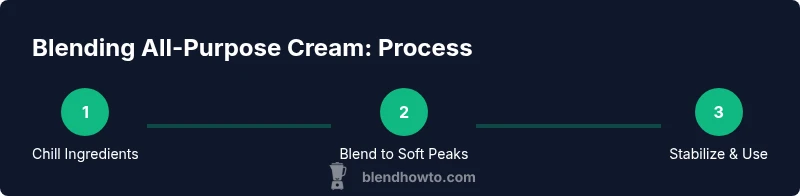
Yes—you can blend all-purpose cream to create whipped texture, sauces, or emulsions. Key factors are fat content, temperature, and blending method. Use cold cream and a chilled blender, employ short pulses, and stop as soon as soft or stiff peaks form to avoid turning it into butter. For best results, blend in controlled bursts.
What is all-purpose cream and why blending matters
All-purpose cream sits between light and heavy cream in fat content and is used widely for pouring, cooking, and finishing dishes. Depending on your region, its fat range can influence stability when blending. The BlendHowTo team has found that blending all-purpose cream is a useful technique for both texture and flavor, but it requires attention to temperature, fat level, and technique. When you blend, you are either forming a stable emulsion or, if overworked, you risk breaking the fat and creating a grainy or butter-like texture. Understanding these outcomes helps you decide when blending is the right tool for a recipe. A practical approach is to treat blending as a controlled emulsification exercise rather than a quick puree. The exact result you get depends on the cream you start with and how carefully you monitor the process.
Understanding fat content and blending outcomes
Fat content is the main driver of how cream behaves when blended. Whipping or all-purpose creams with higher fat tend to emulsify more readily and hold texture longer, while lower fat varieties may separate or fail to gain stiffness. Temperature also plays a crucial role: cold cream blends better and stabilizes more quickly, whereas warm cream is prone to slip and separation. When you blend, fat droplets must unite into a stable network; if you push too hard or blend too long, the fat can break apart and turn into a greasy, buttery emulsion. For this reason, many cooks start with a short pulse to begin emulsification, then pause to check texture before continuing. Keeping tools cold and clean reduces friction and helps maintain a smooth texture. BlendHowTo notes that a clean, chilled bowl and blades can make a big difference in success rates.
Can you blend all-purpose cream in a blender vs immersion blender
Both full-size blenders and immersion blenders can work for all-purpose cream, but they behave differently. A standard blender offers consistent, even blending with quick bursts, which is useful for whipping and emulsifying. An immersion blender gives you more control over texture and is handy when working in a pot or mixing bowl. The key is to use short bursts, avoid running at high speed for long periods, and monitor texture closely. Whipped cream typically comes together faster with a blender set to low or medium speed, then you adjust to reach the desired peaks. If you notice separation or oiling out, stop and rest the mixture before continuing. Using a chilled blender and cold cream yields the most stable results.
Step-by-step: creating whipped cream with a blender
To achieve whipping texture with all-purpose cream, start with cold ingredients and equipment. Add the cream to a chilled bowl or blender jar, then pulse in short bursts until you see light foaming and the mixture starts to thicken. Move to continuous low-speed blending in short intervals, checking texture every few seconds. Stop as soon as you reach soft peaks for soft whipped cream or stiff peaks for a firmer texture. If you want vanilla or a touch of sugar, add it in the last few seconds of blending. Avoid over-mixing to prevent butter formation. A final 10-minute rest in the fridge can help set the texture before use.
Step-by-step: creating a creamy sauce or emulsified base
All-purpose cream can be emulsified into a smooth sauce by blending with a fat or liquid in a controlled manner. Start with a small amount of liquid (broth, stock, or stock plus a splash of wine) to create a base, then slowly drizzle in the cream while blending on low speed. The goal is to form a cohesive emulsion rather than separating. If the sauce looks split, pause and re-emulsify with a splash of cold liquid and blend briefly. For seasoning, add salt, pepper, or aromatics at the end to taste. This technique is ideal for finishing sauces or creamy soups.
Troubleshooting and best practices
Texture issues are the most common problems when blending all-purpose cream. If the mixture remains liquid after blending, chill the bowl and blades, then try a few short pulses again. If you see oil separation, stop immediately and re-emulsify with a small cold amount of cream or milk. Keep the blender in a stationary position, and avoid tilting or swirling during blending to maintain uniform texture. Always use fresh cream and cold equipment, and consider adding a small amount of stabilizer like a pinch of cream of tartar or a few drops of lemon juice only if your recipe calls for it.
Practical recipe ideas and adjustments
Blended all-purpose cream expands your repertoire beyond simple whipped cream. Use it to finish sauces like a light alfredo or to create a creamy pan sauce for poultry or vegetables. For desserts, blend with cocoa powder, vanilla, and a hint of sugar to make a mousse-like topping. In beverages, a small amount of blended cream can smooth out coffee or hot chocolate. If fat content varies by brand, adjust the amount of cream and any sugar to achieve the desired body. The key is to blend in short bursts and taste frequently to prevent overdoing it.
Safety, storage, and substitutions
Store all-purpose cream in the coldest part of the refrigerator and use it within the manufacturer’s recommended window. Do not freeze cream intended for whipping, as ice crystals disrupt texture. If you need to substitute, you can use a higher-fat cream in a pinch, though your texture may differ. When blending, avoid contact with hot surfaces or steam, which can cause sudden separation. Clean equipment thoroughly after blending to prevent cross-contamination and maintain texture for future uses.
Tools & Materials
- Blender or immersion blender(Choose a blender with a wide jar for easier blending; immersion blenders work well in bowls)
- All-purpose cream(Cold, fresh, and well-chilled; plan for 1 cup (240 ml) as a baseline)
- Chilled mixing bowl(Metal or glass; chill 5–10 minutes for best results)
- Measuring spoons and cups(Accurate measurements help with texture and sweetness)
- Spatula(For scraping and final texture checks)
- Thermometer (optional)(If you want precise temperature control; not strictly required)
- Timer(Helpful to track pulse intervals and rest times)
Steps
Estimated time: 15-25 minutes
- 1
Gather ingredients and equipment
Collect cold all-purpose cream, a chilled blender or immersion blade, and a clean, cold mixing bowl. Having everything ready minimizes heat gain during blending. This initial setup helps you reach stable texture faster.
Tip: Chill all equipment for at least 5 minutes before starting. - 2
Prepare blender and container
If using a blender, fit with a blade that can operate at low speeds. If using an immersion blender, choose a tall, narrow container to reduce splashing. The goal is to keep friction low and blending controlled.
Tip: Keep the blades submersed and start on the lowest setting. - 3
Add cream and flavorings
Pour the cold cream into the blender and add any flavorings like vanilla or sugar in measured amounts. Begin blending gently to initiate emulsification without overheating. Avoid adding acidic ingredients at this stage unless your recipe specifically calls for them.
Tip: Introduce flavorings gradually to avoid over-sweetening. - 4
Pulse to begin emulsification
Pulse in short bursts to start building structure. Pause after every 5–10 seconds to check texture and avoid overworking the fat. This prevents turning the cream into butter.
Tip: Use a timer to ensure consistent pulse intervals. - 5
Adjust speed and texture
Switch to longer pulses or a gentle continuous blend once the mixture thickens. Stop when you reach soft peaks for a light whipped texture or stiff peaks for a firmer one. Avoid running the blender on high for too long.
Tip: If you see oil separation, stop and rest the mixture briefly before reblending. - 6
Finish and use
Taste and adjust sweetness or vanilla if needed, then use immediately or refrigerate briefly to set. Whipped cream can be stabilized slightly with a touch of cream of tartar or a pinch of cornstarch if preferred. Clean up promptly to prevent any lingering odors.
Tip: Chill the whipped cream for 10–15 minutes before serving for a more stable texture.
Frequently Asked Questions
Can all-purpose cream be whipped in a blender?
Yes, with cold cream and proper technique you can whip all-purpose cream in a blender, but watch texture closely and stop at soft or stiff peaks to prevent overworking.
You can whip it with a blender, but keep an eye on the texture and stop as soon as you reach soft or stiff peaks.
Will blending cause the cream to turn into butter?
Over-blending at high speed or blending for too long can cause fat to separate, forming a greasy mixture or butter. Short bursts and pauses reduce this risk.
Over-blending can make butter form, so use short bursts and rest between pulses.
What is the difference between blending and whisking?
Whisking uses air to incorporate into the cream, while blending emulsifies fat droplets. Blending can be faster but requires careful control to avoid overworking the fat.
Blending emulsifies using the blender, while whisking relies on air to aerate the cream.
Is there a best fat content for blending cream?
Creams with higher fat content generally yield more stable emulsions and better texture, but results vary by brand. Start with whipping or all-purpose cream as a baseline.
Higher fat creams tend to emulsify better, but results vary by brand.
Can you blend all-purpose cream into a sauce without curdling?
Yes, blend slowly with a liquid base and maintain moderate heat. Drizzle in cream gradually to avoid curdling or separation.
Blend slowly with a liquid base and keep heat moderate to prevent curdling.
Can you freeze all-purpose cream for blending later?
Freezing changes texture and can affect emulsification. Use fresh cream for best blending results, and refrigerate leftovers promptly.
Freezing can affect texture, so use fresh cream for best results.
Watch Video
What to Remember
- Start cold and blend in short bursts
- Higher fat creams emulsify more reliably
- Monitor texture to avoid turning into butter
- Chill finished product before serving when possible