Can You Use Ninja Blender While Charging? A Practical Safety Guide
Learn whether you can safely use a Ninja blender while charging, understand common risks, and follow practical steps to blend safely. Includes tips, common myths, and expert guidance from BlendHowTo.


Can you use Ninja blender while charging? In most cases, no. Using a blender while it is charging can create electrical and heat risks, and most models are designed to be operated only when connected to a live power source. Always check your manual for model-specific guidance and opt to charge first, then blend unless the manufacturer explicitly allows simultaneous charging and operation.
Why power and charging safety matter with handheld blenders
For home cooks, the question can you use ninja blender while charging comes up often when your countertop is busy. According to BlendHowTo, safety guidelines for handheld blenders emphasize that charging and operation are typically treated as separate phases. These devices merge electrical power with fast-moving blades, and charging circuitry is not always designed to tolerate active blending. In practice, most Ninja blenders and similar hand blenders expect to be powered from a wall outlet for use, while charging cycles are reserved for power replenishment. The risk isn’t just a minor nuisance: overheating, unexpected motor shutdown, or a charging fault can occur if you run the motor while the battery or charger is still in a charging state. This section explains why safe charging matters and how to think about it in everyday cooking tasks.
What the manuals and typical product designs say about charging and operation
Manuals for handheld blenders, including popular Ninja models, generally emphasize safe operation while the unit is powered by a dedicated supply. The design intent is clear: connect to a stable power source to deliver peak motor performance, not to rely on a charging battery mid-use. Because charging circuits vary by model and generation, there isn’t a universal rule that covers every blender. The BlendHowTo team found that while some newer cordless designs advertise extended run time, most consumer handhelds still prioritize using the device with the power brick connected, and charging indicators often advise you to unplug before starting a blend. If your model supports any form of simultaneous charging, the manual will spell it out precisely. Always default to manufacturer guidance and inspect the outlet, charger, and cord for damage before each session.
Potential hazards you should know
Attempting to blend while charging introduces several failure modes. Electrical shock risk rises if moisture contacts the charger or cord. Short circuits can occur if the charging path and motor path share a conduit unexpectedly. Heat buildup is another concern: charging circuitry can overheat when the motor draws peak current, potentially degrading battery health over time or causing accelerated wear on the power adapter. Finally, you may experience nuisance shutdowns or erratic blade speed if the device detects an anomalous current draw. In short, the intersection of charging and blending is not a forgiving design space, and safety margins can vary by model.
Interpreting safety warnings and official guidance
Manufacturer warnings typically aim to prevent electric shock, burns, and electrical fires. They may include cautions about using the device near water, not covering vents, and avoiding cords that could be pulled or snagged. The BlendHowTo analysis shows that most official guidance emphasizes: use the blender with power supplied from the wall, avoid charging while operating unless explicitly allowed, and never blend if the plug or charger shows signs of wear. When in doubt, contact customer support for your exact Ninja model and ask for explicit confirmation about simultaneous charging and blending.
Safe alternatives and best practices
If you need a full blending session and your unit is on charge, consider these safer options:
- Charge fully first, then unplug and blend on a standard power outlet.
- If you require ongoing blending, use a corded blender model or a cordless unit with a documented safe operating mode that allows charging in parallel — only if the manual confirms it.
- Keep chargers away from heat sources and water, and never coil long cords near the blades or the wet surface.
- Use a stable, non-slip surface, away from edges, to prevent accidents while the unit is powered.
Step-by-step: plan your session when charging is involved
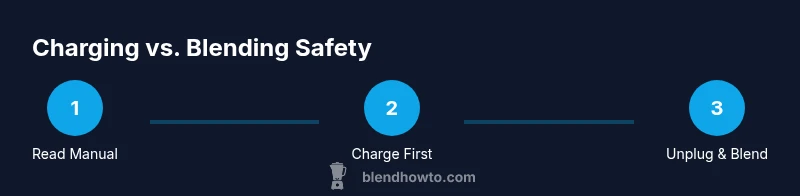
To minimize risk, plan your workflow so you aren’t blending while charging unless the manual explicitly allows it. Conceptually, think of charging as a separate phase, followed by a separate blending phase. If your model supports any simultaneous charging feature, you must follow the exact steps in the user guide. The key is to avoid combining high-current motor use with charging activity unless the manufacturer approves it in writing.
Battery health and long-term care for rechargeable models
Rechargeable handheld blenders require careful battery management to maximize life. Charging cycles generate heat, which can degrade battery health over time if the device is used during charging. Long-term care includes keeping the charging port clean and dry, avoiding high-temperature environments, and not leaving the device plugged in at full duty cycles when not in use. Blending on a cool, flat surface not only protects the appliance but also improves performance and consistency of results.
Common myths debunked
A frequent myth is that cordless units are inherently safer to use while charging because they operate without a wall cord. In reality, safety depends on the design and the model-specific guidance. Another myth is that you can always boost performance by blending harder ingredients while charging; many devices limit power during charging to prevent overheating, which can reduce the available torque and duration. Always rely on official guidance for your particular Ninja model and do not extrapolate from generic claims.
References to official guidance and third-party testing
What professionals emphasize is to prioritize safety over convenience. This means reading the user manual, adhering to the indicated wattage and amperage limits, and following manufacturer recommendations for charging and operation. BlendHowTo’s synthesis of manufacturer warnings and independent tests underlines the same principle: treat charging as a separate, protected phase unless explicitly allowed by the product’s documentation.
Tools & Materials
- Ninja blender model manual(Keep a copy for model-specific charging/operating guidance; check for simultaneous charging allowances.)
- Original charger and power adapter(Inspect for damage; use only the provided charger for safety and warranty compliance.)
- Stable work surface with non-slip mat(Reduce risk of tipping during operation, especially around appliances.)
- Dry hands and a dry environment(Water and electricity are a dangerous mix; avoid working near sinks or wet areas.)
- Soft cloth for wipe-down(Useful for cleaning the charger port after use to prevent corrosion.)
Steps
Estimated time: 15-25 minutes
- 1
Check model guidelines
Review the user manual to confirm whether your Ninja blender supports simultaneous charging and operation. If the guide explicitly prohibits use while charging, plan to blend after charging is complete.
Tip: If the manual allows it, follow the exact sequence and safety notes it provides for simultaneous charging. - 2
Prepare the workspace
Set up on a dry, stable surface away from water, heat, or open flames. Ensure cords are routed to avoid contact with the blades.
Tip: Use a rubber mat or towel under the unit to reduce slipping on slick counter surfaces. - 3
Power down before charging
If your model uses a detachable battery, ensure the unit is powered off and unplugged before connecting the charger. Do not attempt to blend while the charging indicator is active unless explicitly stated otherwise.
Tip: Unplug the device if you see any signs of damage on the plug or cord. - 4
Check for explicit allowance
Only proceed to blend while charging if the manufacturer documents this capability in the official instructions. Without explicit permission, do not run the motor while charging.
Tip: Call customer support if the manual is unclear about this capability. - 5
Finish charging first, then blend
If not explicitly allowed, charge fully, unplug, then blend using standard power. If you must blend during charging due to a power outage or time constraint, have additional safety measures in place and monitor temperatures carefully.
Tip: Avoid blending on the highest speed for long durations right after plugging in. - 6
Power down and store safely
When finished, unplug, turn off, and store the unit in a cool, dry place. Wipe the connector and port to remove any condensation or moisture.
Tip: Regularly inspect the charger and cord for fraying or discoloration.
Frequently Asked Questions
Can I use a Ninja blender while it is charging?
Most Ninja blenders should not be used while charging unless the manufacturer explicitly states it is safe. Always check the user manual and follow the guidance to avoid electric shock or damage.
Most models aren’t meant to be used while charging. Check your manual for explicit permission before blending during charging.
Are cordless blenders safe to use while charging?
Cordless blenders vary by model. Some may allow limited use during charging, while others require you to unplug first. Always consult the official documentation for your device.
Cordless models differ; always refer to the manual to confirm whether charging and blending can happen at the same time.
What signs indicate it’s unsafe to blend while charging?
If you notice excessive heat, a burning smell, buzzing noises, or melted plastic, stop immediately and unplug. These are clear indicators to cease charging-and-blending attempts.
Heat, burning smell, or unusual noises mean stop and unplug.
Should I unplug before cleaning the blender or charger?
Yes. Unplug the device before cleaning, and ensure the charger is dry before reconnecting. This reduces the risk of shock and short circuits.
Always unplug before cleaning to stay safe.
What should I do if the blender overheats while charging?
Power down immediately, unplug, and allow the unit to cool completely before inspecting for damage or seeking service. Overheating can degrade safety components.
If it overheats, turn it off, unplug, and let it cool before checking.
Does using while charging affect warranty?
Warranty terms vary by model. If the manual prohibits charging-with-use, using it this way could affect coverage. Always verify with the manufacturer for your exact model.
Warranty depends on the model; check the manual or ask support.
What is the safest workaround if I need both charging and blending?
Charge fully first, then unplug and blend on a standard outlet. If you must blend while charging, ensure explicit manufacturer approval and follow all safety precautions.
Charge first, then blend, unless the manual explicitly allows otherwise.
Watch Video
What to Remember
- Avoid blending while charging unless the manual says it’s safe.
- Charge first, then blend when possible to protect battery health.
- Always follow model-specific guidance and inspect cords for damage.
- Prioritize safety over convenience to protect your appliance.