How to Blend Carrots: A Practical Blending Guide
Learn how to blend carrots into a silky puree using a blender or immersion blender. This comprehensive guide covers prep, texture control, safety, troubleshooting, and practical tips for soups, sauces, and baby food.


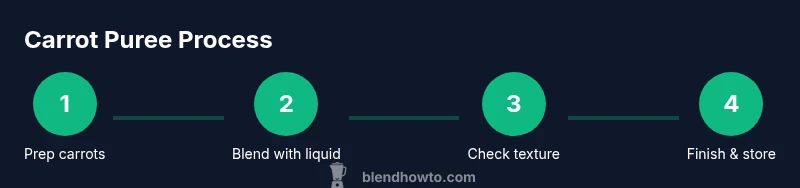
Blend carrots into a silky puree using a blender or immersion blender. This guide covers prep, texture control, safety, and cleanup to help you achieve smooth results for soups, sauces, or baby food. You’ll learn even chopping, balancing liquids, and troubleshooting for consistent carrot puree.
Why carrot texture matters
Carrot texture determines how you can use the puree: a pourable, emulsified sauce for soups, a thick spread for dressings, or a smooth baby-food consistency. Texture is influenced by how you cook the carrots (raw vs. cooked), how finely you chop them, and how you blend. Raw carrots deliver more bite and fibrous notes, while steamed or boiled carrots surrender to a more velvety finish. When planning texture, imagine the final dish: soup requires lighter, pourable consistency; sauces benefit from a slightly thicker body; baby-food puree needs the smoothest texture with no fibrous strands. Balance solids to liquids carefully: too little liquid makes a dense paste that strains the blender; too much makes a soup-like result. Additionally, beating air into the mixture during blending can create froth. For a glossy, restaurant-quality finish, consider a quick pass through a fine sieve after blending to remove any remaining fibers.
To optimize color and flavor, limit oxidation by blending in short bursts, use fresh carrots, and add a touch of citrus or a splash of broth to brighten the final puree. Finally, plan portions ahead of time: you can freeze extra puree in ice cube trays for quick future use. These choices set the stage for predictable texture every time.
Choosing the right blender
The tool you choose shapes texture, ease, and speed. A countertop blender with a high-torque motor and sharp stainless-steel blades is excellent for large batches and ultra-smooth textures, provided you add enough liquid and blend in batches if needed. Look for a jar with a wide mouth for easier carrot transfer and a design that minimizes air capture to reduce frothing. An immersion blender excels for quick, small-batch work directly in a bowl or pot. It’s convenient for cooking on the stove and for thicker purées where you want to control texture in real time. When using an immersion blender, a tall, wide container helps prevent splatter and makes it easier to blend evenly.
Important features include a pulse option to break up chunks, a tamper to push solids toward blades, and a lid that seals well to reduce splatter. If you’re blending hot liquids, ensure the lid has a vent or leave the gap slightly open to release steam safely. Overheating can dull flavor and damage blades, so avoid running any blender for long uninterrupted periods. For the best results, blend in short bursts, pause to scrape down the sides, then resume until your desired texture is reached.
Prep steps for carrots
Start with fresh carrots: wash well, scrub off dirt, and trim the ends. Decide whether to peel; the skin adds fiber and nutrients but can introduce a slightly earthy flavor and texture. If you’re aiming for a creamy, ultra-smooth puree, peeling can help. Cut carrots into uniform chunks (about 1–2 inch pieces) to ensure even cooking and blending. Raw carrots can be blended, but for a smoother finish, lightly steam or simmer until tender: about 5–7 minutes for sliced pieces, or 10–12 minutes for larger chunks. If you’re short on time, microwave-steam small rounds in a covered dish with a splash of water to soften quickly. After cooking, drain well and let them cool briefly before blending. Keeping carrot pieces similar in size prevents pockets of undercooked fibers and helps you achieve even texture across batches.
The blending process: achieving a smooth texture
Begin with a moderate amount of liquid—water, stock, or milk—depending on the intended use and flavor profile. Place the carrot pieces into the blender, add the liquid gradually, and start blending on a low setting to avoid splatter. Increase speed gradually, using short pulses or interspersed blending bursts to maintain control. If your blender has a tamper, use it to push solids toward the blades without lifting the lid. For immersion blenders, blend in the bowl or pot in steady motions, keeping the blender depth consistent to avoid air pockets. If you notice grit or fibrous strands, blend longer in short bursts or strain the puree through a fine-mesh sieve. Taste and adjust with salt, pepper, and a touch of acid like lemon juice to brighten the flavor. The goal is a uniform, glossy texture free of chunks and with a smooth mouthfeel that suits your planned dish.
How to adjust for different uses
For soups, blend to a pourable consistency, then whisk in stock or water to reach the desired body. For sauces, reduce slightly after blending or add a bit of cream or olive oil to enrich texture. If you’re making baby food, aim for the smoothest texture possible; strain or pass through a fine sieve for an ultra-smooth finish. If the puree seems too thick, add liquid in small increments; if too thin, simmer a bit longer or evaporate excess moisture. You can also add aromatics such as garlic or onion powder, fresh herbs, or a splash of vegetable broth to tailor flavor. Color retention is best when carrots are fresh and not overcooked; limit exposure to air and heat to preserve bright orange hue.
Storing leftovers is simple: refrigerate in an airtight container for up to a few days, or freeze in ice cube trays for quick single-serving portions. Thaw in the fridge or gently reheat on the stove while stirring to prevent separation. These adjustments let you repurpose carrot puree across soups, sauces, and side dishes with consistent texture every time.
Safety, cleaning, and maintenance
Always unplug your blender before cleaning or changing attachments. For safety, avoid blade contact during cleaning; use a brush or cloth to wipe blades when the unit is unplugged. Rinse the blending jar promptly after use to prevent staining and buildup. If your blender is dishwasher-safe, place the jar on the top rack, but wash the lid and tamper separately to remove any residual food particles. For stubborn residues, soak in warm, soapy water for a few minutes before scrubbing. Keep the blades dry after washing to prevent rust. If your appliance becomes noisy or struggles to blend, pause and allow it to cool to prevent motor damage. Periodically check seals and gaskets for wear and replace as needed to avoid leaks.
Troubleshooting common issues
If the puree is gritty, blend longer in short bursts or run through a sieve to remove fibrous strands. A frothy finish usually indicates air incorporation; pause to stir and blend in bursts, or add a small amount of oil to emulsify. If the color looks dull, a tiny squeeze of lemon juice can brighten it, while ensuring you don’t alter flavor. If heating causes separation, reblend with a little extra liquid and reheat gently. For stubborn chunks, chop carrots into even smaller pieces before the next blend. Finally, if the texture is too thick, add liquid gradually and blend until you reach the desired consistency. Practice makes perfect—adjusting for batch size, carrot variety, and blender type yields better results over time.
Quick carrot puree variations and tips
Experiment with flavors to suit different dishes. Add roasted garlic for depth, a pinch of cumin for warmth, or a splash of cream for silkiness. For a lighter, dairy-free option, use unsweetened almond milk or vegetable broth. To boost nutrition and color, blend in a handful of fresh herbs like parsley or chives. If you want a more vibrant orange, avoid overcooking the carrots, which can dull color, and blend promptly after cooking. Finally, for baby-friendly variants, skip added salt and spices, and blend to a velvety texture. These variations keep carrot puree versatile across multiple meals.
Tools & Materials
- Carrots (fresh)(Wash and scrub; peeling optional)
- Water, stock, or milk(Liquid for blending and texture control)
- Salt and pepper(Season to taste depending on use)
- Blender or immersion blender(Choose based on batch size and control)
- Knife and cutting board(For uniform carrot pieces)
- Measuring cup or kitchen scale(Helps with precise liquid balance)
- Fine-mesh sieve (optional)(For extra-smooth texture)
- Spatula or spoon(To scrape sides and mix)
- Timer or phone(Track blending time)
Steps
Estimated time: 25-35 minutes
- 1
Wash and prepare carrots
Rinse carrots under cool water. Trim ends and peel if desired. Cut into even chunks to promote uniform cooking and blending. This initial prep reduces blending time and helps achieve smoother texture.
Tip: Peeling is optional; keeping skins on adds fiber and color but may affect texture. - 2
Chop carrots into uniform pieces
Aim for pieces around 1–2 inches. Uniform size ensures even cooking and blending, preventing under- or overcooked spots that make the puree inconsistent.
Tip: If space is tight, bullet-cut pieces are fine as long as they’re roughly the same size. - 3
Optionally pre-soften by steaming
Steam or boil until pieces are tender (about 5–12 minutes depending on size). Soft carrots blend more easily and yield a smoother puree with fewer lumps.
Tip: Test with a fork; it should slide in easily. - 4
Add carrots to blender with liquid
Place cooked carrots in the blender with a measured amount of liquid. Start with less than you think you need; you can add more later to control texture.
Tip: Too much liquid at once can make the puree too runny. - 5
Blend in bursts until smooth
Run the blender on low to start, then move to higher speeds. Pause to scrape the sides with a spatula and blend again. Use a tamper if available to keep solids hitting the blades.
Tip: Avoid running the blender continuously for long periods to prevent overheating. - 6
Check texture and adjust
Evaluate the puree: is it too thick, too thin, or not smooth enough? Add liquid gradually or blend longer in short bursts until you reach the desired texture.
Tip: If needed, strain through a fine sieve for ultra-smooth results. - 7
Finish and store leftovers
Taste and season as needed. Use immediately or store in an airtight container in the fridge for a few days, or freeze portions for longer storage.
Tip: Cool to room temperature before refrigerating to avoid condensation.
Frequently Asked Questions
Can I blend raw carrots in a standard blender?
Yes, you can blend raw carrots, but they may require more liquid and blending time. Chopping into smaller pieces helps achieve a smoother puree. Steaming or boiling softens the fibers for an even smoother result.
Yes, you can blend raw carrots, but you may need more liquid and longer blending time. Chopping into small pieces helps, and steaming can help if you want a smoother result.
Should I peel carrots before blending?
Peeling is optional. The skin adds fiber and color but can introduce earthy flavors and a slightly coarser texture. Peel if you want a purer, smoother result, or leave the skin on for more nutrients.
Peeling is optional. If you want a smoother texture, peel; otherwise you’ll keep more nutrients and color from the skin.
What liquid is best for carrot puree?
Choose based on flavor and use: water for a neutral base, stock for depth, or milk/cream for richness. Start with a small amount and add gradually to control thickness.
Use water for a neutral base, stock for depth, or milk for richness. Start with a little and add as needed.
How long can carrot puree be stored?
For best quality, refrigerate in an airtight container for a few days. For longer storage, freeze portions in a freezer-safe bag or tray. Thaw and reheat gently when needed.
Keep it in the fridge for a few days, or freeze for longer. Thaw and reheat slowly.
What if the puree is lumpy or gritty?
Blend longer in short bursts and scrape the sides. Passing the puree through a fine sieve removes remaining fibers for an ultra-smooth finish.
If it's lumpy, blend a bit more and pass it through a sieve for extra smoothness.
Can I use an immersion blender for hot carrot soups?
Yes, but use caution. Keep the container tall and vent the lid slightly to release steam, blending in short bursts to avoid splatter. Let the mixture cool a bit if it’s very hot before blending.
Yes, with caution. Use a tall container, vent the lid, and blend in short bursts to avoid splatter.
Watch Video
What to Remember
- Choose uniform carrot pieces for consistency
- Balance carrot-to-liquid ratio for texture
- Use pulses and scrape the sides regularly
- Strain if you want ultra-smooth texture
- Store puree properly for future use