How to Blend Food in a Blender: A Practical Step-by-Step Guide
Learn how to blend food in a blender with practical prep, texture control, safety tips, and a detailed step-by-step process for smoothies, sauces, soups, and purees.


You will learn how to blend food in a blender to achieve smooth sauces, creams, smoothies, and purees. This guide covers selecting the right blender, prepping ingredients, safe operation, and practical step-by-step techniques. You’ll also see tips for texture control and cleanup to keep your kitchen efficient. This quick overview primes you for the full, detailed steps that follow.
Why blending matters in everyday cooking
Blending is a versatile technique that transforms solid ingredients into smooth textures, unlocks flavor combinations, and speeds up meal prep. Whether you’re making a silky soup, a velvety sauce, or a refreshing smoothie, a blender can simplify tasks that otherwise require multiple tools. For those learning how to blend food in a blender, the core idea is that blade design, motor power, and jar shape affect texture, mouthfeel, and stability. Starting with soft ingredients and adding liquids gradually helps maintain control and prevent splatter. The broader benefit is consistency: even small batches of sauces, spreads, or gravies rely on a uniform mixture. In this section, we lay the foundation for practical blending, explain the terminology you’ll encounter, and highlight how subtle changes in technique yield noticeable results.
Choosing the right blender and attachments
A good blender is a blend of power, control, and ease of cleaning. If you plan to blend fibrous vegetables, nuts, or ice, look for a model with a motor rating of at least 700 watts and a tall, narrow jar to minimize air pockets. Consider variable speeds, a pulse function, and a sturdy blade design. Attachments like a personal cup lid, mini-chopper, or tamper widen versatility. For immersion blenders, assess reach and power for quick purees in pots. In practice, think about your typical tasks—smoothies, nut butters, or hot soups—and pick a setup that minimizes empty-jars and messy transfers. Matching your blender to your recipes makes a big difference in texture and reliability.
Ingredient prep and safety basics
Prep is the quiet partner to any successful blend. Rinse produce, remove stems, cores, or seeds as needed, and cut ingredients into uniform pieces to encourage even processing. For hot soups or curries, vent the lid and blend in batches to avoid pressure build-up. Always secure the lid tightly and avoid opening the jar while the blades spin. Start with liquids, adding more gradually to achieve a stable base; too much solid matter at once can stall the blades and overwork the motor. Keep the workspace clean and dry to prevent slips, and unplug the blender before disassembling parts for cleaning. These safety habits protect you and your equipment while delivering better results.
Understanding texture: from chunky to silky
Texture is the signature of a finished blend. A chunky salsa relies on less liquid and shorter blending, while a smoothie aims for a creamy, pourable consistency. A sauce often needs emulsification, which means introducing fat and a small amount of liquid at a time to prevent separation. When testing texture, stop blending early to preserve bite, or continue until completely smooth if that’s desired. Keep notes on ingredient ratios and processing times so future batches replicate the results. With practice, you’ll learn how to adjust speed, pulse frequency, and ingredient order to dial in the perfect mouthfeel for each dish.
Popular blending applications: smoothies, sauces, soups
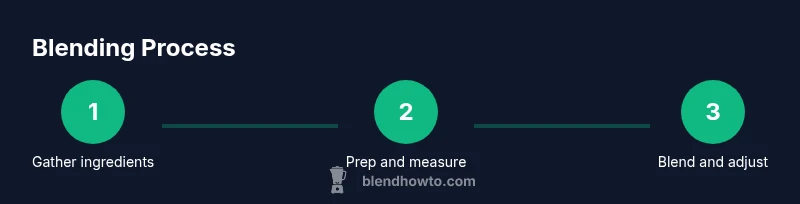
Smart blending supports many everyday recipes. For smoothies, balance fruit, greens, yogurt or milk, and a dash of sweetness; freeze some ingredients for a colder, thicker texture. For sauces, start with a base liquid and gradually whisk in fat or emulsifiers to stabilize the blend. For soups, blend warm ingredients to creamy consistency, then return to the pot to finish with seasonings. Each category benefits from a simple workflow: prep ingredients, measure liquids, blend at a steady pace, check texture, adjust seasoning, and serve or store. Here are sample ratios you can adapt to your taste and blender capacity.
Troubleshooting common blending problems
Even experienced home cooks run into issues. If a batch is uneven, pause to scrape the sides and re-seat the lid, then blend on a lower setting with short pulses. If the motor heats up, stop and let it cool for a few minutes before continuing. Leaks usually indicate a poorly sealed lid or gasket—check the ring and replace if damaged. For loud operation, inspect blades for dullness or an obstruction. Keep a small jar nearby to test texture as you go, and avoid overfilling the jar beyond manufacturer recommendations. With these checks, you’ll resolve most routine blender challenges.
Cleaning and maintenance tips
Clean promptly after blending to prevent stubborn residue. Rinse immediately, disassemble the jar and blades, and wash with warm, soapy water. Avoid harsh cleaners that could degrade seals; if dishwasher-safe, place parts on the top rack to preserve gaskets. Dry all parts thoroughly before reassembling. Regularly inspect blades for dullness and replace as needed, and store the blender with the lid off or ajar to prevent odors. A quick wipe-down of the exterior keeps your machine looking new and ready for the next blend.
Tools & Materials
- Countertop blender (at least 700W)(Choose a jar with a capacity of 1-1.5 liters for family-size batches)
- Tamper (optional)(Helpful for thick blends and nut butters)
- Measuring cups and spoons(For precise ingredient ratios)
- Cutting board and knife(Chop ingredients into uniform pieces)
- Spatula or silicone scraper(To scrape sides without wounding blades)
- Heat-safe pitcher or measuring jug(Useful for hot liquids when cooling slightly before blending)
Steps
Estimated time: 60-75 minutes
- 1
Gather ingredients and equipment
Lay out all ingredients and the blender with its lid. Verify you have measuring tools, a cutting board, and any attachments you plan to use. This reduces interruptions and helps you control texture from the start.
Tip: Organize items by dry vs. wet to speed up measurement and prep. - 2
Chop ingredients into uniform pieces
Uniform pieces ensure even blending and prevent large chunks from stalling the blades. Keep pieces small enough to fit through the blender opening without forcing them in.
Tip: Aim for bite-sized pieces, about 1–2 cm each. - 3
Add liquids first, then solids
Pour liquids into the blender jar before solids. This helps create a smooth base and reduces air pockets that push ingredients up toward the lid during blending.
Tip: Start with 1/4 to 1/2 of total liquid and add more as needed. - 4
Pulse to start, then blend on low
Use short pulses to break up ingredients, then switch to a steady moderate speed. Pulsing reduces splatter and gives you initial control over texture.
Tip: Pause to scrape the sides after the initial blend. - 5
Check texture and adjust
Pause the blender, check texture, and decide if you need more liquid or a longer blend. For thicker blends, use shorter bursts; for smoother results, blend longer at a consistent speed.
Tip: Keep a note of times and ratios for future batches. - 6
Finish and test, then serve or store
Once you reach the desired texture, taste and adjust seasonings if needed. Transfer to a clean container or store in the refrigerator for up to a few days, depending on ingredients.
Tip: Label containers with date and contents. - 7
Disassemble and clean safely
Unplug the blender, remove the blade assembly, and rinse parts promptly to prevent residue from hardening. Dry thoroughly before reassembling and storing.
Tip: Check seals and blades regularly for signs of wear. - 8
Maintain equipment for longevity
Periodically inspect seals, lubricate if manufacturer-approved, and replace dull blades to keep performance high.
Tip: Avoid harsh chemicals that can degrade gaskets.
Frequently Asked Questions
What blender settings are best for smoothies?
For smoothies, start on a low speed to break up fruit, then gradually increase to high. Use short pulses if you need to prevent over-processing. Add ice or frozen fruit gradually for a creamier texture.
For smoothies, start on low, then go to high, and add ice gradually for a creamier texture.
Can I blend hot soups in a regular blender?
Yes, but blend in batches and vent the lid to release steam. Start with cooler temperatures and allow liquids to cool slightly before blending to avoid pressure buildup.
Yes, but blend in batches and vent the lid to release steam.
How can I prevent ingredients from sticking to the sides?
Pause blending to scrape the sides with a spatula and re-seat the lid. Use a tamper if your model supports it for thick mixtures.
Pause to scrape the sides and, if possible, use a tamper for thick blends.
What should I do if the blender overheats?
Turn off and unplug, let the motor cool for several minutes before resuming. If overheating recurs, blend in shorter bursts or reduce batch size.
Turn it off, let it cool, and blend in shorter bursts next time.
Is it safe to emulsify sauces in a blender?
Yes. Start with a liquid base, slowly add fat or emulsifier, and blend at a steady pace to avoid separation. If needed, finish with a quick pulse to boost texture.
Yes—start with liquid, add fat slowly, and blend steadily to emulsify.
Can a blender handle ice and frozen ingredients?
Many blenders handle ice well with a pulse function and proper liquid. For hard ice, use crushed ice or blend in smaller batches to reduce strain on the motor.
Yes, with crushed ice or smaller batches to reduce strain.
Watch Video
What to Remember
- Choose the right blender for your tasks
- Prep ingredients for uniform mixes
- Add liquids gradually to control consistency
- Use pulse when needed to fine-tune texture
- Clean promptly to prevent odors and damage