How to Put in Blender: A Practical Beginner Guide
Learn how to put in blender safely and effectively with practical prep, blending techniques, and cleanup tips. This guide covers ingredient prep, layering, speed control, and troubleshooting for beginners.


Today you’ll learn how to put in blender safely and effectively. This quick guide covers prep, proper ingredient order, blending technique, and cleanup. By following the steps, you’ll achieve smooth textures and consistent results whether you’re making smoothies, sauces, or soups. This post is written for beginners but includes tips that improve every blend. Start with the right equipment, prep ingredients to uniform sizes, and blend in safe bursts.
What putting ingredients into a blender means for home cooking
Putting ingredients into a blender is about sequencing, texture control, and safety. At its core, you’re combining solids, liquids, and possibly ice to create a uniform mixture. For beginners, the goal is to avoid chunks, manage air incorporation, and prevent leaks or motor strain. According to BlendHowTo, the simplest way to think about it is: liquids first, then soft ingredients, then harder solids, all within the blender’s max capacity. This approach helps you achieve a smooth, restaurant-like consistency without overworking the motor. As you practice, you’ll learn how different textures respond to different speeds and pulse patterns, and you’ll gain confidence in choosing recipes that fit your blender’s power and your kitchen style. This section sets up the ideas you’ll apply across recipes and tasks.
Safety and equipment basics
Before you put in blender, check the basics:
- Ensure the blender is on a stable, dry surface.
- Confirm the lid seals properly and the blades are secured.
- Do not overfill beyond the max line.
- If blending hot liquids, vent the lid slightly or blend in batches.
Choosing the right blender matters. A unit with a robust motor and sharp blades will handle fibrous ingredients more reliably. For plastic or glass jars, verify the jar is intact and free of cracks. Always unplug the appliance when assembling or disassembling parts to avoid accidental starts. These precautions reduce risk and improve consistency, especially when you’re learning how to put in blender effectively.
Ingredient preparation and layering for smooth blending
Texture starts with preparation. Dice fruits and vegetables into uniform pieces, roughly 1/2 to 1 inch, to promote even blending. For leafy greens, roll or fold leaves to reduce air pockets. Pre-chill ingredients when possible to improve freezing or cool-blend texture. Layer liquids first to create a liquid base that helps the blades catch and blend solids more efficiently. If you’re using ice, add it in after the liquids, allowing small bursts to crush rather than overblending at high speed. Finally, reserve a few soft items (yogurt, dairy or plant-based milks) to blend at the end for creaminess. This method supports a smooth, stable blend every time you put ingredients into the blender.
The right liquid-to-solid ratio and why it matters
A common rule of thumb is to start with about 1 cup of liquid per 2 cups of solid ingredients for a medium-strength blend. If you’re making a smoothie, you’ll want more liquid for a pourable texture; for sauces or dips, use less liquid to keep body. Adjust in 1/4-cup increments after the initial blend. The liquid acts as a lubricant for the blades and helps pull ingredients toward the blades, reducing the chance of motor strain. Remember, every blender is different. Start with a conservative ratio, then add more liquid gradually to reach your desired consistency. This approach makes it easier to predict the result each time you put in blender.
Step-by-step blending workflow overview (non-instructional)
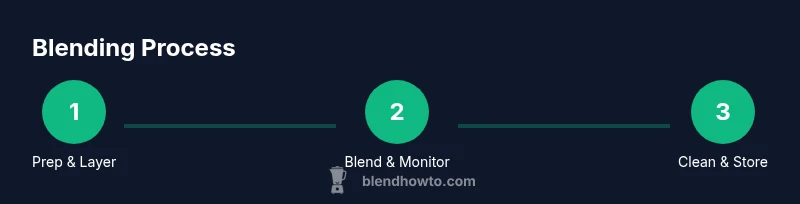
Blending is a sequence of setup, blending, and check-ins. Begin with your prepared ingredients and a measured amount of liquid. Turn on at a low speed to gently start the motion, then gradually increase to reach the desired texture. Pulse briefly if you need to break apart stubborn bits. Stop the blender and scrape the sides with a spatula if the mixture sticks to the walls. Finally, assess texture and adjust by adding liquid or pushing down stubborn pockets. This overview helps you get a feel for the process before diving into the exact steps.
Common mistakes and how to fix them
Common mistakes include overfilling the jar, not using enough liquid, and blending too aggressively from the start. Overfilling can stall the motor and create uneven textures. Not adding enough liquid can yield thick lumps. Blending at high speed for too long can heat ingredients, affecting flavor and texture. To fix, start with a low speed, scrape the sides, and add liquid gradually. If the texture is too thick, add a splash of water, juice, or milk and blend in short bursts. These checks will help you avoid common blunders when you put in blender.
Cleaning and maintenance after blending
Cleaning immediately after blending preserves blade sharpness and prevents staining. Rinse the jar and blades with warm water, then fill with warm water and a drop of dish soap. Run on a low speed for 30–60 seconds to loosen residue, then rinse thoroughly. For stubborn stains, use a baking soda paste on the jar (avoid aggressive scrubbing on blades). Always dry the jar and blades separately to prevent moisture-related corrosion. Regular maintenance, including blade sharpening where appropriate, will extend the life of your blender and keep your blends tasting fresh.
Blending ideas for flavor, texture, and nutrition
A well-rounded blender routine includes more than smoothies. Try sauces like tomato or avocado-based dips, creamy soups, or dressings. For better texture, blend ingredients with a variety of textures—soft fruit, fibrous greens, and creamy dairy—to learn how each component behaves when you put in blender. You can also experiment with frozen fruit for thicker textures or add spices last for a punch of flavor. The key is to rotate the ingredients and keep notes on what works best with your blender model. This experimentation will expand your repertoire while keeping your outcomes predictable.
Adapting blending for dietary needs and substitutions
Blending can accommodate many dietary preferences. Use plant-based milks for vegan blends, or sway toward dairy-free yogurt to reduce calories while preserving creaminess. For gluten-free or allergy-conscious recipes, avoid common allergens and substitute with safe ingredients. When dealing with kids’ smoothies, consider adding a natural sweetener like a small amount of frozen fruit or a touch of honey if appropriate. The core technique—how to put in blender safely and evenly—remains the same; simply tailor the ingredients to meet dietary goals.
Troubleshooting, tips, and quick reference resources
When you encounter a stuck batch, stop the blender and pulse with short bursts, then scrape down the sides. If the motor hums but doesn’t spin, unplug and check for obstructions. For hot blends, allow to rest before blending again and vent the lid to avoid pressure buildup. Keep a small notebook of what you blend and how it turns out; this becomes your quick reference guide for future batches. For ongoing learning, check official safety guidelines and reputable recipe resources to deepen your understanding of effective blending techniques.
Practical recipes to practice with at home
Start with simple blends to build confidence: a basic fruit smoothie with banana, berries, and milk; a creamy avocado-lime sauce; and a vegetable-based soup puree. As you become comfortable, add greens, seeds, and flavor boosters like ginger or cinnamon. Keep a few go-to proportions in mind and adjust to taste. The more you practice putting in blender, the more consistent your results will become, and you’ll be able to customize textures to your preference.
Tools & Materials
- Blender with secure lid and sharp blades(Choose a jar size that matches batch size (500-1500 ml typical).)
- Measuring cups/spoons(Accurate portions help consistency.)
- Cutting board and sharp knife(Prep ingredients into uniform pieces.)
- Silicone spatula or scraper(Scrape sides during blending for even texture.)
- Cold liquids (water, milk, juice)(Use appropriate liquids for flavor and texture.)
- Ice or frozen ingredients(Adds body; crushes better when pre-crushed.)
- Towel or cloth(Dry hands and wipe spills.)
- Ingredients for blending (fruits, vegetables, dairy or dairy-free milks)(Plan a batch based on texture you want.)
Steps
Estimated time: 20-30 minutes
- 1
Gather and plan
Collect all ingredients and decide on the target texture. Having a clear plan helps you layer ingredients correctly and avoids missing liquids or soft items.
Tip: Write a quick plan on a notepad to reference during blending. - 2
Prep ingredients to uniform pieces
Dice or slice ingredients into uniform chunks so they blend evenly and reduce the need for long blend times.
Tip: Aim for 1/2 to 1 inch pieces to balance blending speed. - 3
Add liquids first
Pour the liquids into the blender jar before solids to create a smooth base that pulls ingredients toward the blades.
Tip: Liquid-first helps avoid air pockets and motor strain. - 4
Layer softer ingredients next
Place soft fruits, yogurt, or dairy-free options above the liquids to ensure gentle blending and creaminess.
Tip: This order reduces skimming and helps texture stay uniform. - 5
Add harder solids last
Add fibrous vegetables or ice last to ensure blades can handle tougher textures without stalling.
Tip: Pulse briefly if needed to break up tough pieces before full blending. - 6
Start on low, then increase speed
Begin blending at a low speed to pull ingredients together, then gradually raise to achieve smoothness.
Tip: Avoid high-speed bursts at the start to prevent splashing. - 7
Check texture and scrape sides
Pause, open the lid, and scrape the sides to ensure an even blend.
Tip: Use a spatula for thorough scraping without creating air pockets. - 8
Finish with a final blend and adjust
Blend until you reach the desired smoothness, adding more liquid in small increments if needed.
Tip: Taste and adjust seasoning or sweetness as you go. - 9
Pour, enjoy, and clean promptly
Serve promptly for best texture and flavor; start cleaning the jar soon after to prevent residue setting.
Tip: Rinse and wash blades with caution; keep safety in mind.
Frequently Asked Questions
What should I do if my blender won’t start?
First, check that the blender is plugged in and the lid is securely in place. Inspect for any obvious jams or obstructions in the blades. If it still won’t start, verify the fuse or circuit and consult the manual for safety overrides.
Make sure it’s plugged in, the lid is on, and there’s no jam. If it still won’t start, check your fuse or circuit and consult the manual.
Can I blend hot soups in a blender?
Blending hot liquids is possible with many blenders, but use caution. Vent the lid, blend in small batches, and let the mixture cool slightly before resealing. If your blender isn’t rated for heat, cool the ingredients before blending.
Yes, but vent the lid and blend in small batches. If your blender isn’t heat-rated, cool the mixture first.
How do I clean a blender without wasting time?
Rinse, add warm water and a drop of dish soap, and run on low for 30-60 seconds. Rinse again and dry. For stubborn stains, use a baking soda paste on the jar and blade area.
Rinse, run warm soapy water, and rinse again. Wipe dry; use baking soda for stains if needed.
Why is my smoothie grainy or chunky?
Graininess usually comes from over-dense fibers or insufficient blending. Try cutting ingredients smaller, starting with liquids, and blending a bit longer. Adding a little more liquid can help smooth texture.
It happens when fibers aren’t fully broken down. Slice ingredients finer and blend longer with a bit more liquid.
What is the best order to add ingredients?
Liquids first, then soft ingredients, and finally hard solids. This order helps the blades pull ingredients toward them more efficiently and minimizes noise and strain.
Add liquids first, then soft items, and finally hard solids for smoother blending.
How can I adjust texture without starting over?
Add small amounts of liquid or ice and blend in short bursts to refine texture without over-thinning. Taste as you go to avoid flavor loss.
Add tiny amounts of liquid and pulse to refine texture. Taste as you adjust.
Watch Video
What to Remember
- Prepare ingredients with uniform size for consistent blends.
- Use liquids first to create a smooth base and prevent motor strain.
- Blend in stages and scrape sides for even texture.
- Start slow, then increase speed to desired smoothness.
- Clean promptly to preserve blade sharpness and flavor.