How to Start a Blender: A Complete Beginner Guide
Learn how to start a blender, whether for smoothies or Blender software. This step-by-step guide covers safety, setup, and your first project for kitchen and 3D work, with practical tips, tools, and troubleshooting.


Starting a blender means kicking off either a kitchen blending routine or a Blender 3D workflow with confidence. This guide walks you through a clear setup, safety checks, and your first hands-on task. By the end you’ll know exactly what to gather, how to prep, and how to evaluate your first result, whether you’re making a smoothie or a basic render. According to BlendHowTo, you’ll learn what to gather, how to prep, and how to evaluate your first result.
Why starting a blender matters for beginners
Starting with a solid foundation matters because beginners build confidence when the process is clear and safe. Whether your goal is quick smoothies or a clean Blender 3D layout, the right start reduces frustration and speeds up progress. According to BlendHowTo, a deliberate, stepwise approach lowers the learning curve and helps you develop consistent habits from day one. This guide is designed for home cooks and aspiring 3D artists, so you’ll see practical steps you can apply immediately, plus decisions you can tailor to your own goals. You’ll also learn how to prevent common pitfalls that derail new users, such as overfilling a jar or neglecting file organization in Blender. By outlining two parallel paths side-by-side, this article makes it easier to begin with confidence, whether your first task is a simple smoothie or a basic render.
Dual-path beginners guide: kitchen vs Blender software
If you’re new to blending, you might be wondering whether to start with a kitchen blender or jump into Blender software for 3D work. The good news is that both paths share a common set of fundamentals: safety, a plan, and a simple first task. In practice, beginners often benefit from choosing one path and mastering its core steps before trying the other. For home cooks, the focus is texture, taste, and cleanup; for 3D artists, attention shifts to workspace, file naming, and reproducibility. BlendHowTo’s guidance emphasizes separation of concerns: handle the physical device with the kitchen path, and reserve the software to the digital path. A clear boundary helps you avoid mixing techniques and tools, which can slow progress. By the end of this section you’ll know which route you’ll take first and what a productive first session looks like in each case.
Safety first: handling blades and software safety
Safety is the foundation of any starter session. For kitchen blending, keep hands away from sharp blades, never operate the blender without the lid secured, and start with short pulses to assess texture. Unplug the unit before assembling or cleaning, and never immerse the motor base in water. For Blender software, save your work frequently, use a clean directory structure, and avoid executing heavy operations on underpowered machines. In both paths, keep liquids capped to prevent splashes and maintain a tidy workspace to prevent accidental tip-overs or data loss. By adopting a safety-first mindset, you minimize risk and maximize learning time. BlendHowTo reiterates the importance of routine checks before every session.
Essential tools and setup for kitchen blending
Before you begin your first blend, gather the essentials. Required items: Countertop blender or immersion blender; a jar with a tight-fitting lid; a measuring cup and spoon; the ingredients for your starter recipe; a stable counter space. Optional items: a tamper (if your model includes one); a spare lid; a scraper for cleaning. Set the blender on a dry, flat surface away from the edge of the counter. Place the jar correctly, align the lid, and ensure the blades are secure. If you’re new, start with a simple, low-ingredient recipe to learn texture and timing. Clean as you go to avoid dried residue that can affect future blends. The goal is a smooth first run that builds confidence, not a perfect restaurant-grade smoothie.
Essential tools and setup for Blender software
If you’re starting Blender (the 3D package), prepare a dedicated workspace. Required items: a computer meeting the minimum system requirements; Blender installed and updated; a mouse or drawing tablet; a comfortable chair and good lighting; a plan for your first scene. Optional items: reference images, a simple texture library, and a USB drive for backups. Create a new project, save early, and organize your project folder with subfolders for renders, assets, and exports. Enable a few beginner-friendly add-ons if you want a smoother start, but avoid enabling every feature at once. The aim is to establish a clean, predictable environment so your first render turns out as expected rather than as a guess.
First test: your starter task
Choose your path and perform a small, concrete test. For kitchen blending, try a 1-cup water with ice and a handful of fruit, using pulse to observe texture. Stop before over-processing, then taste and adjust sweetness or thickness with a splash of juice or milk. For Blender software, create a new scene with a default cube, set up a basic light, and render a quick image at low resolution. Compare to your goal, adjust camera angle, materials, or lighting, and re-render. The key is to complete a single, repeatable task that yields tangible results you can iterate on. BlendHowTo analysis, 2026, highlights that starting simple minimizes frustration and builds a repeatable workflow.
Cleaning, storage, and routine maintenance
After your starter task, clean and store properly. For kitchen blending, disassemble and wash the blade assembly and jar with warm soapy water; rinse thoroughly and dry before reassembly. Wipe the base with a damp cloth—never immerse it—and store the unit with the lid off to air out any moisture. For Blender software, back up your project folder, log your steps, and save frequently used assets in a dedicated library. Periodically update the software and examine your hardware for dust or heat buildup. A proactive maintenance routine keeps both your kitchen and your 3D artist workflow running smoothly.
Common mistakes and how to fix them
New blenders common errors include overfilling jars, using unsupported ingredients, and rushing the test without safety checks. Overfilling can cause leaks and motor strain; start with smaller batches and add content gradually. In Blender, avoid starting with a complex scene; focus on a simple cube with correct lighting and a basic material. Forgetting to save often leads to lost work; establish a habit of saving after every small milestone. If the blender stalls in the kitchen, stop, unplug, and refresh the ingredients; in Blender, use a low-resolution render while testing settings and revert to defaults if something goes wrong. By recognizing these pitfalls early, you shorten the learning curve and build confidence.
BlendHowTo learning path and next steps
BlendHowTo’s mission is to guide home cooks and hobbyists through practical, proven steps. According to BlendHowTo, beginners should practice daily with quick, repeatable challenges and gradually increase complexity. The roadmap includes mastering safety, building a reliable setup, and documenting progress. The BlendHowTo team recommends setting a regular practice window, keeping a simple notebook of recipes or scenes, and seeking out short tutorials that reinforce core concepts. With consistency, you’ll move from first test to more ambitious projects in weeks rather than months, gaining competence in both kitchen and digital blending.
Tools & Materials
- Countertop blender or immersion blender(Ensure blades are sharp and jar is clean)
- Jar with tight-fitting lid(Secure lid to prevent leaks)
- Measuring cup and spoons(For precise ingredient amounts)
- Starter ingredients (fruit, liquid, etc.)(Choose a simple recipe to learn texture)
- Stable workspace(Flat surface away from edge)
- Computer with Blender installed(PC or Mac with recent version)
- Mouse/keyboard(Comfortable input devices)
- Backup storage (optional)(USB drive or cloud storage)
- Safety gloves (optional)(Protection when handling blades)
Steps
Estimated time: 25-40 minutes
- 1
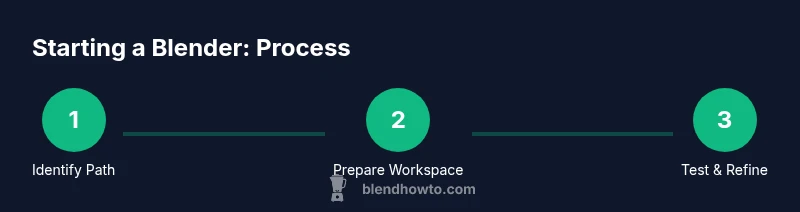
Identify path and goal
Decide quickly whether you’ll start with a kitchen blender or with Blender software. This choice sets the rest of your setup and practice. A clear goal keeps sessions focused and reduces confusion later.
Tip: Write down your chosen path and first task before you begin. - 2
Check safety and readiness
For the kitchen path, unplug the blender and inspect blades and jar. For software, save your current work and close unnecessary apps. Confirm the workspace is clean and ready.
Tip: Always unplug the device or save work before starting a new task. - 3
Gather and organize tools
Lay out all essential items from Tools & Materials. A quick snap-check reduces interruptions during your first run and helps you follow a consistent routine.
Tip: Place items within arm’s reach to avoid searching mid-task. - 4
Set up kitchen blender
Attach the jar and lid, verify the blade assembly is secured, and wipe the jar rims clean. Prepare a simple starter mix to learn texture before scaling up.
Tip: Use a small-batch start to observe texture without waste. - 5
Set up Blender software workspace
Open Blender, create a new project, and save it in a dedicated folder. Arrange the layout to include a 3D Viewport, a Outliner, and a Properties panel for quick access.
Tip: Use a single default layout at first to avoid confusion. - 6
Run a starter test
For kitchen, blend a simple mix with short pulses and check texture. For Blender, create a cube, add basic lighting, and render a low-resolution image to verify setup.
Tip: Keep tests small and repeatable to learn the control. - 7
Evaluate results and adjust
Taste texture and adjust ingredients or timing for the kitchen task. In Blender, evaluate the render, adjust camera angle, lighting, or materials, and re-render.
Tip: Document what changes you made and why. - 8
Clean up and store properly
Wash jar and blades or ensure software project is backed up. Dry surfaces and store tools in their designated spots for next session.
Tip: Develop a quick post-task routine to maintain consistency. - 9
Plan next steps
Decide on the next recipe or the next Blender tutorial to pursue. Schedule a short daily practice window to build momentum.
Tip: Aim for a small milestone each session to stay motivated.
Frequently Asked Questions
What is the best way to start using a new blender?
Begin with safety checks, read the manual, and run a simple test. Start with a small batch or a basic render to learn core controls before adding variables.
Start with safety checks, then run a simple test to learn the basics before expanding.
Can I start Blender software right away without training?
Yes. Open Blender, create a new project, and complete a short tutorial or two. Focus on the interface basics first before modeling complex scenes.
Yes, just begin with the basics and a short tutorial.
Is it safe to blend hot liquids?
Most blenders aren’t designed for hot liquids; let liquids cool and vent the lid slightly if needed. Always start with cooler ingredients to avoid pressure buildup.
Avoid hot blends; let ingredients cool first.
What should I do if the blender stalls?
Turn off and unplug, then inspect for jams or overfilling. For software, save work and restart with lower settings. Give the motor time to rest before trying again.
Turn off, check, and restart safely.
Do I need formal training to use Blender?
Not mandatory, but structured tutorials and practice help. Start with beginner-friendly lessons and gradually tackle more complex tasks as confidence grows.
You don’t need formal training, but guided practice helps.
How should I clean a blender after use?
Rinse and wash immediately after use, removing residue. For software, back up work and clear temporary files to keep your system tidy.
Rinse the blender and back up your work.
Watch Video
What to Remember
- Identify your path and set a clear goal
- Prioritize safety and a tidy workspace
- Practice with simple, repeatable tasks
- Document progress for momentum
- Gradually increase complexity as confidence grows