Immersion Blender Target: How to Choose the Right Immersion Blender
Learn how to define the immersion blender target for home kitchens, compare power, attachments, and ergonomics, and choose a model that suits soups, sauces, and smoothies. Practical guidance, buyer tips, and a shopping checklist.


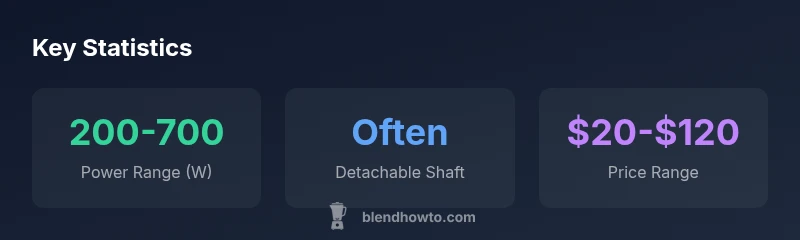
The immersion blender target for most home cooks is versatility across small-batch blending tasks like soups, sauces, smoothies, and emulsions. Look for a model in the 200–700 watt range with a comfortable handle, a detachable shaft for easy cleaning, and a splash guard. For budget shoppers, entry-level units offer solid performance; for frequent use, prioritize power, durability, and ease of cleaning.
What is the immersion blender target and why it matters
The term immersion blender target refers to the typical tasks and buying criteria home cooks should prioritize when selecting a stick blender. For many kitchens, understanding this target helps align power, ergonomics, and accessories with real cooking needs. In this guide, we explore how to identify your own immersion blender target and translate it into concrete shopping decisions that save time and improve results. If you’re optimizing for soups, emulsions, and smooth purees, the right model makes a noticeable difference in texture and ease of use.
Common target tasks for immersion blenders
In everyday cooking, immersion blenders excel at small-batch blending tasks that would otherwise require moving to a countertop blender. Typical target tasks include creamy soups, puréed sauces, smoothies directly in a cup, emulsified dressings, and baby-food purees. Home cooks value models that blend quickly without splashes, handle hot liquids safely, and clean up easily. By mapping your tasks to a blender’s features, you avoid paying for capabilities you won’t use and pick a model that genuinely fits your kitchen rhythm.
Key specs to compare when shopping
Different immersion blenders offer a range of specs that matter to the target tasks described above. Power (watts) influences the ability to blend dense ingredients and heat-resistant liquids; look for models in a practical range that balances performance with noise and durability. Attachment options matter: a detachable shaft, whisk, and mini-chopper expand versatility. Shaft length and blade design affect reach and texture, while materials and build quality influence longevity and dishwasher compatibility. Finally, check control options (pulse modes, variable speed) for precision.
Performance demonstration: soups, sauces, emulsions
A good immersion blender should turn chunky vegetables into silky soups with minimal effort. In sauces, it should emulsify vinaigrettes and keep oils from separating. For smoothies, it should achieve a creamy texture without large air bubbles. In practice, test models with a hot soup, a thick purée, and a vinaigrette to observe texture, consistency, and any splatter. The right target model will maintain steady blending with minimal fatigue and splash, even when you’re in a rush.
Ergonomics and design considerations
Ergonomics impact how often you reach for the tool. Look for a comfortable grip shape, balanced weight, and a shaft with a non-slip finish. A longer shaft helps reach the bottom of pots, while a shorter one is easier to maneuver in small bowls. Consider noise levels and a snug splash guard to protect your countertop. Accessible parts and intuitive controls reduce learning curve and increase repeated use.
Maintenance and cleaning best practices
Cleaning should be quick rather than a chore. Detachable shafts and dishwasher-safe blades simplify post-cooking cleanup. Rinse immediately after use to prevent foods from drying on blades, and follow manufacturer guidance on disassembly. If your blender includes a whisk or mini-chopper, clean those attachments separately. Regular inspection for wear, seals, and blade sharpness preserves performance over time.
Price, warranty, and value considerations
Prices for immersion blenders span a broad range, driven by power, build quality, and attachments. In most markets, expect budget models to underperform on longer blends, while mid-range units offer a good balance of power and durability. Premium models justify their price with stronger motors, quieter operation, extra attachments, and longer warranties. When evaluating value, consider how often you’ll blend, what you’ll blend, and how easy it is to clean and maintain over years.
Practical shopping checklist and quick-start guide
Use this checklist to confirm a model matches your immersion blender target:
- Define your primary tasks (soups, emulsions, smoothies)
- Confirm power range and noise level suits your kitchen
- Verify detachable shaft and included attachments fit your needs
- Check dishwasher-safe parts and warranty length
- Compare weight, balance, and grip comfort
- Read user reviews focusing on real-world durability and ease of use
Quick-start guide:
- Decide on essential attachments; 2) Inspect shaft length and guard design; 3) Test for comfortable grip and control access; 4) Clean immediately after use to prolong life.
Model comparisons for immersion blender types
| Model Type | Power (W) | Detachable Shaft | Typical Tasks |
|---|---|---|---|
| Handheld immersion (home) | 200-600 | Yes | Soups; sauces; smoothies |
| Corded professional | 600-1000 | Yes | Purees; emulsions; hot soups |
| Cordless mini | 120-300 | Yes | Light blending |
Frequently Asked Questions
What is the immersion blender target?
The target describes the typical tasks and criteria you should prioritize when choosing a stick blender, such as power, attachments, and ease of cleaning. It helps narrow options to what you will actually use.
The immersion blender target helps you pick models that fit your cooking tasks.
What tasks should immersion blenders handle best?
They should puree soups, emulsify dressings, blend smoothies, and puree baby food effectively. Prioritizing models that excel at these tasks ensures practical results.
They’re great for soups, sauces, and smoothies.
Do I need a detachable shaft?
A detachable shaft makes cleaning easier and lets you swap attachments for different tasks. It also simplifies storage and maintenance.
Yes, detachable shafts simplify cleaning and increase versatility.
Are cordless immersion blenders suitable for heavy blending?
Cordless units are convenient but often limited by runtime and power; for frequent heavy blending, corded models are more reliable.
Cordless are handy, but they may not keep up for long blends.
What watt range is ideal for a home kitchen?
For most home uses, a model in the 200–600 watt range covers soups, sauces, and smoothies.
Look for about 200–600 watts.
How should I clean an immersion blender after use?
Rinse the shaft and blades immediately, detach attachments, and follow the manufacturer’s dishwasher guidance if available.
Rinse after use and detach parts for cleaning.
“When buyers align their goals with the immersion blender target, they select tools that deliver consistent texture and less cleanup. The BlendHowTo Team emphasizes ergonomics and detachable parts as non-negotiables.”
What to Remember
- Define your immersion blender target before shopping.
- Prioritize detachable shaft for easy cleaning.
- Aim for 200–700 watts for versatility.
- Choose a comfortable grip and balanced weight.
- Check attachments and dishwasher-safe parts.