Can You Put Blender Bottle in Freezer? A Practical Guide
Learn whether you can safely freeze a blender bottle, how to prep, and best practices to protect materials, seals, and drink quality. A practical guide for home cooks and hobbyists.


Yes, you can temporarily freeze a blender bottle to chill a smoothie quickly, but with careful limits. If you’re wondering can you put blender bottle in freezer, the safe path is short-term chilling, not long-term storage. Check the bottle material, gasket, and cap design, and avoid freezing carbonated mixtures or liquids with high acidity.
Can you put blender bottle in freezer safely? Key considerations
If you’re asking can you put blender bottle in freezer, the short answer is yes for brief cooling, but only under safe conditions. The freezer should be used as a rapid chill tool rather than a storage solution. The bottle’s material, cap design, and gasket integrity determine whether freezing will create cracks, leaks, or seal failure. Carbonated drinks, pressurized shakes, and extremely acidic mixtures increase risk of expanding liquids and damaged seals. In most cases, a quick chill in a fridge or an ice bath achieves cooling with less risk. For BlendHowTo readers, this guidance emphasizes evaluating material compatibility, door proximity, and the difference between chilling and freezing.
Material safety and compatibility: bottles, lids, and gaskets
Not all blender bottles are created equal when exposed to freezing temperatures. BPA-free plastics and certain polycarbonates may tolerate short freezes, but others can become brittle or crack under expansion. Lids with rigid threads and gaskets can deform, leading to leaks. Before freezing, inspect for cracks, warped threads, or degraded gaskets. If any damage is visible, do not freeze the bottle. When in doubt, consult the manufacturer’s guidelines and favor durable, freezer-safe options designed for liquids.
Temperature, liquids, and expansion: what to freeze and what not
Freezing expands liquids, which can stress the bottle walls and caps. Water-rich or sugar-heavy blends may be more prone to pressure build-up. Carbonated beverages should never be frozen in a blender bottle because the pressure can pry lids or burst containers. Thick smoothies with frozen fruit can chill effectively, but avoid very frosty textures that press on seals. If you are unsure, dilute concentrates with water prior to freezing to reduce expansion and viscosity.
Freezer prep, storage, and labeling best practices
Preparation reduces risk and keeps the bottle usable after thawing. Rinse the bottle and lid, dry thoroughly, and avoid leaving moisture inside the cap area, which can freeze into ice. Label frozen bottles with a date and intended contents to prevent mix-ups. Place the bottle on a shelf away from the freezer door to reduce temperature fluctuations. Use a liner or sealed bag to catch leaks in case of breakage, and separate from items with strong odors to avoid flavor transfer.
Alternatives to freezing and quick-use tips
If your goal is to cool a smoothie fast, consider alternatives to freezing the bottle itself. Chill the bottle in the fridge for 15–30 minutes, or use an ice bath with a sealed container. For rapid cold without risk, pre-chill liquids or use metal bottles that are designed for temperature retention. When you absolutely must use a blender bottle, only freeze if the bottle is explicitly labeled freezer-safe, and limit storage time to a short window.
Common misconceptions and safety myths
Some home cooks believe freezing any bottle is harmless, but long-term exposure can degrade plastic and seals. Others assume metal lids are always safe; metal-to-metal contact can transfer cold more aggressively and cause condensation inside. Understanding the limits of your bottle’s design helps prevent leaks and cracks. Always treat freezer use as an exception, not a regular practice, and prioritize safety over convenience.
Tools & Materials
- Blender bottle (freezer-safe, BPA-free recommended)(Check for a freezer-rated symbol or manufacturer guidance before freezing)
- Freezer-safe container or zip-top bag(Use to contain any leaks if the bottle cracks)
- Permanent marker or waterproof label(Date and contents clearly labeled)
- Dish soap and sponge(For post-thaw cleaning to remove any residual flavors)
- Towel or drip mat(Protects surfaces from moisture in case of leaks)
- Liners or silicone mat (optional)(Helps prevent direct pressure on the bottle during freezing)
Steps
Estimated time: Active prep: 10-15 minutes; waiting/chill time: 15-60 minutes
- 1
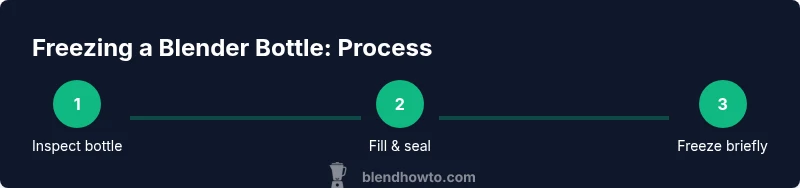
Inspect bottle and cap for integrity
Visually inspect the bottle body, threads, and gasket for cracks or damage. If you see any imperfections, do not proceed with freezing. Damaged seals can leak or fail under cold temperatures.
Tip: Even minor scratches can propagate; err on the side of caution and replace damaged bottles before freezing. - 2
Decide fill level and liquid readiness
Fill the bottle only to a safe level with a beverage that won’t foam aggressively. Avoid carbonated liquids, and leave a small air gap to accommodate expansion during chilling.
Tip: If in doubt, dilute concentrates with water to reduce expansion pressure. - 3
Seal tightly and label
Ensure the gasket is seated correctly and the cap is screwed on firmly. Label the bottle with the contents and date to avoid confusion after thawing.
Tip: Use a waterproof marker and place the label on the side away from the cap so it’s visible after storage. - 4
Place in freezer properly
Position the bottle on a stable shelf away from the freezer door. Do not allow metal parts to contact other metal objects; place it in a bag or liner if you fear leaks.
Tip: Keep the bottle away from heavily odorous foods to avoid flavor transfer. - 5
Wait for cooling period
Let the beverage chill for a short period, typically 15–60 minutes, rather than leaving a bottle fully frozen for hours. Do not shake or open during this period.
Tip: Short cooling minimizes expansion risk and preserves seal integrity. - 6
Remove, thaw, and reuse safely
Thaw the bottle in the fridge or at room temperature before opening. Rinse thoroughly after thawing, then shake or mix as needed.
Tip: Avoid hot water or microwaving to speed thaw; even heat can warp seals.
Frequently Asked Questions
Can you freeze a blender bottle with liquid inside?
Yes, you can freeze with liquid inside for short-term cooling, but only if the bottle and lid are freezer-safe and you avoid carbonated or highly pressurized liquids. Always inspect for damage first.
Yes, you can freeze with liquid inside for a short cooling period, provided the bottle is labeled freezer-safe and you avoid carbonated drinks. Check for damage before freezing.
Will freezing affect the bottle’s material or seal?
Freezing can stress certain plastics and gaskets, causing cracks or leaks if the bottle isn’t designed for cold temperatures. Always use a freezer-safe bottle and inspect seals before and after freezing.
Freezing can weaken some plastics and gaskets, so only use bottles rated for freezing and check seals before and after.
Is it safe to thaw frozen drinks directly in the bottle?
Thawing in the bottle is often not ideal because remaining ice can re-seal, and the bottle may take longer to thaw evenly. Transfer to a glass or plastic container if possible and wash after use.
Thawing directly in the bottle isn’t ideal; transfer contents to another container if possible and clean the bottle after thawing.
What should I do if the bottle leaks in the freezer?
If a leak occurs, move the bottle to a sealed bag or container to prevent spills and odors. Do not reuse the bottle until you’ve inspected and cleaned the area, and replace damaged parts.
If leaks happen, contain them in a bag, clean thoroughly, and replace damaged parts before reuse.
How long can a liquid stay in a blender bottle in the freezer?
Limit freezer time to brief periods for cooling, not storage. Use a timer and remove promptly, then thaw safely before reuse.
Keep it short; don’t store frozen liquids long-term in a blender bottle. Thaw promptly.
Watch Video
What to Remember
- Inspect bottle integrity before freezing
- Avoid carbonated liquids and overfilling
- Seal tightly and label clearly
- Thaw safely and clean after use