Blender Oats: A Practical Guide to Creamy, Quick Breakfasts
Learn to make creamy blender oats for fast breakfasts and smoothies with practical tips, substitutions, and step-by-step guidance from BlendHowTo.


Blender oats are a fast, flexible base for breakfasts and smoothies. Quick method: blend 1 cup rolled oats with 1–1.5 cups milk or yogurt until creamy, then adjust texture with more liquid or a few extra seconds. This approach minimizes lumps and speeds prep, giving you a smooth, versatile oat foundation. According to BlendHowTo, start simple and customize with add-ins.
What are blender oats and why they matter
Oats blended with liquid create a smooth breakfast base, smoothie, or batter—hence the appeal of blender oats for busy kitchens. Blender oats are simply rolled oats or quick oats that are minced in a blender with milk, yogurt, or a plant-based alternative until creamy. The BlendHowTo team notes that this approach reduces clumps, speeds up prep, and yields a versatile base you can flavor in countless ways. For home cooks, blender oats offer a predictable texture and easy portioning, whether you want a thick bowl, a pourable smoothie, or a base for baked goods. The technique works best when you start with quality oats, a warm or room-temperature liquid, and a blender with steady blades. As you practice, you’ll learn how long to blend for different textures and how to balance sweetness and acidity with add-ins. According to BlendHowTo, warming liquids slightly can help achieve a smoother blend and richer mouthfeel.
Choosing the right oats and liquids
The type of oats you choose heavily influences texture. Rolled oats blend to a creamy, spoonable consistency quickly, while quick oats blur into a smoother, thinner result. Steel-cut oats are more challenging; they require soaking or longer blending and often don’t reach the same velvety finish without a high-powered blender. For liquids, dairy milk creates a classic creamy base, while plant-based milks (oat, almond, soy) keep flavors light and versatile. Yogurt adds tang and body, and water can thin things to a drinkable texture. BlendHowTo suggests starting with 1 cup oats to 1 cup liquid for a balanced base, then adjust by adding more liquid for smoothies or less for a bowl. If you’re aiming for gluten-free results, ensure the oats are certified gluten-free to avoid cross-contamination. Consider adding a pinch of salt to enhance sweetness and flavor depth. Consistency comes from practice—blend in short bursts and check texture between intervals.
Texture outcomes: smoothies, bowls, and oat flour
Blender oats can yield several textures depending on blend time and liquid ratio. A quick 15–20 second blend creates a drinkable smoothie with a light body, while a 30–45 second blend (or more) yields a thick, spoonable bowl ready for toppings. If you want oat flour instead of a drink, pulse longer until the grains look powdery, then sift to remove any larger particles. For bowls, aim for a thick, creamy texture that still pours slowly from the blender jar. Over-blending can break down fats and change flavor perception, so use short bursts and check after each interval. Flavor and nutrition expand with add-ins like fruits, nuts, seeds, spices, and a touch of sweetener. BlendHowTo emphasizes balancing creaminess with brightness from acids like yogurt or citrus.
Equipment and blending basics
A sturdy blender with a reliable blade is key to smooth blender oats. High-speed models tend to produce creamier results with less effort, but you can achieve great results with mid-range machines by using gentle pulse cycles. Start on a low speed to incorporate oats and liquid, then switch to a higher setting for a short burst. Avoid overfilling the jar, which can cause splashing and uneven blending. If your blender has a tamper, use it to push oats toward the blades during the initial blending. For hot blends, take care to vent steam or blend in short bursts to prevent pressure buildup. Cleaning is simpler if you rinse the jar promptly after blending and wash the blades with warm soapy water.
Step-by-step overview: approach to blender oats
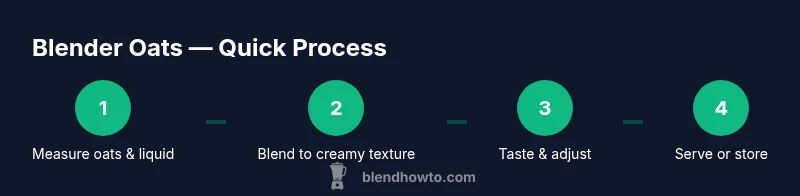
Crafting the perfect blender oats base involves a repeatable routine. Begin by gathering ingredients, then add oats and liquid to the blender. Pulse or blend at a gentle pace until the mixture is creamy with no visible oat bits. Taste and adjust sweetness, acidity, and thickness, adding more liquid or yogurt as needed. Finally, decide whether to serve immediately, chill, or store for later. This process creates a reliable, repeatable base you can customize for every day of the week. The BlendHowTo method emphasizes restraint: small adjustments beat large, ham-fisted changes.
Flavor ideas and add-ins
Elevate blender oats with a range of flavors. Cinnamon, vanilla, cocoa powder, or a pinch of salt bring warmth; fresh or frozen fruit adds brightness and natural sweetness. For texture contrast and protein, fold in a scoop of nut butter, chia seeds, or Greek yogurt after blending. If you want a dessert-like treat, blitz a small amount of dark chocolate, peanut butter, or maple syrup. Nut milks and seeds introduce healthy fats, while citrus zest or a squeeze of lemon can brighten the oats without overpowering them. Keep an eye on sweetness and acidity to balance flavors, especially when using yogurt or fruit juices. The goal is a well-rounded, satisfying base.
Troubleshooting and safety notes
Lumps usually mean the oats need more blending time, more liquid, or a finer oat type. Start with shorter pulses and add liquid gradually to reach your target texture. If the mixture looks gritty, pulse again in short bursts rather than running the blender continuously. Overheating can occur with very thick batters or high-speed blending for long periods, so take breaks and stir the mixture if needed. Never blend hot liquids without a vented lid; allow steam to escape and blend in intervals. If your blender struggles, switch to a smaller batch size or soak oats briefly (10–15 minutes) to soften them and reduce resistance. BlendHowTo recommends cleaning the blades promptly to prevent odor and residue buildup.
Clean-up and storage
Rinse the blender jar with warm water immediately after use, then wash with soap to remove any residue. Dry thoroughly to prevent odor and mildew. For storage, keep blender oats bases in an airtight container in the fridge for up to 3 days. You can also portion into freezer-safe bags or jars for quick future smoothies or breakfasts; freeze for up to 1 month and thaw in the fridge before blending. If freezing, add a little extra liquid during reheating to restore creaminess. Label containers with date and contents for easy rotation.
Tools & Materials
- Blender (standard countertop blender)(Look for 600–900W motor for smoother blending; glass jar is easier to clean)
- Rolled oats(Store in an airtight container; start with 1 cup per batch)
- Liquid (milk, yogurt, or plant-based milk)(1–1.5 cups; adjust for desired thickness)
- Optional flavorings (sweetener, cinnamon, vanilla)(Add to taste)
- Mixing bowl or serving jar(Use airtight jar for on-the-go)
- Spatula or spoon(For scraping and serving)
- Measuring cups/spoons(Helpful for precise portions)
Steps
Estimated time: 20-30 minutes
- 1
Gather ingredients and tools
Assemble rolled oats, liquid, and any add-ins. Have your blender, measuring tools, and serving jar ready to minimize interruptions. This ensures a smooth workflow from start to finish.
Tip: Pre-measuring avoids mid-blend pauses and helps keep texture consistent. - 2
Add oats and liquid to blender
Pour liquids first, then add oats to the blender jar. This helps prevent dry pockets and encourages even hydration as blending starts.
Tip: Start with the lower liquid amount; you can add more after the initial blend if needed. - 3
Blend to creamy texture
Run at low speed to incorporate oats, then blend on medium-high for 15–30 seconds. Check texture; avoid over-blending to prevent a thin, pasty mouthfeel.
Tip: Pause to scrape down the sides if oats cling to the jar. - 4
Taste and adjust
Taste your blend and add sweeteners, salt, or citrus to balance flavors. If too thick, blend in small increments of liquid until you reach the desired consistency.
Tip: A splash of yogurt or lemon zest can lift flavors dramatically. - 5
Serve or store
Enjoy immediately as a smoothie or bowl, or transfer to an airtight container for later. For storage, refrigerate up to 3 days and re-blend briefly before serving.
Tip: Dividing into single-serve portions saves time on rushed mornings. - 6
Clean the blender
Rinse the jar, add warm water and a drop of dish soap, and run for 20–30 seconds. Dry thoroughly before the next use.
Tip: Cleaning right away prevents oat residue from hardening and sticking to blades.
Frequently Asked Questions
What is blender oats and what can I make with it?
Blender oats are oats blended with liquid to create a smooth base that can be used for smoothies, bowls, or as a baking batter. This technique minimizes lumps and speeds up prep, making it perfect for busy mornings.
Blender oats blend oats with liquid to make a smooth base you can drink or eat with toppings.
Can I use steel-cut oats in blender oats?
Steel-cut oats require longer blending or soaking and may not achieve the same creamy texture as rolled oats. If you only have steel-cut oats, soak them for 20–30 minutes and blend in short bursts.
Steel-cut oats can work but usually need soaking and longer blending.
How do I prevent lumps in blender oats?
Use rolled oats, add liquid gradually, and blend in short bursts. Scrape the sides of the jar between bursts to ensure even hydration.
Pulse in short bursts and scrape the sides to prevent lumps.
Are blender oats gluten-free?
Oats are naturally gluten-free but can be contaminated during processing. Choose certified gluten-free oats if you need strict gluten avoidance.
Choose certified gluten-free oats if you need to avoid gluten.
How long will blender oats leftovers last?
Leftovers can be refrigerated for up to 3 days. Re-blend briefly to restore texture before serving.
Re-blend leftovers before drinking or eating.
Can I bake with blender oats?
Yes. Use blender oats as the base for batter, or pulse longer to make oat flour for baking. Expect slightly different texture than traditional flour.
You can use blender oats to make batter or oat flour for baking.
Watch Video
What to Remember
- Measure oats and liquids consistently for predictable texture.
- Choose rolled or quick oats for best blend; avoid steel-cut without soaking.
- Use short blending bursts to control texture and avoid overheating.
- Enhance flavor with strategic add-ins—fruits, spices, and dairy or alternatives.
- Store leftovers properly to preserve creaminess and freshness.