How to Start a Ninja Blender: A Beginner's Guide
Learn how to start a Ninja blender with safe setup, core features, step-by-step operation, cleaning tips, and beginner-friendly ideas. This educational guide from BlendHowTo helps home cooks blend confidently.


With a Ninja blender, you’ll quickly move from unboxing to confident blending. This guide covers model setup, safety basics, how to start ninja blender, jar assembly, ingredient layering, and simple first recipes. By following these steps, you’ll start smoothly and avoid common mistakes. According to BlendHowTo, choosing the right jar size and using the correct speeds yields the best results for smoothies, sauces, and crush blends.
Understanding Ninja Blender Basics
A Ninja blender is a versatile kitchen appliance designed to handle a range of tasks from smoothies and sauces to crushed ice and nut butters. Although models vary, most Ninja blenders share a few core ideas: a powered base, a jar with designed blades, a tight-sealing lid, and a control panel with multiple speeds or presets. For beginners, the goal is to learn how to move from preparation to a smooth result without overworking ingredients. This section outlines common capabilities, typical use cases, and how to plan your first blending session so you can see results quickly and with less waste.
Safety First: Setup, Cleaning, and Maintenance
Safety starts before you plug in. Always ensure the blender is unplugged during assembly and cleaning. Inspect the blades for nicks or dullness and check the jar for cracks. Never blend without the jar securely attached to the base, and avoid overfilling beyond the max line. After blending, wash the jar, lid, and blades with warm soapy water, taking care with sharp edges. Regular descaling isn’t usually necessary for home use, but wipe the base and control panel with a damp cloth and dry thoroughly to prevent moisture from entering the electronics.
Choosing the Right Model and Accessories
Ninja offers a range of blenders with different jar sizes, blade configurations, and accessories. When starting out, focus on compatibility between the jar and base you own or plan to buy, the presence of a secure lid with a cap, and whether the model supports pulses or timed presets. If you’ll blend hot ingredients or dense mixtures, consider models with strong blades and robust sealing that minimizes leaks. Accessories such as extra jars, tamper tools, and lids can expand versatility, but start with the essentials to keep things simple and affordable.
Ingredient Handling and Layering for Best Results
A successful blend often starts with how ingredients are arranged inside the jar. Start with liquids to provide a liquid barrier for blades, then add soft fruits or vegetables, followed by harder items like ice or frozen fruit. Dry powders, seeds, and nuts should go near the bottom or be pre-soaked to prevent clogging. For creamy textures, avoid overfilling and blend in short bursts to monitor texture. Practical batching helps you learn how different ingredients respond to speed and time.
Operating Tips: Speeds, Pulses, and Textures
Think of blending as a controlled process. Begin at a low speed to break down larger pieces, then gradually increase to medium or high speeds as needed. Use pulse or short intervals to prevent over-processing and to manage thick textures. If the blend sticks to the sides, stop, scrape, and re-seat the lid before continuing. For smoother results, blend in short bursts rather than running continuously, and let the machine rest briefly if it overheats.
Cleaning and Troubleshooting Basics
Always unplug before disassembly. Rinse the jar and blades immediately after blending to prevent food from drying on the blades. Wash with warm, soapy water and use a soft brush to clean hard-to-reach corners. If the blender won’t start, check that the jar is properly seated and the lid is securely in place. Refer to the manual for interlock features, especially if your model has a safety mechanism that prevents operation with the jar detached.
Quick-Start Recipe Ideas for Beginners
Try a simple smoothie with frozen fruit and yogurt, a green smoothie with leafy greens and a splash of juice, or a quick tomato-based salsa for snacking. Start with 1–2 cups of liquid, add ingredients in the recommended order, and stop blending when you reach the desired texture. These starter recipes help you learn how speed and order affect flavor and mouthfeel, while keeping cleanup easy.
Tools & Materials
- Ninja blender base(Power cord intact; base flat on a stable surface)
- Ninja blender jar (pitcher)(Ensure jar is compatible with your base model)
- Lid with cap(Cap should seal tightly; use vent if recommended for hot blends)
- Blade assembly(Handle with care; avoid touching sharp edges)
- Tamper (if included)(Useful for thick blends; not all models include it)
- Measuring cups/spoons(Helpful for precise recipes)
- Dish soap and sponge(For safe cleaning of jar, lid, and blades)
- Non-slip mat or towel(Place under the base to prevent sliding)
Steps
Estimated time: 25-40 minutes
- 1
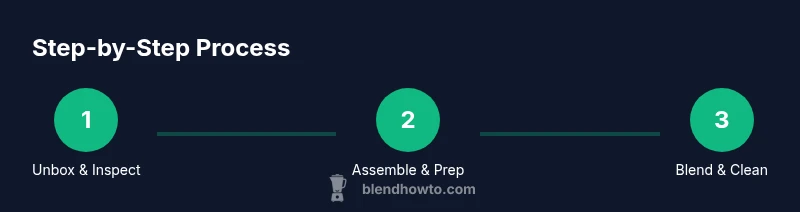
Unbox and identify parts
Open the box and lay out the base, jar, blade assembly, and lid. Confirm all pieces are present and free of damage. This initial check prevents missing parts mid-recipe.
Tip: Take a quick photo of the contents to reference during assembly. - 2
Place base on a stable surface
Set the base on a flat, stable counter. Ensure the area is dry and free of clutter. A stable base reduces vibration and improves blending safety.
Tip: Use a non-slip mat under the base if your counter is slick. - 3
Attach jar to the base
Align the jar with the base’s locking mechanism and twist until it sits securely. Do not force if it doesn’t seat properly.
Tip: Double-check that the blades are clean and properly attached before locking in. - 4
Add ingredients in the recommended order
Pour liquids first, then soft produce, and finally harder items like ice or frozen fruit. This helps blades start smoothly and reduces clogs.
Tip: Pre-chop large pieces to uniform sizes to improve consistency. - 5
Secure the lid and cap
Place the lid on the jar and, if you have a vent cap, set it according to model guidelines. Ensure the cap is firmly seated before blending.
Tip: Keep hands away from the blade area during setup. - 6
Start blending at low speed, then increase
Begin with a gentle pulse or low speed to break down ingredients. Gradually raise to a higher setting as needed for texture.
Tip: Pause to check texture and scrape down the sides if needed. - 7
Check texture and continue as needed
Stop when the mixture reaches your desired smoothness. For chunkier blends, short bursts may be preferable to continuous running.
Tip: If the blend stalls, add a splash of liquid and resume. - 8
Disassemble and clean components
Unplug, detach the jar, blade, and lid. Wash with warm soapy water and dry thoroughly before reassembling for storage.
Tip: Dry blades carefully to prevent rust; store with lid off to avoid odor buildup.
Frequently Asked Questions
Can I blend hot liquids in a Ninja blender?
Many Ninja blenders can handle warm or hot mixtures if you use short bursts and vent the lid as recommended by the manufacturer. Always start with small batches and monitor for steam buildup.
Yes, but start small and vent the lid to avoid pressure buildup.
What is the best order to add ingredients?
Add liquids first, then soft produce, and finally hard ingredients like ice or frozen items. This helps the blades engage smoothly and reduces clogging.
Add liquids first, then soft ingredients, then hard items.
How do I clean the blender safely?
Unplug the unit, disassemble the jar and lid, and wash with warm soapy water. Wipe the base with a damp cloth; avoid immersing the base in water.
Unplug, disassemble, wash the jar and blades, and wipe the base.
Why won’t my Ninja blender start?
Check that the jar is properly seated and the lid is closed. Some models have interlock safety features that prevent operation if parts aren’t aligned.
Make sure the jar is seated and the lid is properly closed.
Can I crush ice without a special mode?
Yes, you can crush ice by using short pulses and a small amount of liquid. If your model supports it, use the pulse setting to avoid over-processing.
Use short pulses and a little liquid to crush ice safely.
What jar sizes are available for Ninja blenders?
Ninja blenders come with various jar sizes; check model compatibility when purchasing. If you often blend large batches, choose a larger jar to reduce refilling.
Jars vary by model; pick one that fits your batch size.
Watch Video
What to Remember
- Know your parts and model compatibility before blending
- Layer ingredients properly to improve texture and speed
- Use bursts and probe texture to avoid over-processing
- Clean promptly to maintain blade sharpness and longevity
- Always prioritize safety and read the manual for interlock features