Ninja Blender for Food Processing: A Practical Guide
Explore how to select, use, and maintain a Ninja blender for food processing. Practical setup, attachments, safety tips, and recipes for home cooks and hobbyists seeking reliable results.


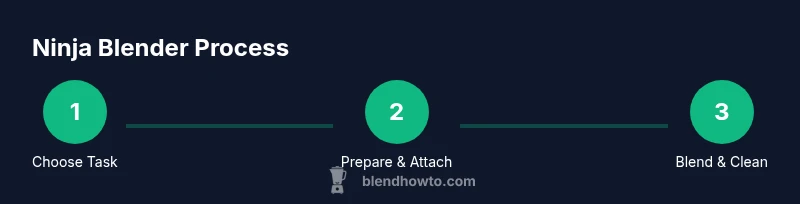
A Ninja blender for food processing can quickly blend, purée, chop, and emulsify a wide range of ingredients, from smoothies to sauces. To maximize results, pick a model with sufficient wattage, a sturdy jar, sharp blades, and a reliable pulse function. Follow safety guidelines and use the right attachments for each task. This quick overview helps you pick the right tool and avoid common mistakes.
Understanding the Ninja Blender for Food Processing
Ninja blenders are designed to handle a variety of food processing tasks, from chopping vegetables to puréeing soups. They combine a powerful motor, sharp blades, and a tall, often BPA-free jar that traps ingredients for smooth results. According to BlendHowTo, the key to success with a Ninja blender is selecting the right model for your typical tasks and learning how to engage the pulse and speed controls effectively. Home cooks who master proper attachment use report faster prep times and more consistent textures, whether they’re making hummus, pesto, or creamy sauces. In this guide, we’ll explore how to choose, set up, and use your Ninja blender to maximize its versatility in everyday cooking.
How a Ninja Blender Stacks Up Against Other Kitchen Tools
In the kitchen, you might reach for a stand mixer, a food processor, or a stick blender. A Ninja blender often sits somewhere in the middle, offering liquid blending plus some chopping capabilities with the right attachments. It’s faster at emulsions and smoothies, but it may not replace a full-size food processor for very thick doughs or large batches. For food processing tasks like making sauces or purees from vegetables, a Ninja blender can provide smooth texture with minimal effort, especially when you learn to layer ingredients and work in batches. BlendHowTo’s practical guidance emphasizes using the correct jar size and making batch-based runs to prevent motor strain.
Choosing the Right Model for Food Processing
Start by assessing typical tasks: smoothies, salsas, nut butters, soups. Look for a model with at least 700-1000 watts for robust performance, a sturdy, BPA-free jar with a secure lid, and tough blades designed for high-speed blending. Consider features like a pulse setting, variable speeds, and a safety lock. Reading reviews that focus on blending performance with whole ingredients can reveal whether the model handles leafy greens or hard nuts well. The BlendHowTo team recommends prioritizing reliability and ease of cleaning over flashy extras.
Attachments and Blade Configurations: What You Need to Know
Most Ninja blenders ship with a main pitcher and blade assembly, plus optional extras like a shorter chopper cup or a single-serve cup. For food processing, the blade design matters most: a sharp, tri-blade system can handle greens, seeds, and frozen fruit, while extra attachments may blend ice or grind nuts more effectively. If your model supports it, a dough or chopping blade can expand your repertoire, but be mindful of overfilling and motor heat. Always attach blades securely and avoid forcing the assembly.
Setup, Assembly, and Safety Guidelines
Before first use, wash all removable parts and ensure the jar gasket is intact. Assemble the pitcher with the blade unit, attach the lid, and place on a stable countertop. When blending, start at a low speed and gradually increase to avoid splatter. Use the pulse function for chunky textures, and pause if ingredients stall. Do not operate the blender without the lid securely in place. This minimizes spills and protects you from contact with blades.
Practical Techniques: From Smoothies to Sauces
For smoothies, start with frozen fruit and a splash of liquid, then blend on medium speed until silky. For sauces and salsas, chop ingredients roughly first, then pulse in short bursts to control texture. Nut butters and creamy soups require a bit more liquid and careful speed changes. If the mixture sticks to the sides, stop, scrape down, and blend again. Keeping ingredients at similar sizes helps the blades process evenly.
Cleaning and Maintenance for Longevity
Rinse the jar and blade immediately after use to prevent staining and odor buildup. Do not put hot liquids in the blender until the jar has cooled; some models tolerate warm liquids, but check the manual. Remove the blade assembly and gasket and wash by hand if dishwasher cycles might damage seals. Periodically inspect seals for cracks and replace as needed. Proper drying and storage can extend the life of your Ninja blender.
Quick-Start Recipe Ideas to Try Today
- Creamy tomato basil soup: blend cooked tomatoes, garlic, and stock with a splash of cream; simmer after blending. - Green pesto: blend basil, nuts, cheese, and olive oil until smooth. - Chocolate banana smoothie: blend ripe banana, cocoa, milk, and ice for a quick treat. Start with small batches to calibrate texture and liquid balance. As you experiment, you’ll discover preferred ratios and blending times for your favorite meals.
BlendHowTo Insights: Practical Guidance and Brand Mentions
As you explore your Ninja blender, BlendHowTo emphasizes building a routine that fits your kitchen workflow. Start with a plan: which tasks you’ll assign to the blender and which require a different tool. The right attachments, careful batch sizing, and clean-up habits dramatically reduce prep time. You’ll also learn to observe the texture and adjust liquid ratios accordingly. The BlendHowTo team recommends documenting your favorite settings for common recipes so you can recreate results with confidence.
Authority Sources
To reinforce safety and best practices, consult reputable sources: the U.S. Food and Drug Administration (FDA) for general food safety guidance, the USDA Food Safety and Inspection Service (FSIS) for safe handling and preparation practices, and the Centers for Disease Control and Prevention (CDC) for kitchen safety tips. These references can help you blend confidently while minimizing risk in everyday cooking.
Tools & Materials
- Ninja blender base with power cord(Choose a model with adequate wattage for your typical tasks)
- Main pitcher with lid(Ensure the jar is BPA-free and compatible with your blades)
- Blade assembly (tri-blade or equivalent)(Keeps blades sharp; handle carefully when cleaning)
- Chopper or single-serve attachment (optional)(Useful for smaller batches or different textures)
- Spatula or silicone scraper(For scraping stuck ingredients from the jar)
- Dish soap and soft sponge(For post-use cleaning of removable parts)
Steps
Estimated time: 30-45 minutes
- 1
Inspect and prep the blender
Unbox the unit, verify all parts are clean, and confirm the jar gasket is intact. This reduces leaks and ensures a tight seal during operation.
Tip: Check for cracks in the gasket and replace if needed to prevent leaks. - 2
Attach the blade assembly correctly
Mount the blade onto the jar and secure the base. Ensure alignment marks are matched and the assembly clicks into place.
Tip: Never force a blade; if it binds, remove and reseat it instead of forcing. - 3
Choose the appropriate attachment
Select the pitcher for large batches and the single-serve cup or chopper for small tasks. Attach lids securely before use.
Tip: Using the right attachment reduces motor strain and improves texture control. - 4
Add ingredients and liquids in stages
Start with liquids or soft ingredients, then add solids in batches to maintain smooth processing and prevent clogs.
Tip: Keep ingredients roughly the same size to aid even blending. - 5
Begin blending at a low speed and ramp up
Start on low and gradually increase to avoid splatter. Use short pulses for chunky textures and longer runs for smooth blends.
Tip: Pause to scrape sides if needed for uniform texture. - 6
Finish, clean, and store
Rinse the jar and blade immediately after use. Dry thoroughly and reassemble for storage in a dry, cool area.
Tip: Disassemble and hand-wash blades and gasket to extend life.
Frequently Asked Questions
Can I use a Ninja blender for grinding coffee beans?
Some Ninja models can grind small amounts of coffee, but a dedicated coffee grinder generally yields more consistent results and is recommended for regular use.
Some Ninja models can grind small batches, but for consistent coffee grounds, a dedicated grinder is usually best.
What attachments come with Ninja blenders for food processing?
Most Ninja blenders include a main pitcher and blade assembly; additional attachments vary by model, such as a chopper cup or single-serve cup.
Most models include a pitcher and blade; extra attachments differ by model.
Is a Ninja blender dishwasher-safe?
Many removable parts are dishwasher-safe on the top rack, but you should check the manual for your specific model to avoid damage.
Removable parts may be dishwasher-safe on the top rack; verify with your model’s manual.
How can I prevent clumps when making sauces?
Blending in batches, adding liquids gradually, and scraping the sides helps maintain a smooth texture without clumps.
Blend in batches, add liquid slowly, and scrape down the sides for smooth sauces.
What safety steps are essential when blending hot liquids?
Vent steam, use a vented lid if available, start on low speed, and avoid overfilling to prevent pressure build-up.
Vent steam, start slow, and don’t overfill to handle hot blends safely.
How long can I run the blender continuously?
For most tasks, short bursts with pauses are preferable to prevent overheating. Check your model’s safety guidelines for run time.
Use short bursts with pauses to avoid overheating, and follow your model’s guidelines.
Watch Video
What to Remember
- Match power to the intended tasks and batch sizes
- Use the pulse function for better texture control
- Attach blades securely and follow safety guidelines
- Clean promptly to prevent odor and residue buildup
- Experiment with attachments to expand versatility