Is it OK to Put Ice in a Blender? A Practical Guide
Learn whether it's ok to put ice in a blender, plus best practices for texture, safety tips, and maintenance to protect your machine and get perfect crushed ice and frozen drinks.


Yes, it’s typically fine to put ice in a blender for crushed ice, smoothies, or frozen drinks. Start with liquid, load ice in small batches, and use short pulses or a low-to-medium speed. Avoid running the motor on high for extended periods, and don’t overload the blender with oversized ice chunks.
Why Ice in a Blender?
is it ok to put ice in a blender? The short answer is yes, with a few important caveats. Ice is a staple for chilly drinks, slushies, and smoothie textures, and most household blenders are designed to handle it when used thoughtfully. The BlendHowTo team emphasizes that understanding your blender’s power, capacity, and blade design is key to avoiding jams or overheating. When used correctly, ice can help you achieve a refreshing texture and perfect mouthfeel without extra equipment. This guide will walk you through safe practices, practical steps, and tweaks to optimize every blend that includes ice.
Why Ice in a Blender?
is it ok to put ice in a blender? The short answer is yes, with a few important caveats. Ice is a staple for chilly drinks, slushies, and smoothie textures, and most household blenders are designed to handle it when used thoughtfully. Ice is a staple for chilly drinks, slushies, and smoothie textures, and most household blenders are designed to handle it when used thoughtfully. The BlendHowTo team emphasizes that understanding your blender’s power, capacity, and blade design is key to avoiding jams or overheating. When used correctly, ice can help you achieve a refreshing texture and perfect mouthfeel without extra equipment. This guide will walk you through safe practices, practical steps, and tweaks to optimize every blend that includes ice.
Tools & Materials
- Blender with sufficient power(Ensure motor power is rated for crushing ice (at least 500W for many countertop models).)
- Ice cubes or crushed ice(Fresh, cold ice works best; plan batches to avoid overfilling.)
- Liquid of choice (water, juice, milk, etc.)(Add 1/2 to 1 cup per batch to help texture and blade movement.)
- Measuring cup or small pitcher(Useful for portioning liquids accurately.)
- Silicone spatula or spoon(For scraping sides and guiding ice without stopping the motor.)
- Tamper (optional)(Only use if your blender includes a tamper; many home units do not require it.)
- Kitchen towel or protective mat(Catches spills and protects surfaces during blending.)
Steps
Estimated time: 15-25 minutes
- 1
Check blender suitability
Review your blender’s manual to confirm ice blending capability. If you’re unsure, start with small batches and observe whether the blades turn smoothly without noise or grinding. This helps prevent overheating or motor strain.
Tip: If your blender has a 600–800W rating, you’re typically equipped for regular ice blending without special precautions. - 2
Add liquid first and ice in batches
Pour liquid into the blender jar, then add a portion of ice. Keeping the liquid baseline reduces blade resistance and helps you control texture from the start.
Tip: Starting with liquid plus a small ice portion minimizes the chance of jamming. - 3
Pulse in short bursts
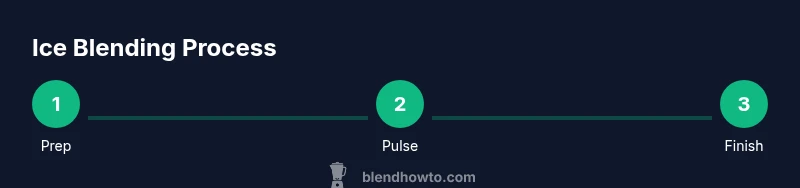
Use short pulses (1–2 seconds) rather than continuous high-speed blending. Pause between bursts to assess texture and avoid overheating the motor.
Tip: If your blender doesn’t have a pulse function, blend on a low-to-medium speed ramp and stop when you notice resistance. - 4
Scrape sides and assess texture
Occasionally stop and scrape the sides of the jar to ensure even blending. If needed, add a splash of liquid and re-blend until you reach the desired consistency.
Tip: Shallow layers blend more evenly; avoid piling ice in the center, which can stall blades. - 5
Finish texture and serve
Blend until the texture resembles crushed ice or a smooth frozen beverage, depending on your recipe. Transfer promptly to prevent clumping as it sits.
Tip: Avoid over-blending; it can turn to slush or melt too quickly. - 6
Clean and inspect after blending ice
Rinse and wash the blender jar and blades promptly to prevent mineral buildup or odors. Check the seals and blades for wear after frequent ice blending.
Tip: A quick rinse with warm soapy water between batches speeds cleanup and preserves blade sharpness.
Frequently Asked Questions
Is it safe to blend ice in a standard countertop blender?
Yes, most standard blenders can crush ice when used with short pulses and proper liquid. Always consult the manual and avoid running the motor continuously at high speed for long periods.
Yes—most standard blenders can crush ice if you pulse and keep batches small, but check your manual first.
Will ice damage blender blades or motors?
Ice itself usually won’t damage blades if you blend in batches and avoid forcing the motor. Large or very hard ice can strain the motor; use moderation and give the motor a rest between bursts.
Ice won’t usually dull blades if you blend in small batches and avoid forcing the motor.
Should I add water or other liquid before ice?
Yes, add liquid first. It creates a smoother initial rotation for the blades and helps you control the texture more easily.
Always add liquid first, then ice for smoother blending.
Can I blend hot liquids with ice?
No. Blending hot liquids with ice can cause pressure buildup and jar damage. Allow hot ingredients to cool before blending with ice.
Avoid blending hot liquids with ice; cool them first.
How long should I blend ice to reach crushed texture?
Start with short bursts totaling 15–30 seconds, then check texture and repeat as needed. Longer blending can over-soften or overheat.
Start with short bursts totaling 15–30 seconds and check texture.
Can I use ice from a bag for smoothies?
Yes, bagged ice works well for smoothies, but crushed ice blends more evenly. If using cubes, pulse longer in shorter bursts.
Bagged ice works, but crushed ice gives better texture for smoothies.
Watch Video
What to Remember
- Always add liquid first to improve blade movement.
- Pulse and keep batch sizes small for even texture.
- Don’t overload or run at high speed too long.
- Clean promptly to maintain blade efficiency and flavor.
- Check your blender’s ice guidelines before blending.