Blender Salsa Recipe: Fresh, Easy Salsa for Any Occasion
Learn a blender salsa recipe featuring fresh tomatoes, cilantro, lime, and peppers. This guide covers prep, blending texture, heat control, and storage ideas for a vibrant everyday dip.


You’ll learn to make a vibrant blender salsa recipe in minutes by pulsing fresh tomatoes, onions, jalapeño, cilantro, and lime in a blender. Start with ripe produce, trim chili for heat, and adjust texture to chunky or smooth. You’ll also get tips on balancing acidity and salt and how to store leftovers.
Why a blender salsa recipe matters
According to BlendHowTo, a blender salsa recipe is a quick, reliable way to bring bright, fresh flavors to snacks and meals. The technique emphasizes fresh produce, proper prep, and control over heat and texture. When you blend instead of chop by hand, you preserve vibrant tomato sweetness and achieve a consistent sauce that pairs with chips, tacos, or grilled proteins. The BlendHowTo team notes that the key to success is balancing acidity with salt and controlling moisture so the salsa isn't watery. By understanding base flavors, you can tailor the heat level and texture to your audience, from a mild, family-friendly dip to a fiery centerpiece. This article will guide you through ingredient choice, texture decisions, and safe storage so your blender salsa recipe remains delicious day after day.
The approach here highlights how a well-made blender salsa recipe can elevate everyday meals, reduce prep time, and minimize waste. By choosing versatile ingredients and using a consistent blending process, home cooks gain a reliable formula they can tweak for personal taste or seasonal produce. Expect practical tips, step-by-step thinking, and substitutions that keep the blender salsa recipe flexible for any pantry.
Key ingredients and how to choose them
A successful blender salsa recipe starts with high-quality produce. Choose ripe, flavorful tomatoes—plum varieties often give the best balance of sweetness and acidity. White or red onions add sharp brightness, while jalapeño or serrano peppers contribute heat. Cilantro brings herbal brightness, and a squeeze of fresh lime balances the greens with a clean acidity. Salt enhances all flavors, so season gradually and taste as you go. Optional add-ins like garlic, roasted corn, or a touch of mango can tailor the profile toward a sweeter or more tropical style. For a truly vibrant blender salsa recipe, avoid precooked ingredients that bleed moisture and dull color. Freshness matters: use produce within a day or two of purchase and keep herbs loosely wrapped in the fridge to preserve aroma.
In this blender salsa recipe, the sheer variety of ingredients gives you latitude to tailor heat and flavor. If you’re feeding kids or guests who prefer milder salsa, start with fewer seeds and membranes and consider milder peppers. If you crave punch, keep the seeds and membranes and add a touch more lime juice to brighten the profile. Blend time influences texture; a quick pulse yields a chunky dip, while longer blending produces a smoother sauce, both equally delicious in different servings of the blender salsa recipe.
How to adjust heat levels safely
Heat control is crucial in a blender salsa recipe. Start with gloves and wash hands after handling hot peppers. Removing seeds and membranes will reduce heat; keep a few seeds if you want a lively kick. If you’re unsure, start with a small amount of jalapeño and blend, then taste and add more gradually. For a smoky twist, briefly char peppers on a dry skillet before using. Remember that lime juice and salt can amplify perceived heat, so adjust these elements after you test a baseline flavor. Mindful handling and incremental testing ensure you reach your preferred heat level without sacrificing the blender salsa recipe’s balance.
BlendHowTo’s guidance emphasizes slow, measured adjustments so you don’t overshoot the heat. Always taste after pulsing and before serving, allowing the flavors to reveal themselves. A good practice is to pause, rest the blender, and recheck the texture—this helps you avoid over-processing and keeps the blender salsa recipe vibrant and fresh-tasting.
Texture and consistency: chunky vs smooth
Texture variation is one of the most flexible aspects of a blender salsa recipe. For a chunky salsa, pulse the blender in short bursts, stopping as soon as the pieces are still distinct. If you prefer a smooth, sauce-like consistency, pulse longer until you reach the desired creaminess. The same mix adapts well to chips, topping tacos, or spooning over grilled meats. A light, slightly chunky texture works well as a fresh salsa for dipping, while a puréed version makes a radiant sauce for bowls and sandwiches. The choice depends on your crowd and the moment—this is a key advantage of using a blender for a salsa recipe, giving you a range of textures with the same ingredient base.
If you’re unsure which texture to choose, start with a middle ground: blend halfway to the desired smoothness, then test and adjust. You’ll often find that a halfway blend reveals a more balanced flavor and reveals the bright acidity of lime and herbs more clearly in the blender salsa recipe.
Flavor balance: acid, salt, and sweetness
Achieving balance in a blender salsa recipe means coordinating acidity, salt, and the natural sweetness of the tomatoes. Lime juice provides brightness and helps lift herbal notes, while honey or a pinch of sugar can mellow particularly aggressive peppers—though sugar is optional and depends on your tomato sweetness. Salt should be added gradually and tasted in stages to avoid oversalting. If the salsa tastes flat, a tiny squeeze more lime and a pinch of salt often make a big difference. In contrast, if the salsa seems too sharp, a pinch of sugar or a touch of tomato sweetness can smooth the acidity. The blender salsa recipe rewards patient seasoning—taste often and adjust until the final profile is vibrant, fresh, and well-balanced.
BlendHowTo recommends documenting your preferred balance so you can reproduce it, whether you’re cooking for a family weeknight or a party lineup.
Vegetables and herbs prep: best practices
Prep matters almost as much as the ingredients themselves in a blender salsa recipe. Rinse all produce thoroughly and pat dry. Rough-cut vegetables into sizes that will blend evenly—too-large chunks can stall blending, while not cutting enough can produce uneven textures. Cilantro should be roughly chopped to release its aroma; lime zest can be added for extra brightness if desired. Keep onions and peppers separate until blending to control the potence of aroma and heat. Pre-measuring spices and seasonings helps you reach a consistent result with the blender salsa recipe, especially when batch-cooking for multiple meals.
Good prep reduces processing time and improves the overall texture and flavor in the blender salsa recipe.
Food safety and storage
Fresh blender salsa recipe is best served soon after blending, but it stores well in the refrigerator for several days. Transfer to a clean, airtight container and chill promptly. Avoid leaving salsa at room temperature for more than two hours. When reheating or re-serving, give it a quick stir to recombine any separated liquid and freshen the aroma. If you notice an off smell or color change, discard responsibly. Proper handling in the blender salsa recipe ensures safety and preserves flavor across servings.
Serving ideas and pairings
A blender salsa recipe shines with simple pairings. Serve with tortilla chips for a quick snack, spoon over grilled chicken or fish for a bright topping, or use as a zesty salsa fresca in burritos and bowls. The vibrant color and fresh aroma also make it a great topping for roasted vegetables or crunchy salads. For a party, set up a salsa bar with lime wedges, cilantro, and sliced jalapeño so guests customize their blender salsa recipe to taste.
Budget-friendly tips and seasonality
The blender salsa recipe is naturally budget-friendly when you lean into seasonal produce and bargain tomatoes. Use homegrown herbs when possible, buy onions and peppers in bulk, and store fresh cilantro in a glass of water in the fridge to extend its life. When ingredients run short, rely on pantry staples like canned tomatoes or canned green chiles to maintain flavor. The blender salsa recipe adapts to your pantry and seasonality, helping you minimize waste while delivering bold, fresh taste.
Troubleshooting and common mistakes
If your blender salsa recipe turns out watery, start by draining excess liquid from tomatoes or pulse briefly to retain more solids. Over-blending can turn the mixture into a sauce rather than a salsa; use short pulses to maintain texture. If heat feels uneven, blend in batches to ensure even distribution and test again. Avoid adding too much lime juice in a single go, as this can overpower other flavors. With patience and small adjustments, you can correct most issues in this blender salsa recipe and end up with a vibrant dip every time.
Variations and add-ons
Experiment with variations to keep the blender salsa recipe exciting. Try roasting peppers for a smoky flavor, add corn for sweetness, or incorporate pineapple or mango for a tropical twist. A roasted garlic note can deepen depth, while fresh cilantro brings a bright finish. Whether you lean toward a fruity salsa or a classic tomate-and-cilantro blend, the blender salsa recipe accommodates your creativity, enabling you to craft a signature version for your family or guests.
Tools & Materials
- blender (countertop or immersion)(Essential for the blender salsa recipe; choose a blender with a pulse function for control)
- cutting board(Stable surface for chopping produce)
- sharp knife(For clean, quick chopping of tomatoes and peppers)
- mixing bowls(For pre-measuring and holding chopped ingredients)
- measuring spoons(To portion lime juice, salt, and optional sweeteners)
- spoon or spatula(To scrape ingredients into the blender and adjust texture)
- storage containers (airtight jars)(For refrigerating leftovers)
Steps
Estimated time: 15-25 minutes
- 1
Prepare ingredients and equipment
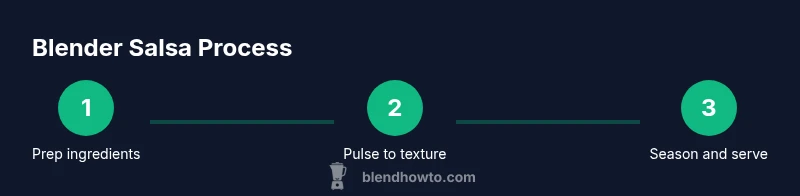
Wash, trim, and rough-chop produce. Measure lime juice, salt, and any optional add-ins. Set up the blender and a couple of bowls for organization. This prep keeps the blender salsa recipe efficient and minimizes processing time.
Tip: Pre-chop veggies into uniform chunks to ensure even blending. - 2
Remove seeds for heat control
If you prefer milder salsa, remove seeds and membranes from peppers before blending. Wearing gloves helps protect your hands, and you can always add a touch of heat later by adding more peppers.
Tip: Taste a small piece of pepper before committing to full heat—heat scales quickly. - 3
Add ingredients to the blender in order
Place tomatoes, onion, peppers, cilantro, and lime juice into the blender. Add salt and any optional add-ins. Leaving some texture intact preserves the signature character of the blender salsa recipe.
Tip: Layering ingredients helps the blender process evenly and prevent a stuck blend. - 4
Pulse to the desired texture
Pulse in short bursts for chunky texture, or blend longer for a smooth sauce. Check intermediate texture, then blend again if needed. This control is the key advantage of a blender salsa recipe.
Tip: Pause between pulses to prevent over-processing. - 5
Taste and adjust seasoning
Taste the salsa and adjust salt, lime, or heat. Add more cilantro or a pinch of sugar if needed, depending on tomato sweetness and pepper heat. Balance is the goal for the blender salsa recipe.
Tip: Keep adjustments small and test after each addition. - 6
Chill briefly to meld flavors
Refrigerate the salsa for 10–15 minutes to let flavors come together and relax the texture. A short rest improves aroma and balance for the blender salsa recipe.
Tip: Chilling also helps reduce any raw onion sharpness. - 7
Serve or store
Serve immediately with chips or as a topper for dishes. For leftovers, transfer to airtight containers and refrigerate. The blender salsa recipe stores well for a few days with proper chilling.
Tip: Label containers with date for easy freshness tracking.
Frequently Asked Questions
What ingredients are needed for blender salsa recipe?
A basic blender salsa recipe uses ripe tomatoes, onion, cilantro, lime juice, salt, and peppers such as jalapeño. Optional add-ins include garlic, mango, or corn. Freshness matters, as it affects flavor and texture.
For the blender salsa recipe, start with tomatoes, onion, cilantro, lime, salt, and peppers; add optional items like mango or garlic to taste.
Can I make blender salsa ahead of time?
Yes. You can prep and blend and refrigerate the salsa for up to a couple of days. Allow flavors to meld by resting in the fridge, then give it a quick stir before serving.
Yes, you can make it ahead and refrigerate for a day or two; just stir before serving.
Is a blender necessary, or can I use a food processor?
A blender is ideal for a smooth, integrated texture, while a food processor can work but may produce a chunkier, paste-like result. For the classic blender salsa recipe, a blender is preferred for even consistency.
A blender gives the smooth, uniform texture you expect from this salsa recipe; a processor works but yields a different texture.
What texture should I aim for in the blender salsa recipe?
Texture is personal. For chunky salsa, pulse briefly; for smooth salsa, blend longer. The same base ingredients adapt to both textures depending on your preference.
Choose chunky or smooth by adjusting blending time.
How should I store blender salsa safely?
Keep the salsa refrigerated in a clean, airtight container. Consume within 3-4 days for best quality and safety. If it smells off or looks odd, discard it.
Store in the fridge and use within a few days for best flavor and safety.
Can I add fruit to the blender salsa recipe?
Yes, adding mango or pineapple can create a refreshing variation. Balance sweetness with lime and salt to maintain the salsa’s bright profile.
Fruit additions work well—just balance sweetness with acidity.
Watch Video
What to Remember
- Choose fresh, ripe produce for vibrant flavor
- Control heat by seeds and peppers, then adjust with lime and salt
- Pulse to achieve desired texture—chunky or smooth
- Chill briefly to meld flavors and improve aroma
- Store leftovers properly in airtight containers