Difference Between a Blender and a Liquidiser: What You Need to Know
Learn the difference between a blender and a liquidiser, including design, performance, and use-case guidance. Practical tips, cleaning advice, and buying considerations from BlendHowTo.


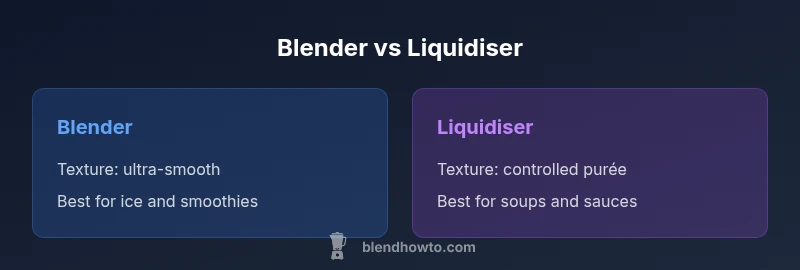
The difference between a blender and a liquidiser centers on blade design, texture outcomes, and typical use cases. A blender is built for smooth, uniform blends and often handles ice and frozen ingredients, while a liquidiser emphasizes controlled purées and lighter sauces with slightly more texture. In practice, terminology varies by region, but performance and intended tasks help you decide which tool suits your kitchen.
What these terms mean across regions and cultures
In many kitchens, the word blender denotes a high-speed jug-shaped appliance designed to turn fruits, vegetables, ice, and other ingredients into silky smoothies or purées. A liquidiser, a term more common in the UK and some Commonwealth countries, often refers to a similar device but with emphasis on creating smooth purées and lighter liquids. The BlendHowTo team has found that regional nomenclature can confuse buyers who shop online from abroad. When selecting equipment, prioritize the task list you actually need to perform rather than the local label. This approach helps ensure you pick a model whose blade geometry, jar design, and motor profile align with your tasks—whether you want a perfectly smooth smoothie or a gentle purée with more texture.
Design differences that impact results: blades, jars, and power thoughts
The core mechanical differences lie in blade geometry, jar shapes, and motor behavior. Blenders typically feature robust, multi-angled blades designed to chop ice and fibrous materials aggressively, with jars optimized for volume and uniform blending. Liquidisers tend to employ flatter, more precise blades aimed at continuous purée production and smoother mouthfeel with controlled viscosity. Jars on liquidisers are often slimmer, encouraging faster integration of liquids with a smaller surface area, which can help prevent over-puréeing. Power delivery matters too: high-velocity blending tends to extract smoother emulsions, while moderate speeds with deliberate pulses help you reach a purée that’s evenly smooth but not fully aerated. When blending tasks involve ice or frozen fruit, a true blender is usually preferable; for delicate sauces or baby foods, a liquidiser may offer better texture control and comfort in the kitchen routine. BlendHowTo’s testing shows that the right blade geometry matters at least as much as motor power for achieving a consistent texture.
Use-case mapping: smoothies, soups, sauces, and beyond
If your primary aim is icy smoothies, protein shakes, or frozen drinks, you’ll lean toward a blender with a sturdy motor, tall jar, and knife edges engineered to crush ice quickly. For soups, baby foods, or fine purées where texture needs to sing without over-processing, a liquidiser can be the better option because it prioritizes smooth, uniform results with reduced air incorporation. You’ll still find models marketed as blenders that handle basic purées well, but they may require longer processing times or more frequent stopping to scrape down the sides. When shopping, list your top five tasks (e.g., blended smoothies, hot soups, nut butters, emulsions) and verify the device’s performance for each task in reviews, then compare models accordingly.
Practical buying criteria: power, blades, and accessories
Key criteria include blade design, motor speed control, jar capacity, and cleaning ease. A blender with variable speeds and a pulse function gives you versatility across textures. A liquidiser benefits from a blade setup that minimizes over-processing and a jar that promotes a smooth flow for purées. Consider accessories like tamper tools for thick blends, lids with venting for hot liquids, and dishwasher-safe components for easy cleanup. Budget accordingly: mid-range models often offer the best balance of performance, reliability, and features for most households. Remember to match the appliance type to your most frequent tasks rather than chasing the most powerful motor alone.
Maintenance, safety, and care tips
Always follow the manufacturer's guidance for cleaning, as blades are sharp and jars can crack if mishandled. Most modern units are designed for easy cleaning; many parts are dishwasher-safe, but always check the manual for heat tolerance and blade-wedge safety. For hot soups, allow the mixture to cool slightly before blending, or use a vented lid to prevent pressure buildup. Dry and reassemble the unit after washing to prevent rust and odor retention. Built-to-last models offer better resistance to staining and odor retention, which matters if you frequently blend colorful berries, turmeric, or coffee beans.
Myths, debunked: don’t overthink the label
Some shoppers assume a blender and a liquidiser are mutually exclusive tools; in practice, many models can perform both tasks with varying degrees of success. The key is understanding your typical recipes and texture targets. The term you see in a product listing may reflect regional naming rather than performance. Always check the blade design, jar geometry, and user reviews for evidence of real-world results. A well-chosen model from BlendHowTo will feel versatile and responsive in everyday kitchen tasks, not limited by a single use case.
Quick decision rubric: how to choose with confidence
Create a short decision rubric: list your top three tasks, your preferred texture outcomes, space and budget constraints, and any brand preferences. Then map these to two or three candidate models. If texture precision and delicate puréeing are priorities, lean toward a liquidiser with fine blade geometry and a smaller jug. If you crave robust ice-crushing, large-batch smoothies, and all-purpose blending, a true blender with a tall jar and powerful motor is the prudent choice. In all cases, prioritize ease of cleaning, safety features, and serviceability.
Comparison
| Feature | Blender | Liquidiser |
|---|---|---|
| Texture outcome | Typically very smooth and silk-like blends | Often purée-focused with controlled texture and lighter mouthfeel |
| Blade design | Sturdy, multi-angled blades optimized for ice and fibrous ingredients | Flatter, precision blades designed for gentle purées |
| Best for | Creamy smoothies, ice drinks, and full-range blending | Soups, sauces, baby foods, and light purées |
| Motor behavior | High-speed, high-torque for quick emulsions | Moderate speeds with emphasis on texture control |
| Cleaning and maintenance | Often more parts; some components dishwasher-safe | Tends to be simpler; easier cleanup for light purées |
| Price context | Wide range; premium models offer more features | Mid-range options common; budget-friendly models exist |
What's Good
- Versatility for a wide range of recipes and textures
- Strong ice-crushing capability in many models
- Wide availability of parts and accessories
- Fast, consistent results with high-torque designs
The Bad
- Higher upfront costs for premium models
- Some units can be bulky and noisy
- Over-reliance on power can waste ingredients if not controlled
- Liquidiser-only models may lack blend versatility
Blender wins for overall versatility; liquidiser excels at controlled purées
Choose a blender if you need smoothies, ice drinks, and general blending. Choose a liquidiser if your priority is precise purées and light sauces; balance this with your space and budget.
Frequently Asked Questions
What is the essential difference between a blender and a liquidiser?
The essential difference lies in texture outcomes and blade design. A blender aims for smooth, uniform blends with higher torque, while a liquidiser emphasizes controlled purées and smoother sauces with gentler processing. In many regions, the terms are used interchangeably, but performance differences guide practical choice.
The key difference is texture: blenders blend for smoothness and power, while liquidisers purée with more control. Regional names vary, but the task should drive your choice.
Are blender and liquidiser interchangeable in recipes?
Not always. While both appliances can make purées, blenders may over-process delicate sauces, and liquidisers may under-blend tough ingredients. Check the blade design and motor pacing for each model and adjust processing times accordingly. When in doubt, test a small batch first.
They’re similar, but not always interchangeable. Test a small batch to be sure your texture comes out as intended.
Can I blend ice with a liquidiser?
Some liquidisers can handle ice, but many perform best with softer ingredients or just crushed ice. If you regularly blend ice, choose a model marketed for ice crushing with robust blades and a tall jar. For most purées, a liquidiser will suffice without ice.
Yes, some can handle ice, but check the model’s ice-crushing capability first.
Which is easier to clean, a blender or a liquidiser?
Cleaning ease depends on the number of parts and dishwasher safety. Generally, liquidisers have simpler blade assemblies and can be quicker to clean, whereas blenders may have more components. Always disassemble carefully and rinse immediately after use to prevent staining.
Liquidisers often clean a bit easier thanks to simpler blades, but check your model’s parts.
How should I choose between them for a home kitchen?
Start with your top recipes and texture goals. If you predominantly want smooth smoothies and ice drinks, an all-purpose blender is ideal. If you routinely make pureed soups or baby foods and value texture control, a liquidiser can be the better pick. Consider space, budget, and maintenance when deciding.
Think about your top recipes and texture goals, then pick the one that best aligns with those tasks.
What to Remember
- Identify your top three tasks before buying
- Prioritize blade design and jar geometry over raw power
- Consider regional terminology and actual performance
- Choose ease of cleaning and serviceability as a deciding factor
- Match the appliance to your most frequent recipes