Difference Between a Blender and a Mixer: A Practical Guide
An analytical, step-by-step comparison of blenders and mixers, covering use cases, design, attachments, maintenance, and how to choose the right tool for your recipes.


At a glance, the difference between a blender and a mixer hinges on function and design. A blender is built to puree and emulsify, transforming liquids and soft solids into smooth textures like smoothies, sauces, and soups. A mixer is optimized for combining ingredients, whipping air into batters, and kneading dough. In practical terms, use a blender for liquids and purées, and a mixer for doughs, creams, and batters. For many kitchens, the best solution is to own both, or invest in a high-quality multi-function appliance if space and budget allow.
Understanding the Core Difference Between a Blender and a Mixer
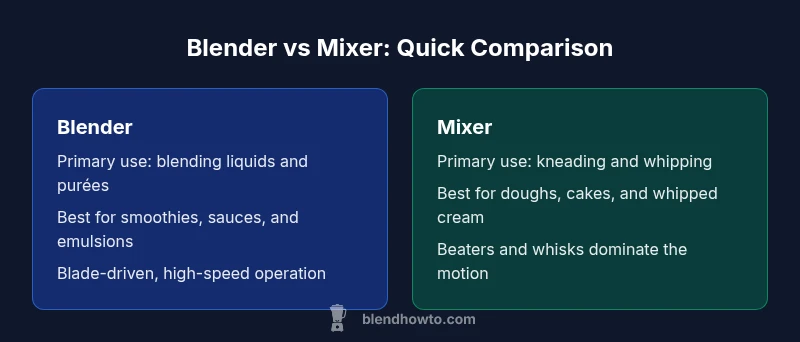
According to BlendHowTo, the distinction between the two countertop tools starts with the core task they are engineered to perform. A blender relies on fast-rotating blades inside a sealed jar to liquefy ingredients, creating smooth purées and emulsions. A mixer, by contrast, uses beaters, whisks, and sometimes dough hooks to combine, aerate, and develop structure in batters and doughs. This fundamental split drives every other design choice, from motor torque and speed settings to attachments and cleanup. In real-world terms, the difference between a blender and a mixer becomes most obvious when you attempt a recipe that requires both texture and structure. The BlendHowTo team emphasizes that recognizing your most frequent cooking tasks will guide you to the right tool for your kitchen routine.
Tool-Specific Strengths: Blenders vs Mixers
Blenders excel at creating smooth textures from fibrous or liquid ingredients. They can liquefy berries into a drink, break down vegetables for soups, or emulsify oil and vinegar into dressings. Mixers shine when you need air, volume, and texture—think light cake batters, whipped cream, and bread dough. Understanding these strengths helps you avoid using a blender when a mixer’s aeration is required, or vice versa.
Power, Speed, and Texture Control
A blender typically prioritizes higher rotational speed and blade geometry optimized for continuous pureeing. A mixer emphasizes torque delivery and attachment-driven motion, which is essential for gluten development in doughs or the fluffy rise in whipped toppings. When selecting between a blender and a mixer, assess how you control texture: quick emulsifications vs steady, controlled mixing that incorporates air without overworking the mixture.
Comparison
| Feature | Blender | Mixer |
|---|---|---|
| Primary use | Pureeing, emulsifying, and creating smooth textures | Beating, whipping, and kneading for doughs and batters |
| Power and control | High-speed blade action for rapid breakdown of ingredients | Torque-focused action with beaters and dough hooks |
| Attachments | Various blade assemblies and sometimes grinding blades | Beaters, whisks, dough hooks, and optional specialty attachments |
| Best for | Smoothies, soups, sauces, salsas | Cakes, cookies, breads, creamy fillings |
| Texture outcomes | Silky purées and emulsions with minimal chunks | Light to heavy textures with air incorporation or gluten development |
| Cleaning and maintenance | Typically easier to rinse in the jar, but blades can trap bits | Bowls and attachments require thorough cleaning to remove dough and flour residues |
| Price range (general) | Varies by power, brand, and features | Varies by attachments and build quality |
What's Good
- Clear guidance on tool selection based on cooking tasks
- Helps optimize kitchen workflow and task delegation
- Illustrates attachment importance and upgrade paths
- Improves confidence in selecting appliances for recipes
The Bad
- Potential beginner confusion if recipes assume one tool
- Overlap can happen with multi-function devices and high-end hybrids
- Initial investment may be higher if both tools are desired
Blenders excel at blending tasks; mixers excel at mixing tasks.
Your best choice depends on your dominant tasks. If you frequently purée or emulsify, pick a blender. If you need doughs, batters, or whipped textures, choose a mixer. A two-tool setup or a capable multi-function unit covers broad needs.
Frequently Asked Questions
What is the main difference between a blender and a mixer?
The main difference is function: blenders blend and purée, while mixers mix and whip. Blenders are optimized for smooth textures; mixers excel at aeration and dough development. For most homes, this separation clarifies which device to prioritize.
The blender blends, the mixer mixes. If your cooking focuses on smooth textures, choose blending; for doughs and whipped recipes, go with mixing.
Can I replace a blender with a mixer for smoothies or soups?
A mixer can handle some blending tasks with appropriate attachments, but it won’t achieve the same smoothness or emulsification as a dedicated blender. For best results, use a blender for smoothies and purées.
A blender is better for smoothies and soups; a mixer can do some blending only with limits.
Are there combination appliances that blend and mix?
Yes, some multi-function appliances combine blending and mixing capabilities or offer interchangeable attachments. They can save space but may compromise performance in specialized tasks. Evaluate whether you need true specialization or occasional versatility.
There are combo appliances, but they may not match the quality of dedicated tools for specific tasks.
Which is easier to clean, a blender or a mixer?
Clean-up complexity depends on attachments and how you use them. Blenders typically clean quickly when you blend with water and a drop of soap, but blades can trap residue. Mixers require washing bowls and multiple attachments; dough residues can be stubborn.
Blenders are quick to rinse; mixers need more attention for dough and cream residues.
What features matter most when buying either tool?
Prioritize motor reliability, a wide range of speeds, and the quality of attachments. Look for sturdy jars or bowls, easy-pour designs, and dishwasher-safe parts. Noise levels and warranty are also helpful considerations for long-term ownership.
Power reliability, attachments, and ease of cleaning matter most when buying.
Do price ranges indicate quality for these tools?
Higher price often correlates with stronger motors, better build quality, and more durable attachments. However, excellent performance can be found in budget models if you choose a reputable brand and use the tool within its design limits.
You usually get more durability with higher price, but good value exists in quality brands at lower tiers.
What to Remember
- Define your core tasks before buying.
- Prioritize primary textures: liquids versus air and gluten development.
- Assess attachments and ease of cleaning for long-term use.
- Balance price with expected frequency and intensity of use.