Blender vs Mixer: When Blender Replaces a Mixer in the Kitchen
Analytical comparison of blender vs mixer to help home cooks decide when Blender can serve as a substitute for a mixer, with practical guidance, scenarios, and setup tips.


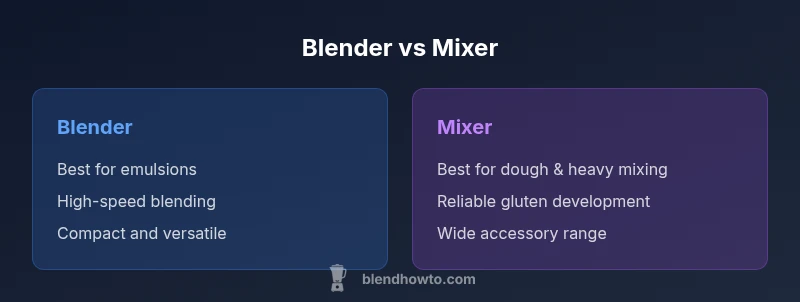
According to BlendHowTo, a blender can often substitute for a mixer for light tasks such as emulsions, sauces, and smoothies, but it struggles with doughs and heavy whisking. The key is matching the task to the tool: use a blender for texture-focused mixing and a mixer for dough or large batches. In many kitchens, a blender instead of mixer covers most day-to-day needs, with specific limitations.
Defining Roles: Blender vs Mixer
In most households, the decision about using a blender instead of a mixer comes down to function, not status. A countertop blender typically relies on a rotating blade to pulverize or puree, creating smooth textures and emulsions. A stand mixer or hand mixer relies on beaters or hooks to agitate ingredients, build gluten structure, and aerate batters. This fundamental difference shapes which tasks each tool performs best. For the category of tasks that involve breaking down solids into smooth suspensions or integrating liquids with small particles, a blender is often the more efficient choice. When the goal is kneading dough, aerating cream, or forming air-rich batter, a mixer holds the advantage. BlendHowTo’s practical takeaway is to map your most frequent recipes to the tool that delivers the texture you want, rather than forcing one device to perform every job. For many kitchens, the right approach is to reserve the blender for high-speed blending and the mixer for serious mixing chores.
A practical path is to classify tasks into three buckets: texture-focused blends (emulsions, sauces, smoothies), light fabrication (pâtés, dips, dressings), and heavy processing (doughs, meringues with stiff peaks). In the texture-focused bucket, you can often rely on a blender instead of mixer. In heavy manipulation like dough development, the mixer remains the better option. This framework helps simplify decision-making and reduces counter clutter while preserving desired results.
When a Blender Shines: Light Whipping, Emulsions, Smoothies
A blender excels at turning whole ingredients into velvety mixtures without breaking down delicate structures. For sauces, vinaigrettes, hummus, and creamy soups, high-speed blending creates a uniform texture that’s hard to achieve with a whisk or spoon. Emulsions such as mayonnaise or aioli form quickly when the ingredients are blended at the right pace and with the correct liquid balance. Smoothies and frozen drinks benefit from the blender’s ability to break down ice and fibrous produce in seconds. Practical tips include starting at a low speed to avoid splatter, adding liquids first to ease shear, and pulsing in bursts to control texture. In many cases, you can substitute a blender instead of mixer for these tasks, achieving consistent results with less manual effort.
Keep in mind that some thick mixtures may need thinning with liquids during blending, and very small quantities can cause uneven results if the motor is undersized. Selecting a blender with sufficient watts and a tall pitch helps minimize air pockets and uneven texture. For home cooks who often blend soups or sauces, choosing a model with blade geometry designed for emulsification can make a meaningful difference.
From BlendHowTo’s perspective, if you frequently create smooth fondants, dressings, or puree-based sauces, the blender route is a compelling option that saves time and clean-up while maintaining a clean recipe profile. It’s essential, however, to avoid substituting a blender for a mixer when the goal is aeration or gluten development, where structure matters more than texture.
When a Mixer Shines: Kneading, Whipping, Heavier Batters
Mixers are purpose-built for induced mixing that requires gluten development, air incorporation, and robust kneading. A stand mixer with a dough hook handles bread dough, pizza dough, and dense batters that require sustained mixing. Hand mixers and smaller compact devices perform well for whipped cream, meringues, and beaten egg-based batters where volume and stability are critical. The main advantage of a mixer is control over mix time and the ability to reach desired stiffness without turning the mixture into a puree. For heavy doughs, a mixer provides reliable kinetic energy and even distribution of ingredients. In situations where you need to incorporate air rapidly—like whipping cream or beating egg whites—the mixer remains the preferred tool. In short, a blender can substitute for a mixer only when the task is not dough development or heavy aeration, and you are mindful of texture goals rather than structural outcomes.
If you own only a blender, one strategy is to substitute by performing multiple passes with short pulses and adding compatible liquids to maintain emulsification. But for most bread-making enthusiasts, a dedicated mixer is worth the space and investment for consistent results and gluten development.
Core Specifications to Compare
When evaluating a blender versus a mixer, focus on core specs that influence the substitution potential. Power and speed ranges matter: blenders designed for smoothies often offer high wattage and fast top speeds to achieve a smooth texture, whereas mixers rely on torque and a controlled pace to foster gluten networks and stable foams. Bowl or jar capacity is another key factor: a mixer’s bowl size dictates how much dough or batter you can handle, while a blender’s jar size and neck opening affect how easily you load ingredients and pour finished textures. Attachments are not interchangeable between devices, so consider what you truly need: blades for blending and grinding versus beaters, dough hooks, and whisks. Space and maintenance costs should also factor in; blenders tend to be compact and have fewer moving parts for cleanup, but higher-end models may still require frequent blade replacement or gasket maintenance. BlendHowTo’s analysis shows that buyers should prioritize a model that aligns with their most frequent tasks, rather than chasing a single all-purpose device. This approach reduces regret and improves long-term satisfaction.
A practical decision framework is to select one device that covers your top three tasks and verify that the other tasks can be executed with acceptable quality using pacing, liquid adjustments, or technique tweaks. If you bake bread weekly, a mixer is often the better choice; if you blend sauces every night, a capable blender could replace the mixer’s role in many recipes.
Attachments and Accessories: Blades, Whisks, and Paddles
Accessories expand the scope of what a blender can do, but they do not always substitute the specialized gear of a mixer. Blenders use blades optimized for pulverizing or pulverizing with some chopping capability; some models offer grinding attachments for nuts, seeds, or coffee beans. Optional accessories like tamper tools help push ingredients toward the blades for even blending. Mixers rely on beaters, dough hooks, and whisks that are designed to handle different textures and densities. The right dough hook promotes gluten development, while beaters enable airy creaming of butter and sugar. If you’re considering a blender instead of mixer, verify whether the blender supports optional attachments that expand its capabilities—however, note that not all attachments are cross-compatible.
In practice, many users achieve satisfactory results by sticking to the tool’s natural strengths: blending for texture and emulsions, and separate whisking or kneading devices for specific tasks. This reduces gear complexity and keeps maintenance simple.
Practical Substitution Scenarios: Substituting a Blender for a Mixer
Consider a typical home kitchen scenario: you want to prepare a creamy tomato sauce, a whipped cream topping, and a small-batch bread loaf. For the sauce, a blender can combine roasted tomatoes, cream, and seasonings into a silky emulsion after a brief simmer. For whipped cream, a blender can whip to soft peaks, though you must be careful not to over-blend fat. For the bread loaf, substituting a blender is risky due to gluten development; you’ll get uneven texture and insufficient kneading. In this scenario, you substitute the blender for the mixer in the sauce and whipped cream tasks, but retain a mixer for the dough. BlendHowTo’s guidance emphasizes mapping your most common tasks to the tool that handles them best and preserving a dedicated mixer for baking projects that rely on gluten structure and stable aeration.
Another substitution example is cake batter: a blender can handle light aeration and incorporate ingredients evenly, but for a heavy batter with high sugar and fat content, you may prefer a mixer to avoid over-pulverization and to achieve consistent texture. The key to success when using a blender instead of mixer is to work in small batches and monitor texture frequently.
Texture and Consistency: How Tools Shape Results
Texture control hinges on how the energy is delivered to ingredients. A blender’s sharp blades shear and emulsify rapidly, producing smooth, uniform textures; however, it can also over-mix if not controlled carefully. A mixer’s beaters or dough hooks introduce air and develop structure more gradually, offering control over viscosity, stiffness, and gluten formation. When you substitute a blender for a mixer, small adjustments—such as adding more liquid to thin a batter or pulsing in shorter intervals—help prevent over-processing. Texture expectations differ: smoothies should be perfectly creamy, dressings should emulsify evenly, and doughs should retain their elasticity. The takeaway is to balance speed, time, and ingredient ratio to achieve the target texture without compromising structure.
Cleaning, Safety, and Maintenance
Cleaning is a frequent pain point, but it’s often simpler with a blender due to fewer components. After blending, some models require disassembly of the blade assembly and gasket; always unplug the unit first and rinse parts promptly to prevent dried-on residue. Safety-wise, avoid overfilling, keep blades sharp for better efficiency, and never submerge electrical components. For mixers, clean the bowl, beaters, and hooks promptly to prevent dough buildup. Check the manufacturer’s dishwasher safety guidelines; some attachments are dishwasher safe while others require hand washing. Regularly inspect seals and gaskets for wear, especially on blenders that encounter thick sauces and fibrous ingredients. Routine maintenance reduces the chance of leakage, preserves performance, and extends the device’s life.
Budget, Longevity, and Total Cost of Ownership
From a cost perspective, a solid blender can be a budget-friendly addition for households focusing on beverages and sauces. Stand mixers tend to cost more upfront but offer durability and a longer lifecycle for baking tasks. When considering total cost of ownership, account for accessory availability, replacement parts, and long-term reliability. If you plan to bake bread weekly, the upfront investment in a mixer may pay off through more consistent results and lower maintenance headaches. If your use is occasional and mostly texture-focused, a mid-range blender can deliver similar results with lower ongoing expenses. BlendHowTo suggests evaluating typical use, expected lifespan, and maintenance costs to determine the right price-to-value balance for your kitchen.
Brand Considerations and Hybrid Devices
Hybrid devices that combine blending and mixing capabilities exist, but they often trade off performance in one domain for versatility in another. If you’re deciding whether to pursue a blender instead of mixer, weigh the likelihood of needing dough production alongside smoothies and sauces. Some users benefit from a modular approach: a dedicated blender for texture work and a separate mixer for heavy tasks. When choosing from brands, focus on warranty, available attachments, blade quality, motor power, and ease of cleaning. Hybrid devices can be tempting for space-constrained kitchens, but specialized tasks typically yield better results from dedicated tools.
In the BlendHowTo framework, the best choice aligns with your most frequent recipes, while keeping a plan for occasional heavy tasks that may require a second device.
Getting the Right Setup for Your Use Case
The final step is translating your kitchen reality into a practical setup. Start by listing your top 10 recipes and categorizing each by the required texture and technique. If the majority are smoothies, sauces, and emulsions, a capable blender may suffice. If your repertoire includes bread, pastries, or dense batters, a mixer becomes more efficient and consistent, reducing manual labor and time. For hybrid kitchens, consider a model with adequate wattage, a broad range of speeds, and a reliable pulse function to switch between tasks quickly. Regardless of choice, proper technique—such as blending liquids first, using proper attachments, and respecting capacity constraints—will determine whether your blender instead of mixer delivers the results you expect.
Authority Sources
For readers who want to verify safety, usage guidelines, and appliance recommendations, consider consulting official consumer safety and extension resources. These sources provide context on appliance use, cleaning, and safe operation. See the references for more information:
- https://www.cpsc.gov
- https://www.fda.gov/food
- https://extension.osu.edu
Comparison
| Feature | blender | mixer |
|---|---|---|
| Best for | Emulsions, sauces, smoothies, and purees | Doughs, heavy batters, and aeration |
| Power & speed range | Typically high-wattage high-speed blending (varies by model) | Torque-focused with multiple speeds for controlled mixing |
| Capacity / bowl size | Jar capacity varies (roughly 16-64 oz), tall profile | Bowl capacity typically 3-7 qt for standard stand mixers |
| Attachments | Blades for blending, optional grinding discs | Whisks, dough hooks, beaters |
| Best for large batches | Limited by jar size; best for individual portions | Excellent for large batches when using a suitable bowl |
| Ease of cleaning | Often simpler; many parts are dishwasher-safe | More components; washing beaters/hooks may take extra time |
| Price range | $30-$200 (compact to mid-range blenders) | $50-$400+ (entry to high-end mixers) |
| Best for | Texture-focused results and fast emulsions | Dough development and creaming batters |
What's Good
- Versatile for smoothies, sauces, soups, and emulsions
- Compact and often budget-friendly
- Faster for pureeing and liquid-based textures
- Easy cleanup for many models
- High-tech blades enable fine texture control
The Bad
- Poor dough kneading and gluten development capability
- Limited bowl capacity for large batches
- Attachments can be costly and not universally compatible
- Some models struggle with very thick mixtures without thinning
Blender wins for versatility; mixer wins for dough and heavy mixing
Choose a blender when your tasks focus on emulsions, purees, and smoothies. If bread and heavy baking are central, a mixer remains essential. The BlendHowTo team recommends prioritizing your most frequent recipes and investing accordingly, with a plan for occasional heavy tasks.
Frequently Asked Questions
Can I substitute a blender for a mixer in most baking recipes?
A blender can substitute for some baking tasks that rely on texture rather than gluten development, such as batters with light aeration. For doughs requiring gluten formation, a mixer is generally preferred to achieve consistent results.
Yes, for some baking tasks you can substitute a blender, but for doughs you should use a mixer for best structure.
Is an immersion blender enough for kneading dough?
An immersion blender is not ideal for kneading dough or forming gluten; it lacks the even torque and long blending cycles needed. Use an immersion blender for blending and purée tasks, and switch to a traditional mixer for dough.
Immersion blenders aren’t the best for kneading dough; use a mixer for that job.
What blender features matter most when substituting for a mixer?
Look for strong motor power, durable blades, a tall narrow jar to reduce splatter, and reliable pulse or variable speed controls. The ability to process thick sauces and dense batters without overheating is crucial.
Power, blade design, and pulse control matter most when substituting a blender for a mixer.
Are there safety considerations when blending thick mixtures?
Yes. Always secure the lid, avoid overfilling, and blend in short bursts with liquids added gradually. Let the motor rest if it becomes hot and follow the manufacturer’s safety instructions.
Yes—secure the lid, don’t overfill, and blend in bursts to stay safe.
How do I clean a blender after thick mixtures?
Rinse immediately after use, disassemble blade and gasket as allowed, and run a quick cycle with warm soapy water. Dry all parts thoroughly to prevent corrosion and odors.
Rinse right away, wash parts, and dry completely after blending thick mixtures.
What to Remember
- Identify your primary tasks to decide between blender and mixer
- A blender substitutes well for light mixing and emulsions
- Dough development and heavy aeration favor a mixer
- Check attachments and capacity before buying
- Budget for long-term maintenance and parts availability