Difference Between Blender and Mixer Grinder: A Practical Guide
Compare blender and mixer grinder to choose the right tool for blending liquids, grinding spices, and more. This guide covers design, performance, maintenance, and buying tips with practical examples.


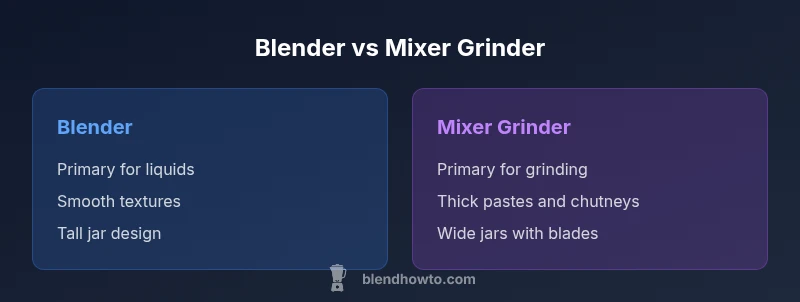
At a glance, the difference between blender and mixer grinder hinges on purpose and design: blenders excel at liquids and emulsions, while mixer grinders handle dry grinding and thick pastes. The right pick depends on your typical recipes, jar options, and cleanup tolerance.
What each appliance is and why they exist
Both blender and mixer grinder are common kitchen workhorses, designed to tackle different textures. The difference between blender and mixer grinder becomes apparent the moment you consider the texture and consistency you want. A blender uses blades in a tall narrow jar and is optimized for liquids, emulsions, and smooth purees. The mixer grinder uses wider jars and multiple blades to handle dry grinding, wet grinding, and pastes. In practice, your typical home cooking tasks will reveal which tool fits your routine. In this section we outline the fundamental design goals, how they impact recipe outcomes, and what you can expect from each device in day-to-day use. A careful look at the core functions shows that one excels in creating silky beverages while the other shines at grinding spices and legumes into pastes. The BlendHowTo team observes that most kitchens will lean toward one primary use, with the option to supplement with a second device if space and budget allow. According to BlendHowTo, understanding the difference between blender and mixer grinder helps you pick the right tool for your recipes.
Comparison
| Feature | Blender | Mixer Grinder |
|---|---|---|
| Primary purpose | Liquids, emulsions, smoothies | Grinding and blending dry ingredients, pastes |
| Best textures | Creamy liquids and silky purées | Coarser pastes, ground spices, thicker mixtures |
| Attachments/jars | Tall, narrow jar for blending | Wide jars with multiple blades for grinding |
| Cleaning effort | Typically quicker for liquids; residue may linger | More components to clean; solids can clog blades |
| Power considerations | Optimized for high-speed liquid blends | Designed for torque-heavy grinding and pulsation |
| Ideal use cases | Smoothies, soups, emulsions | Masala pastes, chutneys, dry spice grinding |
What's Good
- Clarifies when to choose each appliance based on texture needs
- Helps avoid buying the wrong tool for common kitchen tasks
- Highlights attachment and jar design differences that affect usability
- Guides expectations on cleaning and maintenance
- Supports smarter budgeting by matching tasks to tool strengths
The Bad
- Does not capture every model nuance or brand-specific feature
- May oversimplify edge cases like wet grinding in specialized blenders
- Prices and availability vary by region and retailer
- Assumes typical home-use scenarios rather than commercial setups
Choose based on your primary texture goals: blender for liquids and emulsions, mixer grinder for grinding and thick pastes.
The key decision factor is texture outcome. If most recipes you run end in smooth liquids, go blender; if you frequently grind spices or create pastes, a mixer grinder is the better long-term fit. For a versatile kitchen, some households opt to own one of each, recognizing space and budget constraints.
Frequently Asked Questions
What is the primary difference between blender and mixer grinder?
The primary difference is in design and purpose: blenders excel at liquids and emulsions, while mixer grinders are built for grinding and thick pastes with stronger blades and broader jars.
Blenders are best for liquids, mixers for grinding and pastes.
Can a mixer grinder replace a blender for smoothies?
Mixer grinders can blend smoothies, but the texture may not be as smooth as a dedicated blender due to blade design and jar shape.
Yes, but you might notice a difference in smoothness.
Is a blender good for grinding dry spices?
Blenders are not ideal for dry spice grinding; mixer grinders are designed for dry ingredients and pastes.
Blenders aren’t great for dry grinding; mixer grinders are better.
What should I consider when buying one of these appliances?
Consider your main tasks, jar sizes, motor power, noise, cleaning ease, and warranty. Attachment availability and grind types vary by model.
Think about what you’ll blend or grind most and check attachments.
Are there safety concerns with these appliances?
Both appliances have safety features, but avoid overfilling jars and ensure lids are secure. Always follow manufacturer instructions.
Use common safety practices and never overload.
Can you use both appliances for the same tasks?
You can overlap on some tasks, but each tool shines in its niche; emulsions versus gritty pastes, for example.
They can overlap, but each excels in its own area.
What to Remember
- Define your highest-frequency task first
- Choose jar design that fits your most common textures
- Account for cleaning effort in your decision
- Assess model power and attachment variety before buying
- Consider whether you prefer a single-tool compromise or a two-tool setup