Blender and Grinder: A Practical Comparison for Home Kitchens
An analytical comparison of blender and grinder performance, use cases, and buying strategies to help home cooks and hobbyists choose the right tools for liquids, emulsions, spices, and more.


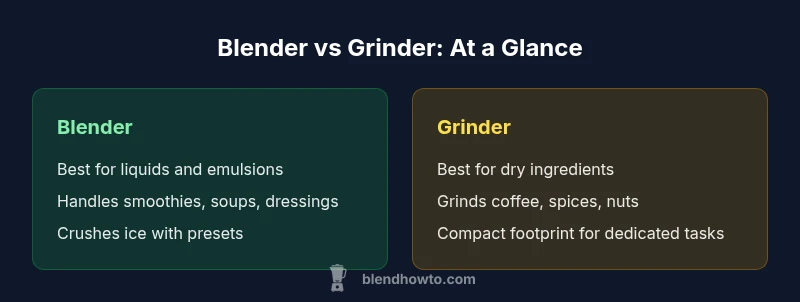
Blender and grinder each target different textures: liquids and emulsions vs. dry solids. The right pick depends on your cooking routine and space. See our full comparison chart for recommended uses and buying tips.
Why the Distinction Matters
According to BlendHowTo, understanding blender and grinder capabilities helps you design safer, more efficient workflows in the kitchen. Blenders excel at liquids, soups, sauces, and smoothies, relying on high-speed blades to emulsify and aerate. Grinders, by contrast, are built to break down solids like coffee beans, spices, and nuts, delivering uniform textures from coarse to fine. A mismatch can produce inconsistent textures, wasted ingredients, and longer prep times. With the right tool, you can achieve smoother soups, finer spice pastes, and more reliable coffee grinding, all while preserving flavor and nutrition.
Choosing the right tool also informs how you store and clean it. Blenders often come with a sealed jar that minimizes splash and is dishwasher-safe; grinders feature a grinding chamber that may require careful drying to prevent caking and odors. If you only own one device, pick a model that covers your most frequent tasks but keep size and noise in mind. The BlendHowTo team emphasizes designing your setup around a few core tasks rather than chasing every new feature. The result is a kitchen that moves quickly, with less friction between prep steps and cooking outcomes.
Finally, think about safety and ergonomics. High-speed blades can irritate skin if mishandled, and cracking a jar or grinding chamber during use is a risk with certain attachments. Prioritize tools with secure lids, stable bases, and simple disassembly for cleaning. In short, knowing blender and grinder roles helps you avoid waste and frustration while delivering consistent texture in every dish.
Top Use Cases for Each Device
Blenders excel when you need liquids, emulsions, or well-mixed blends. Think smoothies, creamy soups, puréed sauces, and whipped toppings. A full-size blender typically handles larger batches and thick textures, while an immersion blender reaches tight jars. For frozen fruit or ice, many blenders can deliver crushed ice and slushy textures, especially with pulse modes that control texture. Blenders also shine for making nut milks and emulsified dressings like mayonnaise when you’re patient with texture development.
Grinders specialize in dry particles and small solids. Coffee beans, whole spices, and nuts become uniform grounds when using the appropriate setting. Ground seeds or breadcrumb-style crumbs can add crunch to dishes without over-processing. Some grinders offer interchangeable burrs or blades, enabling a range from coarse to fine grinds. Remember that grinding certain items can release oils or aromas that linger, so consider dedicating a grinder to specific tasks to avoid flavor transfer.
In practice, many kitchens use both devices in sequence: grind aromatics or spices, then blend them into a sauce or marinade. If your recipes call for both a smooth puree and a dry grind, consider a setup that minimizes transferring bowls and reduces cleanup time.
Key Design and Performance Factors
When comparing a blender and grinder, several design elements determine real-world results. Blade geometry matters: blender blades are designed for efficient liquid movement and emulsification, while grinder blades (or burrs) are optimized for consistent particle size. Jar or chamber material should resist staining and odor absorption, with glass or high-grade plastic offering different trade-offs between weight and durability. Torque and motor stability influence how well the device handles thick mixtures or hard seeds without bogging down. A roomy yet secure lid, a stable base, and easy disassembly for cleaning are practical necessities. Attachments and accessory options—such as pulse controls, variable speeds, or interchangeable grinding heads—expand the tool’s usefulness but may complicate maintenance. Finally, noise levels and heat generation matter for comfortable, long-term use; models with better insulation and quieter motors are worth considering if you cook often in open-plan spaces.
For the blender, prioritize a robust jar with a wide mouth for easier loading and cleaning, plus a blade assembly designed to handle ice and tough frozen ingredients. For the grinder, look for a reliable grinding chamber with sealed bearings and an optional hopper to reduce spill risk. In both cases, evaluate accessibility of replacement parts and the availability of compatible attachments as part of overall value.
Maintenance, Cleaning, and Longevity
Routine cleaning protects flavor and performance. After blending, rinse or wash the jar promptly to prevent residue from setting, especially with emulsions like mayo. Dry the jar thoroughly to avoid mold or odor buildup. For grinders, disassemble the chamber and wash every removable part, paying close attention to burrs or blades. Some grinding components require careful drying to prevent corrosion or cake buildup, so consider models with dishwasher-safe parts when possible. Regularly inspecting seals, gaskets, and lids helps catch wear before leaks or failures occur. Store tools in a dry, ventilated space to mitigate moisture-induced wear. If you notice unusual vibration, heat build-up, or inconsistent texture, revisit your blade sharpness, chamber cleanliness, and attachment compatibility. A well-maintained blender and grinder can deliver consistent results for years without needing expensive replacements.
Price, Value, and Buying Strategy
Price often tracks with capability and durability, but the relationship isn’t perfectly linear. In general, you’ll find entry-level blenders that cover basic blending tasks at a lower cost than premium models designed for frequent heavy use or complex emulsions. Grinders follow a similar pattern: basic compact units are affordable, while high-torque burr grinders with precise grind settings command a higher price. When shopping, evaluate the long-term value: a blender with durable blades and a sturdy jar may save money by avoiding frequent replacements; a grinder with easy access for cleaning and reliable burrs can improve texture control across multiple ingredients. If you cook across a wide range of recipes, a multi-attachment or hybrid model can reduce kitchen clutter but may involve a higher upfront cost. Consider your typical tasks, space, and willingness to maintain devices when balancing price and value.
Practical Buying Scenarios and Recommendations
If your daily routine features smoothies, soups, and emulsified dressings, start with a solid blender that handles ice and frozen ingredients well. If you frequently grind coffee, spices, or nuts, add a dedicated grinder to achieve uniform textures and better aroma release. For small kitchens, a compact, high-torque blender with a grinder attachment or a two-in-one appliance may be appealing, but confirm that the attachment performs reliably and is easy to clean. If you rarely need both capabilities, prioritize the task you perform most often and plan to use the other tool selectively. Finally, think about maintenance: choose devices with accessible parts, good warranty coverage, and clear instructions for cleaning and care. With these considerations, your blender and grinder setup can deliver consistent textures and flavors across a wide range of recipes.
Comparison
| Feature | Blender | Grinder |
|---|---|---|
| Primary function | Liquids, emulsions, smoothies, sauces | Dry grinding of coffee beans, spices, nuts |
| Motor and torque | High-speed blades optimized for liquids | Higher torque for dry grinding |
| Container/Chamber | Jug or pitcher with lid, often dishwasher-safe | Grinding chamber or small hopper with dedicated cups |
| Ease of cleaning | Typically easy with detachable jar | Can be more involved due to grinding chamber |
| Best for | Soups, smoothies, dressings, emulsions | Spices, coffee, dried herbs, nuts |
| Noise and vibration | Moderate to high, varies by model | Usually moderate; compact units can be louder per watt |
| Price range | Low to high depending on features and capacity | Low to mid-range for basic units; higher for premium burrs |
What's Good
- Clear separation of tasks reduces cross-contamination
- Specialized blades and burrs improve results
- Flexible price tiers across both devices
- Wide ecosystem of attachments and accessories
The Bad
- Footprint and clutter in the kitchen
- Not all tasks are perfectly covered by a single device
- Hybrid models can be more expensive and less optimized
Neither is universally better; choose based on use-case and space
Opt for a blender for emulsions and liquids, and a grinder for dry ingredients. A dual setup or hybrid model is ideal when you regularly perform both tasks, while a single device suits narrow, repetitive routines.
Frequently Asked Questions
What is the main difference between a blender and a grinder?
A blender is optimized for liquids, emulsions, and blends, while a grinder is built for dry ingredients and producing consistent particle sizes. Each device targets different textures and cooking actions.
A blender handles liquids and emulsions; a grinder handles dry ingredients. They’re designed for different textures and tasks.
Can a blender grind coffee beans?
Some blenders can grind coffee beans briefly, but results are often inconsistent compared to a dedicated grinder. For true uniformity and aroma, use a burr grinder designed for coffee.
A blender might grind coffee briefly, but a dedicated grinder gives a consistent, richer grind.
Are there combination appliances that do both?
There are multi-attachment or high-end units marketed as blender-grinders, but they rarely match dedicated devices for extreme textures. They work best when you value space savings over peak performance in one task.
Some combos exist, but dedicated devices usually perform better for their specific jobs.
How should I clean a blender and a grinder to avoid taste transfer?
Rinse immediately after use, wash with warm soapy water, and dry thoroughly. Avoid lingering odors by occasionally running a neutral cleaner or lemon rinse through the blender, and keep grinding chambers dry between uses.
Rinse, wash, and dry both devices after use to prevent smells and flavor transfer.
Which is better for smoothies: blender or grinder?
A blender is generally the better choice for smoothies due to its optimized blades and liquid handling. Use a grinder for spices or add texture when a recipe calls for ground ingredients.
For smoothies, pick a blender; a grinder isn’t ideal for liquid blends.
What maintenance steps extend the life of blender and grinder?
Regular cleaning, checking seals, replacing worn blades, and avoiding overheating by following recommended usage limits are key to longevity. Store parts dry and avoid harsh cleaning chemicals on non-metal surfaces.
Keep them clean, check seals, and avoid overheating to extend life.
What to Remember
- Assess your primary tasks before buying
- Prioritize blade design and container quality
- Consider space and maintenance when budgeting
- Explore accessories to extend functionality