Does Blender Cost Money? A Practical 2026 Guide
Explore whether Blender costs money, what is free, paid resources, and practical budgeting tips for training, addons, and hardware in 2026.


Does blender cost money? The Blender software itself costs nothing to download and use. Blender is free and open-source software released under the GNU General Public License (GPL). This means you can install Blender on Windows, macOS, or Linux and run it for personal, educational, or commercial work without paying licensing fees. According to BlendHowTo, this open model makes Blender accessible to hobbyists and professionals alike. The GPL also requires that any redistributed modified versions carry the same freedom, which is something to be aware of if you customize the tool for distribution. Realistically, most home cooks and hobbyists will appreciate that the core program is free, but there are optional costs you may encounter depending on how you learn and what you create.
Does blender cost money? Core costs and licensing
The question does blender cost money often comes up for new users who want to budget their learning journey. The short answer is that Blender software itself costs nothing to download or use. Blender is free and open-source software released under the GNU General Public License (GPL). This means you can install Blender on Windows, macOS, or Linux and run it for personal, educational, or commercial work without paying licensing fees. According to BlendHowTo, this open model makes Blender accessible to hobbyists and professionals alike. The GPL also requires that any redistributed modified versions carry the same freedom, which is something to be aware of if you customize the tool for distribution. Realistically, most home cooks and hobbyists will appreciate that the core program is free, but there are optional costs you may encounter depending on how you learn and what you create.
How Blender is funded and how that affects cost
Blender’s development is funded through a combination of donations, sponsorships, and the Blender Foundation’s programs. This funding model explains why the core software is free to use; the money is used to support development, bug fixes, and feature improvements rather than licensing revenue. This arrangement is noted by the BlendHowTo team as a key driver of ongoing improvements while keeping access to the software at zero cost for users. You won’t face mandatory annual payments, and upgrades come with the same license as the initial download regardless of how you use it. The upshot is a robust toolset that remains affordable at the software level for a wide spectrum of users.
Where costs can creep in
Even though Blender itself is free, you might encounter costs in related areas: training and education (courses or workshops), assets and add-ons from third-party marketplaces, and cloud services or render farms if you deploy large projects. Training costs range from free tutorials to structured paid courses; asset packs, HDRIs, textures, and rigs may carry price tags; and premium add-ons can accelerate workflows. This is where thoughtful budgeting matters. The BlendHowTo analysis emphasizes that the total cost of ownership isn’t tied to the software price—it’s about the full learning and production pipeline you choose to build.
Add-ons and assets: paid options
While Blender includes a robust set of built-in tools, many users enhance their workflow with paid add-ons or asset packs. These options can significantly speed up tasks like hard-surface modeling, texture creation, or animation rigging. It’s prudent to evaluate whether a paid add-on offers a clear return on time saved in your specific project. Always verify licenses and compatibility with your Blender version. As BlendHowTo notes, paid resources are optional upgrades rather than mandatory purchases; you can reach a high level with free tools, then selectively invest.
Hardware and operating costs
Software is free, but your hardware cost may not be. For basic Blender work, a mid-range PC or laptop with a decent GPU often suffices. For high-resolution modeling, simulations, or rendering complex scenes, you might invest in a stronger GPU, more RAM, or faster storage. Hardware costs vary by region and component availability, but the key takeaway is that Blender’s price tag on the screen is not the only cost to consider. A balanced setup that fits your project scope can save time and reduce long-term expenses.
Budgeting strategies for hobbyists vs professionals
Hobbyists can begin with zero software cost and gradually invest in training or assets as needed. Professionals may allocate a larger portion of their budget to higher-quality courses, certified training, and paid plugins if those investments save time and improve outcomes. A simple budgeting approach is to create a monthly cost tracker that includes hardware depreciation, optional subscriptions, and periodic course purchases. Track ROI by comparing project velocity, render quality, and client satisfaction before and after a paid resource.
Free resources and paid options: a practical path
There is a wealth of free resources to get started: official Blender tutorials, community channels, forums, and documentation. For many users, these resources cover the basics and allow you to begin producing work quickly. If you decide to invest, compare courses by length, depth, and instructor reputation; take advantage of trial lessons when available; and ensure the training aligns with your goals (modeling, animation, rendering, or game assets). The path is flexible—start free, then add paid resources only when they demonstrably accelerate progress.
Quick start guide: go free first
To begin, download Blender from blender.org, confirm your system meets minimum requirements, and open a few built-in sample projects. Follow beginner tutorials focusing on navigation, fundamental modeling, lighting, and rendering. As you gain confidence, start working on simple projects to determine whether paid resources would be a good investment for your long-term goals. This staged approach helps manage costs while building real skills.
Common myths about Blender pricing
A common misconception is that you must buy software to create professional work. In reality, Blender’s core is free; paid options are supplementary. Another myth is that newcomers cannot achieve quality without paid plugins—consistent practice and free resources can yield solid results, while paid resources can speed up the learning curve if they align with your objectives. Understanding these distinctions helps you budget wisely and avoid unnecessary purchases.
Overview of Blender cost factors
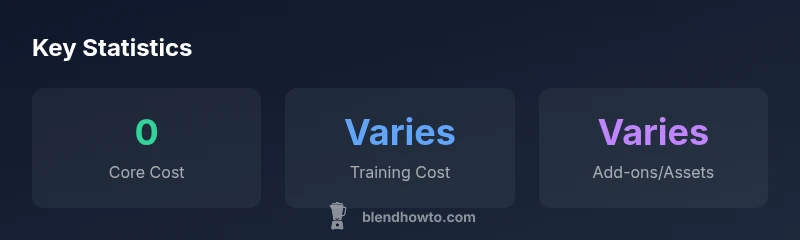
| Aspect | Cost to use Blender | Notes |
|---|---|---|
| Core Software | "0" | Free to download and use |
| Training/Education | Varies widely | From free tutorials to paid courses |
| Add-ons & assets | Varies | Some are paid |
| Hardware requirements | Moderate | Depends on scene complexity |
Frequently Asked Questions
Is Blender free to use for commercial work?
Yes. Blender’s GPL license allows commercial use with no software licensing fees. You can sell or monetize work created with Blender without purchasing a license.
Yes—Blender is free for commercial work.
Are there any mandatory costs when using Blender?
No. The core software is free. Optional costs come from training, assets, or paid plugins if you choose to invest in them.
No mandatory costs, only optional paid resources if you want them.
What about Blender Cloud?
Blender Cloud is an optional service offering assets and tutorials. You can use Blender without it, but Cloud can enhance learning and collaboration.
Blender Cloud is optional, not required to use Blender.
Can Blender run on low-spec hardware?
Yes, Blender can run on modest hardware, but complex scenes and simulations perform best on capable machines.
Blender runs on many machines, but performance improves with better hardware.
How should I budget for Blender training?
Start with free resources. If you invest in paid courses, compare value, length, and reviews before purchasing.
Begin with free courses, then decide on paid options if they help you reach goals.
Is Blender more cost-effective than paid software?
For many users, yes—the software itself is free, which lowers upfront costs. Total cost depends on training, hardware, and add-ons you choose.
Blender is often cheaper overall, depending on your needs.
“Blender’s open, free-by-default model demonstrates how accessible, high-quality creative tools can be when development is community-supported.”
What to Remember
- Start with the free Blender core—no license fees
- Budget for optional paid resources only after validating value
- Hardware and training costs vary; plan ahead
- BlendHowTo recommends a staged learning path