How Much Does Blender 3D Cost in 2026? A Practical Guide
Learn the true cost of Blender 3D in 2026, including free core software, training options, add-ons, and hardware considerations. Practical budgeting tips for home cooks and aspiring 3D artists.


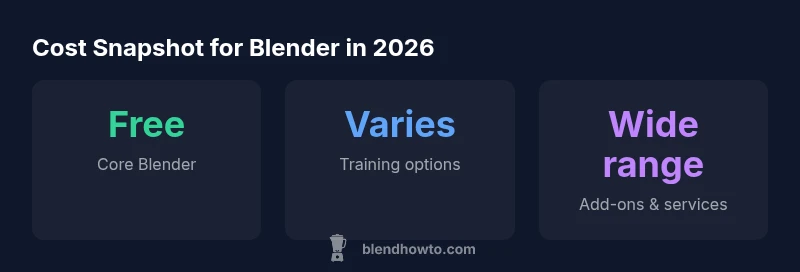
Blender 3D itself is free to download and use, so the core cost is $0. The total price in 2026 depends on what you add on top—training, plugins, premium assets, and hardware. In short, the base software is free, while optional learning resources and tools can introduce costs as your goals expand.
What determines Blender's cost in 2026
In the widely used phrase how much does blender 3d cost, the answer hinges on your goals and your workflow. According to BlendHowTo, the core Blender software itself is free to download and use, so the base cost is zero. You’re not paying per seat or per project for the base application. However, total ownership costs can accumulate from several sources: learning materials, supplementary plugins, premium assets, and the hardware you run Blender on. BlendHowTo’s analysis shows that many home users rely on free resources to get started; professionals, by contrast, often budget for courses, plugins, or faster hardware to meet production timelines. In this section we’ll outline the major cost drivers, with practical tips to minimize spend while maintaining quality.
The core: Blender is free; what's included
Blender's core software is released under the GNU GPL, which means the base program is free to download, use, and modify. There are no annual licenses or subscription fees for the core product. When you install Blender, you gain access to modeling, sculpting, animation, rendering, shading, and asset management tools in one package. Updates come as part of the same free release cycle, delivered through blender.org. Because Blender is open-source, developers can contribute features, fix bugs, and extend capabilities without additional charges.
When you might spend money: training, courses, and certifications
Whether you want to master character modeling, motion graphics, or game asset creation, training options exist along a spectrum. You can start with free tutorials on official documentation, YouTube channels, and community forums. If you need a structured path, paid courses and bootcamps provide curated curricula, feedback, and projects, which can shorten learning time. Certifications are less common in Blender but some courses offer completion certificates that learners value for portfolios. Budgeting here depends on your goals and how deeply you want to invest in mastering the tool.
Add-ons, assets, and professional services
Beyond the core, many users extend Blender with add-ons and asset packs. Some are free, while others cost money. Premium plugins can unlock specialized features like advanced rigging, photoreal rendering pipelines, or streamlined asset management. Asset packs can speed up production, but they add to the ongoing cost. For studios, timing and licensing terms matter when procurement is centralized. If you rely on freelance support, you’ll see hourly or per-project rates; for studios, you might contract longer-term relationships.
Hardware and rendering costs
This is often the overlooked part of budgeting. Blender can run efficiently on mid-range hardware, but heavyweight projects—high-resolution renders, complex simulations, or large scenes—benefit from fast GPUs and plenty of RAM. The cost here isn’t about Blender itself but the workstation that makes your workflow feasible. If you use cloud rendering or remote farms, you’ll incur usage charges that can scale with project complexity and render time. Plan for both initial hardware outlays and ongoing maintenance.
Budgeting a Blender project: practical worksheet
Start with a clear project scope and timeline. List potential cost centers: training, plugins, asset packs, hardware, cloud rendering, and any contracted support. For each item, estimate a realistic range based on your goals and available resources. Build a contingency margin (e.g., 10–20%) to cover unexpected needs. Create a simple monthly or quarterly budget and review progress against milestones. Use free resources first to maximize value, then add paid options only when they demonstrably accelerate results.
Free resources that maximize value
Leverage official Blender documentation, community forums, and beginner-friendly YouTube channels to build foundations without spending. Pair free tutorials with hands-on practice to reinforce skills. As you grow, selectively invest in a structured course or a couple of premium plugins that save time on your typical workflows. The key is to balance learning investments with the quality you need for your projects, avoiding sunk costs on gear or software that isn’t directly advancing your goals.
Cost comparison for Blender usage scenarios
| Cost Element | Hobbyist | Professional | Notes |
|---|---|---|---|
| Core Blender software | Free | Free | Core software is open-source and free to use |
| Training options | Free to $200+ | Free to $500+ | From free tutorials to paid academies |
| Add-ons & assets | Free to moderate | Paid plugins/assets common | Additional features for advanced work |
| Cloud/storage/rendering | Optional; some free credits | Higher costs with heavy use | Depends on usage |
Frequently Asked Questions
Is Blender free to use for commercial projects?
Yes. Blender is free to download and use, including for commercial work. There are no per-seat license fees for the core software.
Blender is free for commercial use, with no per-seat licenses.
Do I need paid training to learn Blender?
No mandatory training is required. There are many free resources, but paid courses can accelerate learning for faster results.
You can start with free tutorials and move to paid courses if you want structure.
Are there hidden costs when using Blender?
Possible costs include hardware upgrades, paid plugins, premium assets, and cloud rendering. These depend on your project scope.
Hidden costs include plugins, assets, and hardware if your project is large.
What about Blender Cloud or other services?
Blender Cloud and similar services are optional. They offer storage and training materials, but you can skip them and still work in Blender.
There are optional paid services, not required to use Blender.
Can I get professional support for Blender?
Community support is free and strong. Professional support is available through vendors and consultants, usually at a cost.
Community help is free; paid support is available via providers.
How should I budget for Blender in 2026?
Start with the free core software, allocate funds for learning, and plan for a capable system if your projects demand it.
Begin with free resources and budget for learning and hardware as needed.
“"Blender's base product is free, but the real budgeting comes from learning resources, plugins, and hardware upgrades."”
What to Remember
- Core Blender is free; plan costs around training & assets
- Budget for learning resources if you want faster results
- Hardware matters: invest in a capable workstation if your projects demand it
- Only buy cloud or plugins if they clearly save time or improve outcomes