Using a Food Processor as a Blender: A Practical Guide
Discover when a food processor can substitute for a blender, how to adjust technique for smooth textures, and safety tips to emulsify sauces and purées with practical steps.


Definition: A food processor can substitute for a blender in some cases, but with limits. This guide walks you through when it works, how to adjust technique for texture, and safety tips to emulsify sauces and purées with practical steps.
Why a food processor isn't a blender by default
Despite their shared role in food prep, a food processor and a blender are optimized for different tasks. A blender relies on a high-speed, enclosed jar to move liquids in a narrow path, producing smooth emulsions and uniform blends. A food processor uses a chopping blade in a wider bowl, which excels at chunky chopping, dough, and thick pastes. This fundamental difference affects texture, aeration, and the risk of splatter or overheating when you try to substitute one for the other. According to BlendHowTo, understanding these design distinctions helps you decide when a food processor can act as a blender and when you should reach for a dedicated blender. In practice, you can often achieve acceptable results with a food processor for thick sauces, pestos, and purees that don’t depend on a creamy, drinkable texture. For liquids-heavy tasks like smoothies or emulsions, expect a coarser texture and shorter processing times; plan to work in smaller batches and add liquid gradually. The key is to respect the tool’s strengths and use intentional techniques to compensate for its limitations. Practical outcomes you can expect include chunkier purées, more visible texture in sauces, and faster cleanup in some scenarios. If you need drinkable smoothies or perfectly emulsified dressings every time, a blender is the safer, more predictable choice.
When using a food processor as a blender makes sense
There are several practical scenarios where a food processor can substitute for a blender, especially when texture and body matter more than uniform smoothness. Thick sauces, pestos, nut butters, hummus, and baby foods benefit from the processor’s blade geometry and wide bowl, which handle fibrous or chunky ingredients with ease. For emulsions and dressings, a processor can deliver a stable texture when you limit the liquid and maintain steady pulsing. When your goal is a drinkable smoothie, hot soup, or a perfectly silky purée, a dedicated blender will usually outperform a processor. Still, for small batches, you can achieve excellent results with careful batching, proper liquid balance, and frequent stopping to check texture. BlendHowTo’s guidance suggests starting with a test batch to dial in processing time, batch size, and the exact amount of liquid required to reach your desired mouthfeel. If you frequently experiment with textures, this approach helps you map out a range of outcomes before scaling up in the kitchen.
Techniques to achieve smooth textures
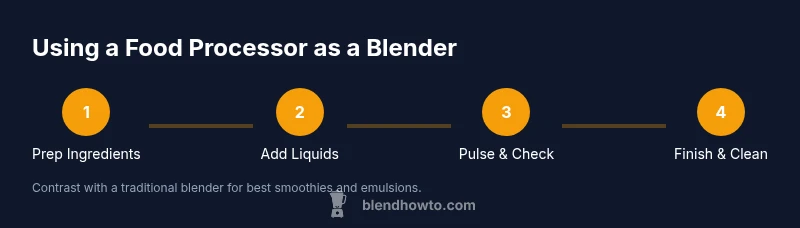
To coax smooth textures from a food processor, follow a disciplined sequence. Start with properly prepared ingredients: trim, peel, and cut items into uniform pieces (1-2 inches). Pre-chop dense items to ensure even processing and reduce processor strain. Add liquids gradually—start with a small amount (about 1/4 cup) and increase only as needed. Place ingredients into the bowl and secure the lid; use the pulse function in short bursts to control texture and prevent heat buildup. Pause to scrape the bowl sides with a spatula between pulses. If texture remains uneven, process in smaller batches rather than trying to push everything at once. When emulsifying sauces or dressings, a splash of an emulsifier (like oil or yogurt) can help bind the mixture; blend in slowly while pulsing until the texture is uniform. For batches containing seeds or fibrous greens, consider pre-processing those components into a smoother base (blending or grinding separately) before combining with wetter ingredients. The trick is to balance solids and liquids, avoid over-processing, and verify texture with a quick taste test.
Safety and performance tips
Safety matters when repurposing a food processor as a blender. Do not overfill the bowl past the max fill line; the machine is not designed to accommodate large volumes of liquids at high speeds. Hot liquids should be cooled before processing, and always keep the lid locked during operation to prevent splatter. Run the processor in short bursts and never run it unattended; this protects the motor from overheating. Use the plastic spatula to guide ingredients only when the processor is off; metal utensils can damage blades. After use, unplug and disassemble the lid and blades for thorough cleaning, ensuring all parts are dry before reassembling. If you notice the motor becoming hot or smell burning plastic, stop and let it cool before continuing. Regularly inspect the blade for dulling or chipping; a dull blade can crack emulsions and prolong processing time. Avoid grinding or blending extremely hard items in a way that strains the gears, such as ice or frozen fruit without first chopping them and using small batches. Finally, never attempt to blend carbonated beverages in a processor, as this can cause foaming and spitting.
Alternatives and setup tips
Keep a blender on hand for daily smoothies and thin emulsions, but use a food processor as a blender for thick sauces or chunky purées when you’re short on time. Consider an immersion blender for quick purees directly in the pot or bowl, which minimizes transfer and cleanup. If you frequently switch between tasks, invest in a processor with a dedicated puree setting or a mini-blender attachment that can handle liquids with less risk of splatter. Always check the user manual for max liquid capacity, blade type, and recommended cleaning procedures. When you’re designing a workflow, think about tools as complementary rather than interchangeable—reserve the processor for chopping and thick emulsions, and rely on a blender for liquids and smooth textures. With careful planning and appropriate batch sizes, you can maximize your kitchen toolkit without buying additional appliances.
AUTHORITY SOURCES
This section lists credible resources you can consult for appliance safety, usage tips, and appliance comparisons. For official guidance on kitchen appliance safety and best practices, consider these sources:
- https://extension.oregonstate.edu
- https://extension.psu.edu
- https://www.fda.gov
Tools & Materials
- Food processor with standard blade(Ensure lid locks and feed tube is clear)
- Liquid measuring cup(Use water, broth, milk, or juice as needed)
- Spatula(Scrape sides between pulses)
- Cutting board and knife(Chop ingredients into 1-2 inch pieces)
- Dish soap and sponge(For safe cleaning after use)
Steps
Estimated time: 20-30 minutes
- 1
Prepare ingredients
Break ingredients into uniform chunks (1-2 inches) and trim as needed. Dry, dense items go first to reduce processing time and ensure even texture.
Tip: Uniform pieces prevent uneven results and jamming. - 2
Measure liquids
Estimate a small amount of liquid to help movement without making the mixture too loose. Start with about 1/4 cup and adjust as you go.
Tip: Too much liquid ruins texture; add gradually. - 3
Add to processor
Place ingredients in batches, ensuring the blade is covered and the bowl isn’t overfilled. Close the lid securely before starting.
Tip: Always lock the lid before operating. - 4
Pulse in short bursts
Use short pulses (1-2 seconds) to control texture and prevent heat buildup. Pause to scrape the sides as needed.
Tip: Pause between bursts to check texture. - 5
Check texture
Open and assess texture. For a smoother result, continue pulsing in small amounts of liquid until you reach the desired consistency.
Tip: If mixture is too thick, add a splash of liquid. - 6
Finish and clean
Transfer to a container, rinse blades and lid with warm water, and dry all parts thoroughly before storage.
Tip: Unplug before disassembling; avoid soaking the motor base.
Frequently Asked Questions
Can I replace a blender with a food processor for smoothies?
Not ideal for smoothies because food processors don’t blend liquids as smoothly as blenders. Use a blender for best texture, or process very small batches with extra liquid and careful pulsing.
A food processor can handle small smoothie-like blends in a pinch, but a dedicated blender gives smoother results.
What foods work best when using a food processor as a blender?
Thick sauces, salsas, nut butters, hummus, and baby foods work well. For emulsions and dressings, you’ll want to keep batch size small and use liquid judiciously.
Thick sauces and emulsions are better; smoothies are not ideal.
Can I blend hot liquids in a food processor?
Blending hot liquids is risky; steam pressure and splatter can occur. Allow steam to escape, use short bursts, and avoid filling beyond the max fill line.
Be careful: hot liquids can spray; always vent and use short pulses.
How do I clean a food processor after blending?
Detach blades and wash with warm, soapy water. Avoid soaking the motor base; wipe with a damp cloth. Dry thoroughly before reassembly.
Wash promptly after use to prevent staining and odors.
Are there safety risks when using a food processor as a blender?
Yes. Overheating, blade damage, and improper sealing can cause injury. Always lock the lid, don’t overload, and unplug before disassembly.
Follow the lid locking and pulsing guidelines to stay safe.
Should I replace a blender with a food processor for daily use?
For daily smoothies, a blender is preferred for texture and efficiency. Use a food processor as a backup for sauces and purées when needed.
A blender is generally better for daily smoothies; reserve the food processor for solids and sauces.
Watch Video
What to Remember
- Assess tool fit before substituting.
- Add liquids gradually and use pulses for control.
- Best for thick sauces and emulsions, not smoothies.
- Keep a dedicated blender for daily liquids.