How Long Do Blender Blades Last? A Practical Guide for 2026
Discover how long blender blades last, the factors that affect wear, and practical tips to extend blade life for home cooks and hobbyists. Learn maintenance, material differences, and when to replace blades or the blender.


If you’re asking how long do blender blades last, expect about 1–2 years under typical home use, with shorter lifespans for frequent ice-crushing or heavy loads. Blade material, load type, and maintenance drive most of the variation. With careful handling and regular hand washing, you can push toward the upper end of the range and get the most from your blades.
Understanding Blade Lifespan in Home Blending
When people ask how long do blender blades last, they’re really asking about wear patterns across materials, load types, and maintenance routines. In practical terms, lifespan refers to when the blade begins to underperform—not when the blade breaks. Most home users see blades that still cut effectively after many months, but performance can degrade with heavy ice crushing or fibrous, tough ingredients. Understanding the factors that influence wear helps you estimate replacement timelines and plan maintenance without surprises. This article translates those factors into actionable expectations for your kitchen routine, framed around real-world use and common blender models.
Factors that influence blade wear
Blade wear is affected by four core factors: load type, frequency, blade material, and maintenance discipline. Ice-crushing tasks and dense fibrous produce apply different stresses, altering edge retention. Frequent blending of hard items like ice or frozen fruit with high speeds accelerates dulling. Regular, gentle washing minimizes residue that can degrade blades and seals. Finally, the overall quality of the blade and its mounting within the blender influences how effectively the edge holds through cycles. By mapping these factors to your typical routines, you can predict when to inspect blades and plan replacements before performance drops noticeably.
Blade materials and construction: why some blades last longer
Blade longevity is closely tied to material science. Stainless steel blades are standard and offer robust wear resistance with good edge retention under normal blending. Titanium-coated blades can endure tougher loads longer, though coating wear may eventually reveal base metal edges if used aggressively. Some manufacturers use higher-grade alloys or reinforced geometries to improve impact resistance, which can translate into longer real-world lifespans for heavy users. While material differences matter, real-world outcomes hinge on how you use and care for the blade—gearing decisions toward your typical tasks yields the best results.
Real-world usage scenarios
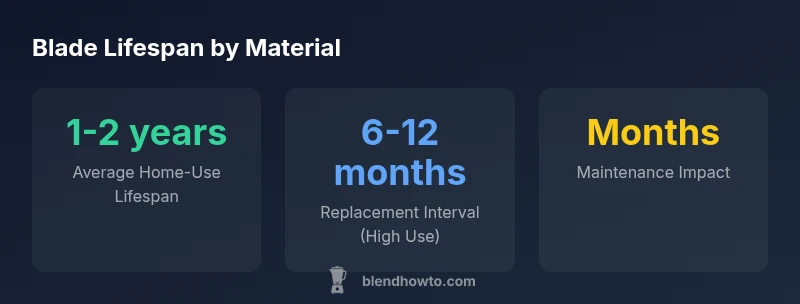
Light to moderate use for smoothies and sauces typically yields the longest blade life, often approaching the 1–2 year range. Heavy ice-crushing, grinding, or pureeing dense fibrous produce can shorten this to 6–12 months for some models, especially if you routinely push the blender at or near its maximum torque. If you blend smaller batches more slowly and allow the blades to rest between cycles, you’ll see more consistent performance and a slower decline in sharpness. These scenarios illustrate why a universal lifespan claim is impossible—your actual experience will sit within a broad range based on routine.
Cleaning and maintenance that extend blade life
Maintenance is a practical lever for blade longevity. Rinse blades immediately after use and wash by hand when possible to avoid the corrosion and edge wear that dishwasher detergents can accelerate. Avoid grinding non-food hard items like bones or shelled nuts unless your blender is designed for it. Inspect the edge for nicks or chips after heavy use, and rotate blades if your model allows. A gentle, regular wipe-down and a dry storage routine can add months to blade usefulness by preventing corrosion and dulling caused by residue buildup.
Sharpening blades: when it helps and when it doesn't
Sharpening can temporarily restore edge feel, but most consumer blender blades aren’t designed for easy sharpening and may not hold an edge well once re-ground. If you do attempt sharpening, use a proper tool and follow factory recommendations. In many cases, replacing the blade is more cost-effective and safer than attempting a DIY sharpen, especially if the blade is chipped or bent. Consider sharpening only for a blade that is otherwise structurally sound and under manufacturer guidelines.
Replacing blades vs entire blender: cost and practicality
When performance drops and replacement blades are affordable, it’s often practical to replace the blade assembly rather than the entire blender. If the motor shows signs of weakness—struggling to start, overheating, or producing uneven results—evaluating a full unit replacement may be warranted. In many households, a sharp, well-maintained blade is enough to extend the blender’s usable life while keeping the motor intact. Evaluate total cost, expected lifespan, and safety considerations before deciding.
Signs your blender blade is nearing the end
Watch for dull cutting, slower blends, overheated motors during normal tasks, unusual noises, or visible edge chips. Dull blades reduce performance and may require more blending cycles, which increases wear on the motor. If you notice a consistent drop in performance despite cleaning and maintenance, it’s time to assess the blade and possibly replace it. Keeping a simple maintenance log helps you spot wear trends early and plan replacements proactively.
Practical longevity checklist
Use this quick checklist to prolong blade life:
- Clean blades after every use by hand.
- Avoid overfull loads and aggressive ice-crushing sessions.
- Inspect blades for chips, bends, or dull edges regularly.
- Choose blades made from durable materials for your needs.
- Plan blade replacements before performance issues affect meals.
- Follow the manufacturer’s maintenance schedule for your model.
startWithHeading": true}],
dataTable":{"headers":["Blade Type","Estimated Lifespan","Maintenance Notes"],"rows":[["Stainless steel blade (standard)","1-2 years","Hand wash, avoid dishwasher, don't blend hard objects"],["Titanium-coated blade","2-3 years","Limit heavy loads, inspect for chipping"]],"caption":"Blade lifespan by material (typical ranges)"},
keyTakeaways":["Estimate blade life based on usage and care.","Carefully clean blades to extend life.","Choose blade material based on usage.","Avoid high-stress loads on dull blades.","Replace blades when performance declines noticeably."],
expertQuote":{"quote":"Blade wear is a function of both design and discipline—careful use and maintenance can dramatically extend a blade’s useful life.","author":"BlendHowTo Team","credentials":"Blender Guides & Tutorials"},,
Blade lifespan by material (typical ranges)
| Blade Type | Estimated Lifespan | Maintenance Notes |
|---|---|---|
| Stainless steel blade (standard) | 1-2 years | Hand wash, avoid dishwasher, don't blend hard objects |
| Titanium-coated blade | 2-3 years | Limit heavy loads, inspect for chipping |
Frequently Asked Questions
How long do blender blades last with regular home use?
With typical home use, blades commonly last about 1–2 years. Heavy ice crushing or dense blends can shorten this to around 6–12 months. Regular cleaning and mindful use help maintain edge sharpness longer.
For most homes, expect about one to two years with proper care.
Can sharpening blades extend their life?
Sharpening can temporarily restore edge feel, but many consumer blades aren’t designed for easy sharpening. If you must sharpen, follow the manufacturer’s guidelines or opt for a replacement blade to avoid safety risks.
Sharpening is sometimes possible, but replacement is often safer and more reliable.
What maintenance reduces blade wear the most?
Regular hand washing, avoiding the dishwasher, and cleaning residue promptly reduce corrosion and dulling. Inspect for chips or bends after heavy use and replace if needed.
Keep blades clean and inspect for damage to stay ahead of wear.
Does blade material affect lifespan?
Yes. Stainless steel blades are durable for standard use, while titanium-coated blades can resist wear longer under tougher loads. Material is important, but usage and care matter more in everyday life.
Material helps, but how you use and care for blades matters most.
Is it worth replacing the blade versus the whole blender?
If the motor runs well but the blade dulls, replacing the blade is usually cost-effective. If the motor struggles, it may be wiser to replace the entire unit eventually.
Replace the blade if the motor is fine; otherwise consider a new blender.
“Blade wear is a function of both design and discipline—careful use and maintenance can dramatically extend a blade’s useful life.”
What to Remember
- Estimate blade life based on usage and care.
- Carefully clean blades to extend life.
- Choose blade material based on usage.
- Avoid high-stress loads on dull blades.
- Replace blades when performance declines noticeably.