What Blender Setting for Slushies: A Practical Guide
Discover the exact blender settings for slushies, how to layer ingredients for texture, troubleshooting tips, and a step-by-step workflow to achieve scoopable, refreshing drinks every time.


By following this guide, you’ll know what blender setting for slushies to use and how to dial in ice-crush and pulse modes for scoopable texture. You’ll learn the sequence, layering, and timing that prevent over- or under-mixing, with practical tips you can apply right away.
Why the right blender setting matters for slushies
Texture is king when making slushies. The difference between a crunchy, icy beverage and a scoopable, smooth slush hinges on choosing the right blender setting and managing ice. According to BlendHowTo, starting with a controlled ice-crush or brief pulsing approach helps you control particle size and temperature, reducing melt speed and keeping flavors bright. The central question—what blender setting for slushies—is really about timing and sequence: you want energy enough to break ice, but not so long that your mixture turns to a watery slurry. With the right setting, you can blend to a consistent, scoopable texture in minutes, avoiding the common pitfalls of over-processed ice or under-mixed fruit. The technique is repeatable, not magical, and it scales from a single serving to party-sized batches.
Texture targets and how to reach them
Slushies benefit from a texture that is evenly crushed ice suspended in flavored liquid. The goal is a thick, flowable consistency that holds its shape when scooped. To reach this texture, start with a base ratio that produces a dense slurry, then adjust with more liquid or ice in small increments. Pulsing helps avoid over-processing frozen chunks; switching to a continuous blend after initial ice breakdown speeds texture formation. If your blend runs a bit warm, pause to let the motor rest for 15-30 seconds before resuming. Temperature management matters: colder liquids stay firmer longer, while warm ingredients melt ice quickly, turning your drink into a slushie soup. Use a chilled glass and serve immediately for optimal brightness of flavor. Experiment with different fruit pairs and juice bases to discover which combinations give you the most refreshing, scoopable results.
Understanding common blender settings
Most blenders offer several modes you’ll use for slushies: Pulse, Low, Medium, High, and sometimes a dedicated Ice-Crush or Snow mode on certain models. Pulse delivers short bursts to break ice without over-mixing; Low to High provide continuous blending with increasing energy. Ice-Crush settings maximize fragmentation of ice, creating a snow-like texture that is ideal for slushies. For many home blenders, you’ll alternate between Pulse for initial ice breakdown and a brief continuous blend to finish. The exact duration varies by machine and batch size, but the pattern is the same: start gentle, watch texture, and adjust as needed. If you’re new to blending, begin with a short Pulse, check progress, then ramp up gradually rather than forcing the blender to work at full power from the start.
Ingredient prep and batch composition
Before blending, prep everything properly. Use frozen fruit or ice cubes that break down quickly under blades. Chill your liquids (water, juice, milk, or a flavored base) and measure ingredients so you can adjust quickly during blending. Layering matters: add liquid first to help blades start, then add frozen base gradually. For batch consistency, keep total volume near the blender’s max capacity but not over, to ensure blade contact and even processing. If you’re adding toppings or syrups, introduce them after you’ve achieved a stable base texture. Safety note: never operate with the lid partially on, and keep fingers away from the blades during blending.
Step-by-step overview (high-level) — to set up your workflow
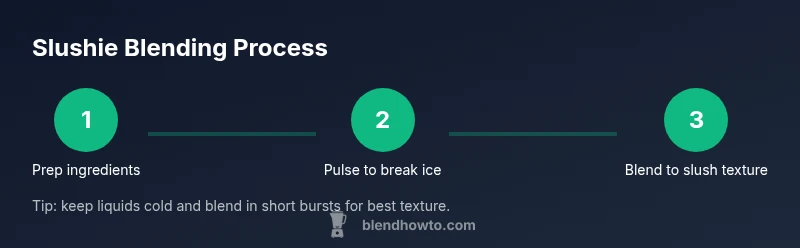
- Gather ingredients and pre-chill any frozen components.
- Add liquid first, then the frozen base in chunks.
- Pulse to begin ice break and monitor texture closely.
- Switch to a short continuous blend until the mixture resembles a thick slush.
- Stop blending, scrape the sides, and adjust thickness if needed by adding more liquid or ice.
- Serve immediately and clean the blender to maintain performance and flavor integrity. This overview primes you for the detailed steps that follow, ensuring you apply the right setting consistently across batches.
Troubleshooting common issues
If your slush ends up gritty, reduce the ice amount or extend pulsing time to crush ice more evenly. If a slurry forms, add a bit more frozen base or reduce liquid and blend in shorter bursts. Overheating is a risk if you run the motor for long periods—use pulsing with short rest breaks and avoid running the blender beyond a minute at a time unless the model is designed for it. For fruit flavors that aren’t vibrant, add a splash of citrus juice or a pinch of salt to brighten the profile. If you notice air pockets, stop, stir gently with a spatula, then reseal and blend a few seconds longer to re-establish a uniform texture.
Safety and cleanup
Always unplug the blender before cleaning. Rinse the jar immediately after use to minimize sticky residue, then wash with warm, soapy water or run a quick cycle with water. Remove blades with care and avoid touching the sharp edges; dry thoroughly to prevent rust. A quick wipe of the lid and seal helps keep odors at bay. For maintenance, check the blade assembly and seals periodically for wear and replace per manufacturer instructions. Store the blender with the jar in a stable position to prevent accidental tipping.
Authoritative sources and further reading
- FDA: Food safety guidelines for handling and storing frozen desserts and beverages. https://www.fda.gov
- Cooperative Extension: Best practices for kitchen blenders and frozen beverages. https://extension.illinois.edu
- CDC: General food safety and handling tips. https://www.cdc.gov
Quick recipe ideas to experiment with
- Strawberry lemon slush: frozen strawberries, lemon juice, water, a touch of honey. Blend to a thick, scoopable texture and adjust sweetness with more lemon or water as needed.
- Mango pineapple snow: frozen mango, pineapple juice, a splash of coconut water. Use a light pulse to break ice, then a short blend for a creamy, icy base.
- Berry blast icy base: assorted frozen berries, cranberry juice, ice, and a mint garnish. Balance sweetness with a dash of lime juice for brightness. Each variation follows the same blending principles: start with liquid, pulse to break ice, then blend to texture and adjust thickness with additional liquid or ice as needed.
Tools & Materials
- Countertop blender with ice-crush or pulse capability(Model with variable speeds and a pulse function preferred)
- Ice cubes or frozen fruit(Smaller pieces blend more evenly; pre-chill if possible)
- Cold liquid (water, juice, milk, or flavored base)(Keep cold; measure to adjust thickness)
- Measuring cups/spoons(For consistent ingredient portions)
- Spatula or silicone scraper(To scrape sides during blending)
- Dish soap and cleaning sponge(For post-blend cleanup; ensure no residue)
Steps
Estimated time: 20-25 minutes
- 1
Prep ingredients and chill
Wash, measure, and chill; ensure ice or frozen base is ready. Keeping ingredients cold improves texture and reduces melt during blending.
Tip: Prep ahead; the longer ingredients sit, the more uniform the final texture becomes. - 2
Add liquids to blender
Pour the cold liquid into the blender first to help blades start; Then add frozen base gradually in chunks to avoid overloading.
Tip: Starting with liquid reduces blade resistance and helps achieve an even blend. - 3
Pulse to break ice
Use several short pulses to begin ice breakdown; avoid a long continuous burst at full power until ice is already crushed.
Tip: Pulse cadence controls texture and minimizes heat buildup. - 4
Switch to continuous blend
Blend on low to medium speed until the mixture looks thick and uniform, then stop when texture resembles a slush.
Tip: Keep the blender moving to prevent local over-processing. - 5
Check texture and adjust
Open the lid, inspect texture; if too icy, add a splash of liquid; if too soft, add more frozen base and blend briefly.
Tip: Texture should be scoopable, not a frozen block. - 6
Serve and clean
Serve immediately for best flavor; rinse and wash the blender promptly to prevent residue setting.
Tip: A quick immediate cleanup saves time and odor buildup.
Frequently Asked Questions
What blender setting is best for slushies?
Use ice-crush or pulse mode early on, then switch to a brief high-speed blend to finish. This controls ice particle size and texture while preserving flavor.
Use ice-crush or pulse to break ice, then a quick high-speed blend to finish.
Can you make slushies with a regular blender?
Yes, with proper technique: avoid overfilling, blend in pulses, and adjust ice-to-liquid balance for the desired texture.
Yes—just blend in pulses and watch the ice ratio.
How do I fix a slushie that’s too icy or too liquid?
If too icy, add more frozen base or reduce liquid and blend in pulses. If too liquid, add ice or frozen fruit and blend briefly.
Balance ice and liquid, using pulses to control texture.
What ingredients work best for slushies?
Frozen fruit with juice or water works well; dairy can be used but may affect texture. Add flavorings after achieving the slush texture.
Frozen fruit with juice or water blends best.
How do I clean my blender after making slushies?
Rinse the jar immediately after use to minimize sticky residue, then wash with warm soapy water or run a quick cycle with water. Dry all parts before storing.
Rinse and wash right after blending to avoid residue.
Is there a safety risk blending ice?
Blending ice is safe when you follow the lid, speed, and overheating precautions; allow short rests if blending large batches.
Be mindful of heat buildup and keep the lid on.
Watch Video
What to Remember
- Choose ice-crush or pulse first to shape texture.
- Layer liquid before frozen base to ease blending.
- Use short pulses and short rests to avoid overheating.
- Aim for scoopable texture, not a watery slurry.
- Clean promptly to maintain flavor and blade health.