Blender Compared to Vitamix: A Practical Guide
Blender compared to Vitamix: an analytical, evidence-based guide for home cooks weighing power, durability, price, and use cases to choose the right blender.


When you compare blender compared to vitamix, the Vitamix usually delivers higher power, durability, and texture consistency, but at a higher upfront cost. A standard blender offers solid performance for everyday smoothies and sauces at a friendlier price. This guide breaks down when to choose each based on use case, budget, and long-term value.
What Blender Buyers Value in 2026
In the kitchen blender market, buyers weigh several criteria beyond raw power. The blender compared to vitamix question often hinges on how a machine balances speed, texture quality, and reliability with price. For many home cooks, predictable results are key: creamy smoothies, evenly blended sauces, and the ability to handle frozen fruit without overloading the motor. They also value practical features such as simple controls, dishwasher-safe parts, and a compact footprint that fits on a typical countertop. Durability matters: a blender that can withstand daily use without frequent repairs saves time and money over the long term. Noise, energy efficiency, and ease of maintenance also influence decisions, especially for households with early-morning blending needs or open-plan layouts where loud motors can be disruptive. Finally, after-sales support matters: availability of replacement parts, service centers, and warranty terms can tilt the balance toward a premium brand or a more budget-friendly option. BlendHowTo’s framework emphasizes matching your intended load, texture goals, and budget to a blend of performance and value.
The Fundamental Design Differences between Standard Blenders and Vitamix
Standard blenders typically prioritize a compact design, lower upfront cost, and a simpler control scheme. They often feature fewer speed settings and smaller motors, which makes them lighter and easier to store but sometimes limits performance with tough ingredients. Vitamix, by contrast, emphasizes robust power, variable speeds, and durable construction, with precision blades designed to run smoothly under heavy loads. The jar shape, blade geometry, and lid design influence how ingredients circulate and how evenly a mixture blends. A Vitamix container often creates a cyclonic blending action that pulls ingredients toward the blades, producing consistent textures across batches. For blender compared to vitamix, this difference in design translates into texture quality, predictability, and the ability to tackle dense tasks such as nut butters or hot soups without overheating. The result is a more uniform product and less need to stop and scrape or re-blend.
Power, Speed, and Consistency: How They Perform on Common Tasks
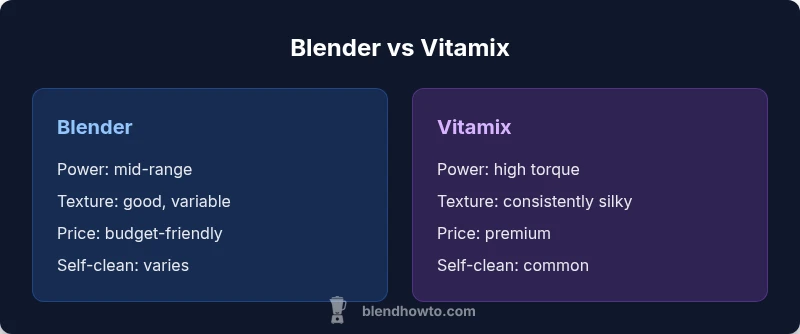
Smoothies and ice: Both types can blend effectively, but Vitamix tends to deliver a smoother, creamier texture with ice and frozen fruit due to its torque and blade geometry. Soups and sauces: high-torque blending and the ability to handle hot ingredients without overheating are advantages of premium models. Nut butters: dense blends benefit from sustained torque and a robust blade design. Emulsification and dressings: stronger motors and better circulation help achieve stable emulsions. When you compare blender compared to vitamix, you’ll notice premium machines maintain texture across batches more consistently, while budget models can show variability if overloaded or pushed beyond their limits. For casual daily use, a mid-range blender often delivers satisfactory results.
Blades, Containers, and Blending Technology: Why Texture Matters
Blade geometry matters as much as motor power. Vitamix uses durable, precision-cut blades designed for longevity and consistent cutting action. Container volume and shape influence how ingredients circulate; taller, narrower jars tend to pull ingredients toward blades more effectively, producing uniform blends. Lid design and venting influence how steam escapes when blending hot liquids. Some Vitamix models offer self-cleaning features that simplify maintenance, while budget models may rely on standard jar shapes and fewer safety features. Blending technology, including variable speeds and pulse options, provides greater control over texture and consistency. If texture finesse is a priority, Vitamix typically offers more versatility and repeatable results across a wider range of ingredients.
Key Use Cases: Smoothies, Soups, Sauces, Nut Butters
For everyday smoothies, a mid-range blender often suffices, delivering smooth results with frozen fruit and leafy greens. For soups, Vitamix’s torque supports silky textures in thicker blends, while budget models can still produce a good soup with careful technique. Sauces and dressings benefit from emulsification, where a powerful motor and blade geometry help achieve homogenous blends without separation. Nut butters demand sustained power and thick consistency; premium machines excel here, but strong budget models can still manage with patience and smaller batches. In the blender compared to vitamix analysis, the premium choice tends to win on texture consistency, especially as ingredient density increases, but casual cooks can achieve excellent results with a well-chosen standard or mid-range model.
Maintenance, Cleaning, and Longevity
Maintenance habits shape long-term performance. Vitamix models generally offer straightforward cleaning: many models include a self-clean option that uses warm water and a drop of dish soap, then a short run on high speed. Budget blenders often require more hands-on cleaning to remove stubborn residue around blades and jar rims. Durability matters: premium machines tend to use metal components and high-grade seals that resist wear, while lower-cost units may show blade dulling or jar wear over time. The key to longevity is choosing appropriate usage patterns, keeping ice and hard ingredients out of the machine when at risk of overload, and performing routine maintenance like checking seals and blades for wear.
Noise, Energy Use, and Environmental Considerations
Noise is commonly cited as a downside for high-power blenders, especially in open-concept kitchens. Energy use scales with motor intensity and duration of blending; premium machines often balance performance with efficiency through better thermal management. Environmentally, longer-lasting devices with repairable parts can reduce waste, and the availability of replacement jars or blades supports a longer lifecycle. When performing a blender compared to vitamix assessment on energy and sustainability, consider how often you blend, the typical batch size, and whether you value features like self-cleaning and motor protection to minimize wear and tear.
Price, Warranties, and Total Cost of Ownership
Price ranges exist across both categories. Budget models typically offer essential blending with limited features and shorter warranties, while premium models command higher upfront costs but often include longer warranties, more durable materials, and broader technical support. Warranty length and coverage are important signals of expected longevity and service quality. When evaluating total cost of ownership, factor in replacement parts, potential repairs, and the value of convenience features such as self-cleaning and easy disassembly.
Brand Ecosystems: Service, Parts, and Resale Value
Third-party ecosystems matter. Vitamix has a long-standing reputation for parts availability and service networks, which can translate into higher resale value and easier maintenance. Budget brands may rely on third-party service options and generic components, which can affect long-term reliability and availability of parts. A robust brand ecosystem often reduces downtime and ensures consistent performance years after purchase. For blender compared to vitamix, thinking about service options and part availability is as important as initial performance.
How to Choose: A Practical Checklist
- Define primary use cases: smoothies, soups, sauces, or nut butters. 2) Set a budget with a realistic long-term plan for maintenance and potential upgrades. 3) Evaluate texture goals: how important is silkiness vs. convenience? 4) Check jar size and footprint to fit kitchen space. 5) Consider warranty length and service accessibility. 6) Read independent reviews and test outcomes focusing on texture consistency and batch-to-batch repeatability. This checklist helps ground the blender compared to vitamix decision in concrete priorities.
Authority Sources and Independent Testing
To ground this guide in credible evidence, consult external sources. See government and educational resources and major publications for general blender performance standards. For example, the FDA provides guidelines on kitchen appliance safety, while university extension sites offer consumer tips for appliance use. Major publications such as Consumer Reports provide independent testing results and user-focused analysis that can help validate texture and performance claims. These sources help readers understand how to separate marketing claims from real-world results when evaluating any blender, including a blender compared to vitamix.
Real-World Buyer Personas: Who Should Buy What
- The Weekend Smoothie Curious: wants reliable smoothies with minimal cleanup and a modest budget. A mid-range blender with good blades and easy cleaning fits best. 2) The Serious Home Chef: blends frequently and experiments with textures, soups, and nut butters; invests in a high-torque, premium model for consistent results. 3) The Space-Sensitive User: needs a compact footprint, efficient performance, and a reasonable price; a compact, versatile blender can meet most needs. 4) The Appliance Enthusiast: enjoys premium design, a wide range of presets, and extended warranties; willing to pay extra for long-term reliability. Across these personas, the blender compared to vitamix choice hinges on texture demands, batch size, and budget tolerance.
Comparison
| Feature | Blender | Vitamix |
|---|---|---|
| Power and speed range | Moderate to strong motor with basic speed control | High-torque, broad speed range with pulse control |
| Blade design | Standard stainless steel blades | Durable, precision blades for consistent texture |
| Container design | Standard pitcher; basic lid | Premium container with ergonomic design and vented lid |
| Program variety | Limited presets; manual control | Extensive presets; customization available |
| Best use case | Everyday smoothies, simple sauces | Professional-grade textures; soups and nut butters |
| Maintenance and cleaning | Easier to clean; dishwasher-safe parts common | Self-cleaning options on many models; longer life |
What's Good
- Lower upfront cost for basic blending needs
- Smaller footprint and easier to store
- Fewer parts to replace and maintain
- Wide availability of accessories and replacements
The Bad
- Limited longevity and performance under heavy daily use
- Texture consistency may vary with cheaper models
- Premium texture results require higher-end models
Premium models deliver better long-term texture and reliability; budget blenders suit casual use
If you blend frequently and value consistent textures, a Vitamix-like premium blender is the safer long-term choice. For occasional blending and budget-conscious buyers, a solid standard blender can meet most needs with proper technique.
Frequently Asked Questions
Is a Vitamix always worth the premium over a standard blender?
Not always. For heavy daily blending and the smoothest textures, a premium Vitamix-like blender can justify the higher price. If you mainly make simple smoothies or sauces a couple of times per week, a well-chosen standard blender may offer better value.
A premium blender is worth it if you blend a lot and need top texture; otherwise, a good budget blender is often enough.
Can a regular blender handle hot soups?
Yes, many blenders can handle hot liquids, especially models designed for thermal blending or those with strong torque. Always consult the manufacturer’s guidelines about hot blending limits and venting.
You can blend hot soups in many blenders, but follow the manual and vent the lid properly to avoid pressure buildup.
Which blender is best for smoothies?
For ultra-smooth smoothies, a high-torque blender with powerful blades tends to perform best. Vitamix or equivalent premium models often produce the creamiest texture, but many mid-range blenders can achieve excellent results with correct technique.
If you want the creamiest smoothie, a high-torque blender wins, but a solid mid-range model can still do a great job.
How important is a self-cleaning feature?
Self-cleaning is convenient and time-saving, especially for sticky ingredients. It’s helpful but not essential; you can still clean manually with warm water and dish soap.
Self-clean is nice, but you can manage without it if you’re willing to clean by hand.
What should I look for in a warranty?
Look for length, what’s covered (parts and labor), and whether wear items like seals are included. Longer warranties usually reflect build quality and service support. Always read the exclusions.
Check how long the warranty lasts and what it covers before buying.
Are there safety concerns with high-powered blenders?
High-powered blenders require careful use: don’t overfill, secure the lid, and keep hands away from the blades during operation. Follow the manufacturer’s safety guidelines to minimize risk.
Use common-sense safety: don’t overfill and keep hands away from moving blades.
What to Remember
- Assess your primary uses before buying
- Weigh texture goals against total cost of ownership
- Consider warranty and service networks
- Recognize that premium models excel in consistency
- Budget options are viable for light to moderate use