Is Blender Free? A Practical Guide to Licensing, Costs, and Getting Started
Explore the truth about Blender’s cost structure, licensing under GPL, and a practical, step-by-step path to using Blender without upfront software fees. Includes comparisons, real-world scenarios, and starter tips for home cooks and hobbyists.


According to BlendHowTo, Blender is free to download, install, and use for any purpose, including commercial work. The core software is open-source under the GPL, with no mandatory license fees or subscriptions. This guide explains what that means in practice for creators, hobbyists, and professionals alike.
Understanding the Free Claim: licensing and core philosophy
Blender’s free status is rooted in its open-source licensing model, primarily the GNU General Public License (GPL). This means anyone can download, modify, and redistribute Blender, including for commercial projects, without paying licensing fees to the Blender Foundation. The phrase blender is free is often used to emphasize there are no mandatory upfront costs for the software itself. However, “free” here refers to the software license, not necessarily all related costs (like hardware, render farms, or training). For home cooks who dabble in 3D food visuals or hobbyists building personal projects, the core tools are accessible at no software cost, which aligns with BlendHowTo’s analysis in 2026.
Key takeaways:
- Core Blender features are not locked behind a paywall.
- You can legally use Blender in commercial work under GPL terms.
- Free software does not eliminate other expenses (hardware, assets, services) you might incur.
The cost reality: not all features are truly free
In practice, blender is free to use, but there are related costs to consider if you are pursuing high-end production. Optional paid assets or add-ons exist, and some specialized services (like premium training or cloud rendering) can incur fees. The GPL license covers the main program, but third-party resources—such as advanced training, professional render farms, or curated asset libraries—may require payment. For serious workflows, it makes sense to budget for good hardware, reliable backups, and professional support if you anticipate complex pipelines. Even with zero software cost, effective production involves investments in time, hardware, and occasionally paid resources. BlendHowTo’s 2026 analysis highlights that cost thinking should separate software licenses from project infrastructure.
Practical implication:
- Plan a monthly or per-project budget that includes hardware upgrades and optional services rather than assuming zero costs across the board.
- Evaluate whether a paid add-on or service genuinely accelerates your workflow or simply adds feature bloat.
How Blender compares to paid software: value and trade-offs
Paid software often bundles a polished, all-in-one suite with official support, guaranteed interoperability, and sometimes cloud-based rendering. Blender, by contrast, emphasizes flexibility, a vast community, and open standards. The absence of mandatory licensing fees means startups and students can experiment risk-free, while professionals can scale with custom pipelines and community-driven plugins. When evaluating tools, consider total cost of ownership, including training time and potential time saved on tasks like modeling, sculpting, animation, shading, and rendering. BlendHowTo’s 2026 review suggests that Blender’s openness often compensates for the lack of vendor-specific guarantees, especially for teams prioritizing adaptability and rapid prototyping.
Guidance:
- Compare feature sets not just price.
- Factor in learning curves, support availability, and ecosystem quality when deciding between Blender and proprietary tools.
Practical steps to start for free: a hands-on workflow
Getting started with blender is free begins with a clean download from the official site. After installation, set up a basic project to learn core workflows: navigation, object manipulation, and basic materials. Use freely available tutorials and community forums to learn non-destructive workflows, such as modifier stacks and non-linear animation. As you grow, you may opt to invest in specialized training or assets, but initial exploration and many production-ready tasks can be accomplished at no software cost. A typical beginner path includes:
- Install Blender and verify system requirements.
- Complete a foundational modeling and rendering tutorial.
- Create a small project to test cycles or Eevee rendering.
- Explore add-ons (many free, some paid) that accelerate common tasks.
- Maintain backups and version control for quick rollbacks in complex scenes.
Final thought: the power of blender is free starts with curiosity and consistent practice. The BlendHowTo team notes that a deliberate, incremental approach helps beginners realize the most value from a zero-cost software base.
Real-world scenarios: from hobbyist to professional
For hobbyists, blender is free removes a major barrier to entry, enabling experimentation with 3D visuals for social media, personal projects, or small side gigs. For aspiring professionals, the lack of upfront software cost accelerates portfolio-building and skill development without the risk of capital expenditure. In collaborative environments, Blender’s open ecosystem can integrate with other open-source tools, allowing teams to prototype quickly and iterate on ideas without vendor lock-in. The key is to leverage free training, community support, and robust hardware to sustain momentum while keeping an eye on any paid services that truly increase productivity or quality. BlendHowTo’s 2026 analysis reinforces that for many users, the strategic choice is to start free and scale as needed.
Hardware and performance: what to expect with a free tool
Blender’s performance depends on your hardware. While the software itself is free, the experience varies with CPU, GPU, RAM, and storage. For simple projects, mid-range machines are sufficient; for complex scenes with high-resolution textures or GPU-intensive rendering, a capable graphics card and ample memory are worth investing in. You should also consider cooling, power efficiency, and future-proofing for longer sessions. In short, blender is free at the software level, but optimal performance requires thoughtful hardware planning. BlendHowTo’s 2026 findings emphasize that efficient workflows often hinge on modest hardware upgrades alongside skill development.
Blender free status snapshot
| Aspect | Blender Free Status | Notes |
|---|---|---|
| Licensing | GPL v3 | Allows commercial use under license terms |
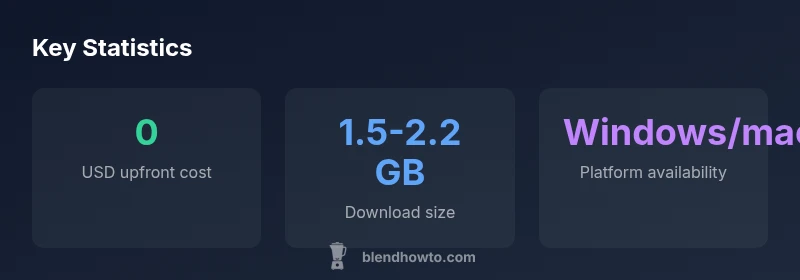
| Cost to start | Zero USD | No upfront software cost; hardware may vary |
| Resources | Extensive | Tutorials, forums, and community-driven assets |
Frequently Asked Questions
Is Blender really free to use for commercial projects?
Yes. Blender is released under the GPL, which allows commercial use without licensing fees. However, ensure your workflow complies with GPL terms, especially if you incorporate non-free assets or proprietary code.
Yes, Blender is free for commercial use under the GPL, though you should verify your workflow complies with its terms.
Are there hidden costs when using Blender?
While the software itself is free, related costs can include hardware, premium training, paid add-ons, and optional render services. Planning for these factors helps prevent surprises.
There aren’t hidden licensing costs, but hardware, training, and paid services can add up.
Can I use Blender without an internet connection?
Yes. Blender can be installed and run offline. You’ll need internet to download updates or assets, but ongoing work can continue without a live connection.
Yes, Blender works offline after installation, though updates require internet.
Are there paid add-ons or plugins for Blender?
There are many add-ons, some free and some paid. Paid options may offer time-saving workflows or specialized features, but they’re optional for most projects.
There are paid add-ons, but you can achieve most tasks with free tools.
How does Blender compare to subscription-only software?
Blender offers a no-cost core toolset with a thriving community, whereas subscription software typically bundles official support and guarantee. Blender trades some vendor support for flexibility and community-driven development.
Blender is free and community-driven, offering flexibility over subscription-only tools.
Can Blender handle professional rendering tasks?
Blender includes built-in rendering engines and can tackle professional work. For heavy workloads, external render farms or GPUs can supplement local hardware as needed.
Yes, Blender handles professional rendering with options to scale via hardware or render farms.
“Blender’s open-source model accelerates innovation by removing barriers to entry while empowering users to customize their pipelines.”
What to Remember
- Start with zero software cost and build skills
- Budget for hardware and optional services separately
- Compare total cost of ownership, not just price
- Leverage open resources for rapid prototyping
- Plan for scaling with paid resources only if needed