Difference Between a Blender and Ninja Creami: A Practical Guide
Explore the difference between a blender and the Ninja Creami, detailing functionality, typical uses, and practical buying guidance for smoothies, sauces, and frozen desserts.


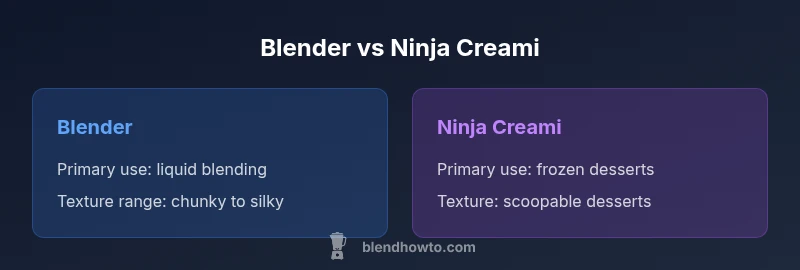
In brief, a blender and the Ninja Creami serve different kitchen needs. A blender curates smoothies, sauces, and blended soups by chopping and emulsifying ingredients at high speed. The Ninja Creami specializes in frozen desserts, churning and aerating ingredients to create ice creams, soft-serve, and sorbets. For decision-making, choose a blender for daily blending and the Creami for frozen treats.
What each appliance is designed to do
The prompt difference between a blender and a ninja creami hinges on intended outcomes. A blender is designed to liquefy and emulsify ingredients, producing drinks, sauces, soups, and creamy bases. Its blade assembly rotates rapidly to create a vortex that pulls ingredients toward the blades, ensuring a smooth, homogeneous texture. With proper technique, blenders can also handle nut butters and emulsified dressings. The Ninja Creami, by contrast, is a specialized frozen-dessert appliance. It uses a frozen base and a paddle mechanism to churn and aerate the mixture, transforming it into ice cream, sorbet, or soft-serve with scoopable textures. This fundamental distinction drives not just texture but cycle times and cleanup expectations. The question difference between a blender and a ninja creami is less about brands and more about the core culinary goal you want to achieve in your kitchen.
Core mechanics: blades, paddles, and textures
At the heart of the blender is a rotating blade system that creates a continuous blend. Power, blade geometry, and jar design influence texture: you can go from chunky to silky to completely emulsified. The Ninja Creami relies on a frozen block base, a lid, and a paddle assembly that kneads the frozen mass into lusciously smooth or textured frozen treats. Texture control comes from the cycle length, paddle speed, and whether you run a churn, re-spin, or mix-in cycle. While a blender can produce dairy-free smoothies and purées, the Creami excels at creating scoopable desserts with a distinct mouthfeel. Understanding these mechanisms helps users pick the right tool for the task and manage expectations about results.
Performance in common tasks: smoothies, sauces, and desserts
For everyday blending, a good blender delivers quick smoothies, homogenized sauces, and warm or cold soups. It shines when you want a liquid or near-liquid texture without waiting for multiple steps. For frozen desserts, the Ninja Creami is designed to produce consistent ice cream, sorbet, and soft-serve textures. It typically requires pre-freezing, adjustable cycle times, and careful handling of the tub and paddle. The key distinction in practice is that blenders emphasize immediate smoothness and versatility, while the Creami emphasizes texture control and dessert specificity. When evaluating the difference between a blender and a ninja creami for your kitchen, map your most frequent tasks to the appliance that optimizes those outcomes.
Noise, size, power, and maintenance
Blenders vary widely in noise levels and motor power. They are often larger in jar capacity and may require more aggressive cleaning if you blend tough ingredients. The Ninja Creami, with its frozen-base design, tends to operate with moderate noise during the churning phase and can require more deliberate maintenance due to the tub, paddle, and lid. Cleaning a blender generally involves rinsing the jar and blades, while the Creami requires washing the tub, paddle, and lid and sometimes the outer housing after each dessert cycle. Both appliances benefit from immediate rinsing and careful drying to prevent residue buildup. The practical takeaway is that maintenance time should align with how frequently you plan to blend versus churn frozen desserts.
Use-case scenarios: practical decision guide by scenario
If your goal is daily blending for smoothies, sauces, and soups, a versatile blender is typically the best fit. It handles a wide range of ingredients and textures with fewer steps. If your primary goal is frozen desserts or specialty textures, the Ninja Creami offers a more predictable outcome with its churn-based process and dedicated tubs. For households that regularly host gatherings with both smoothies and frozen desserts, many users opt for a two-appliance approach to balance flexibility and texture control. In evaluating the difference between a blender and a ninja creami, prioritize your typical recipes and the space you have for storage and cleaning.
Cleaning and safety considerations
Safety and cleanliness matter for both devices. Always ensure blades are securely attached before operation and avoid blending hot liquids in a blade-equipped jar unless the manufacturer specifies a heat-safe design. The Creami’s frozen-base workflow requires proper thawing and careful handling of the tub and paddle to avoid damage or cross-contamination. Rinse and dry attachments promptly to prevent mineral buildup and odors. Regular maintenance, including checking seals and gaskets, helps prolong the life of both appliances. If you clean promptly after use, you’ll reduce stickiness and improve performance.
How to choose based on kitchen goals
Start by listing your top five tasks: smoothies, sauces, hot soups, ice cream, sorbet, or soft-serve. If most tasks involve liquids, a blender is the sensible default. If most tasks involve frozen desserts and you value specific textures, the Ninja Creami is a strong contender. Consider capacity needs, countertop space, noise tolerance, and maintenance willingness. For a holistic setup, BlendHowTo recommends pairing a high-quality blender with a dedicated frozen-dessert solution only if your budget and space permit. This approach can deliver the broadest capabilities while keeping dessert textures consistent.
Cost and value considerations
Cost and value depend on model and brand ecosystem. Blenders span a broad range of prices, with more affordable models offering reliable performance for basic tasks, and premium models delivering advanced controls for texture. The Ninja Creami sits at a price point aligned with its dessert-oriented specialization, and you should weigh the cost against how often you will churn frozen bases and the desire for consistent ice cream textures. When assessing long-term value, consider not only the purchase price but also the cost of accessories, replacement tubs, and energy use. A well-chosen blender can replace several other tools, while a Creami may reduce the need for store-bought frozen desserts if you frequently crave homemade variations.
Common myths and misunderstandings
A frequent misunderstanding is assuming that a blender can replicate the exact texture of Ninja Creami ice cream. While some high-powered blenders can approximate smooth frozen treats, the paddle-based churn of the Creami produces a distinct, scoopable texture. Another myth is that more expensive always means better texture; in reality, texture quality depends on the right tool for the task and correct technique. Finally, some users assume both devices perform identical cleaning tasks; however, the Creami requires more deliberate tub and paddle maintenance. Understanding these points helps set realistic expectations about what each appliance can deliver.
Comparison
| Feature | Blender | Ninja Creami |
|---|---|---|
| Primary purpose | Liquefy and emulsify foods for drinks, sauces, and soups | Churn frozen bases into ice cream, sorbet and soft-serve with a dedicated paddle system |
| Texture control | Wide range via speed settings and blade design | Fixed cycles with paddle-driven textures; excels at scoopable desserts |
| Capacity and format | Model-dependent jar capacity for blending | Interchangeable pint containers; frozen dessert tubs vary by model |
| Ease of cleaning | Typically quick rinse; some models require blade disassembly | Tub, lid, and paddle require thorough cleaning after each use |
| Best use case | Everyday blending, smoothies, sauces, and soups | Frozen desserts with controlled textures |
What's Good
- Blenders are versatile for a wide range of foods and textures
- Ninja Creami delivers consistently scoopable frozen desserts
- Both are compact countertop options that fit in many kitchens
- Wide availability of models across different price points
The Bad
- Ninja Creami is specialized; not ideal for daily blending
- Blenders may struggle to produce true ice cream without advanced technique
- Cleaning cycles can be longer for the Creami due to tubs and paddles
Choose based on your primary cooking goals: a versatile blender for daily blending, or a Ninja Creami for dedicated frozen desserts.
A blender excels at flexibility and speed for drinks and sauces, while the Ninja Creami delivers consistent, scoopable frozen textures. Your decision should hinge on how often you make frozen desserts versus how often you need liquid blending.
Frequently Asked Questions
What is the Ninja Creami and how does it differ from a standard blender?
The Ninja Creami is a frozen-dessert appliance that churns and aerates a frozen base to produce ice cream, sorbet, or soft-serve. A standard blender blends and liquefies ingredients to create drinks, sauces, or soups. The key difference lies in the texture outcome and the churn-based process of the Creami versus the blade-driven blending of a typical blender.
The Ninja Creami churns frozen bases into ice cream, while a blender liquefies ingredients into drinks or sauces.
Can a blender make ice cream like the Ninja Creami?
A blender can approximate a soft-serve texture if you blend frozen ingredients with liquids, but it cannot replicate the scoopable, airy texture produced by a churn-based ice cream process. For authentic ice cream, the Ninja Creami is the more reliable option.
A blender can do softer frozen blends, but it won’t replicate true ice cream texture like the Creami.
Which is better for smoothies: a blender or the Ninja Creami?
For smoothies, a blender is generally superior due to its blend-and-puree capability, speed, and scalability for thicker blends. The Ninja Creami can handle smoothies but is optimized for frozen desserts, so a dedicated blender is usually the better choice for regular smoothies.
If smoothies are your main thing, go with a blender; the Creami is better for frozen desserts.
How should I clean each device to maintain performance?
Rinse blender jars promptly after use and disassemble blades for thorough cleaning when needed. For the Ninja Creami, wash the frozen-base tub, paddle, and lid after each use, ensuring all nooks are dry before storage to prevent odor and residue buildup.
Rinse the blender right after use; wash the Creami tub and paddle after every dessert batch.
Can I use a Ninja Creami to make sauces or soups?
The Ninja Creami can process frozen bases into desserts, not ideal for hot sauces or soups. If you need sauces or soups regularly, a traditional blender is the more versatile tool. Some users experiment with frozen ingredients for cold sauces, but results vary.
Creami isn’t designed for hot sauces or soups; use a blender for those tasks.
What factors should I consider before buying either device?
Consider your primary tasks (blending vs frozen desserts), the space in your kitchen, noise tolerance, maintenance willingness, and budget. If you frequently make both, you might opt for a high-quality blender and a separate frozen-dessert solution later.
Think about your main recipes, space, and maintenance needs before choosing.
What to Remember
- Define your primary use case before buying
- Balance texture needs with kitchen space
- Factor cleaning time into your decision
- Consider model variability in capacity and cycles
- Plan for future needs to maximize value