Glass Jar Blender vs Plastic: An Analytical Buying Guide
A detailed, data-driven comparison of glass jar vs plastic blender jars, focusing on durability, cleaning, heat tolerance, and value to help home cooks decide which jar material fits their blending routines.


Glass jar blenders offer durability and a non-porous surface that resists staining, while plastic jars keep the unit lighter and cheaper. For home cooks and hobbyists, the choice hinges on handling, cleaning, heat exposure, and budget. This brief comparison helps you decide which jar material fits your blending routine.
Glass jar blender vs plastic: Key differences
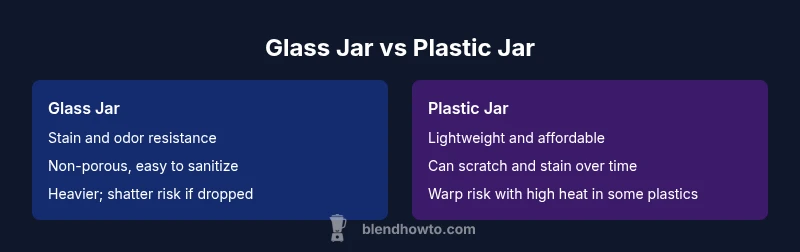
In the ongoing debate around glass jar blender vs plastic, the most pronounced differences relate to durability, weight, and how each material interacts with flavors and cleaning. Glass jars resist staining and odors and are easy to sanitize, making them a favorite for tomato sauces and citrus-heavy blends; plastic jars save you from heft and are often cheaper upfront. The BlendHowTo team analyzes these factors across common kitchen tasks and long-term use. When planning to blend hot soups or citrus-forward blends, heat tolerance and safety matter. Glass offers a non-porous surface that cleans thoroughly and resists absorbing flavors; plastic can trap residues if not cleaned promptly. Each material carries trade-offs in cost, maintenance, and convenience. According to BlendHowTo analysis, the jar choice should reflect your typical tasks and cleaning tolerance. Read on for deeper factors that affect performance and long-term value.
Weight, handling, and ergonomics
Weight governs comfort during repeated blending and while transferring jars from storage to the base. Glass jars are noticeably heavier, which can contribute to stability on the counter but increase fatigue during frequent refills. Plastic jars are lighter, which some cooks prefer for quick, single-handed operation or for households with kids. The ergonomic grip on lid and jar, as well as how the handle feels when the jar is full, often determines daily usability more than any single material advantage. The BlendHowTo team highlights that a heavier jar is not always better if it slows you down in a busy kitchen. Test grip, balance, and lid fit to ensure a comfortable blend routine that minimizes spills.
Cleaning, hygiene, and odor control
Hygiene considerations are central to jar material choice. Glass is non-porous and resistant to staining, which means it generally requires less aggressive cleaning to remove odors from berries, beets, or turmeric. Plastic, especially lower-grade varieties, can scratch and harbor residues, which may lead to lingering smells after repeated use. If you clean promptly after blending strongly pigmented or aromatic ingredients, plastic jars can stay serviceable for a long time. The Best practices include disassembling the jar, rinsing immediately, and occasionally soaking to prevent residue buildup. In everyday use, a glass jar’s cleanability often translates to fewer lingering flavors and easier sanitizing steps.
Heat exposure and thermal considerations
Glass jars typically tolerate temperature extremes without warping, though sudden thermal shock can crack glass. For hot soups or scalding blends, glass may handle heat better in some models, but always check manufacturer guidance. Plastic jars vary by polymer; many plastics cope with hot liquids but can warp or discolor if exposed to high heat repeatedly. In practice, if your blends frequently include hot ingredients, lean toward glass or ensure the plastic jar is rated for heat and used within recommended temperature ranges. BlendHowTo recommends confirming heat tolerance with your specific model’s manual before hot blending.
Durability and everyday handling risks
Daily use exposes jars to drops, accidental bangs, and rough handling in busy kitchens. Glass jars offer excellent scratch resistance and a clean, inert surface, but they are vulnerable to shattering if dropped. Plastic jars are far less likely to shatter, providing you with greater peace of mind around accidental drops, especially in households with children. The trade-off is potential scratching and gradual weakening of the jar walls or lid seal over time. In typical household scenarios, the decision hinges on how aggressively you treat equipment and whether you prioritize safety or longevity in a single, uninterrupted schedule of use.
Jar interface, blades, and interchangeability
Most blender bases accommodate standard blade assemblies, but jar-to-base interfaces and lid designs vary by model. Glass and plastic jars frequently share the same blade assemblies, but you should confirm compatibility with your specific base and jar size. If you own multiple jars, verify that their thread patterns and gasket seals align with your base, especially if you rotate jars for different tasks. A consistent seal prevents leaks during powerful blends, preserving both counter cleanliness and the jar’s integrity. When shopping, consider the jar’s compatibility with existing lids and gaskets to minimize replacement costs.
Cost, value, and long-term ownership
Jar material costs reflect upfront price and perceived longevity. Glass jars tend to have a higher upfront price, but their durability and ease of cleaning can translate to lower long-term maintenance costs if you avoid breakage. Plastic jars are typically cheaper to purchase, which can be appealing for new users or households with tighter budgets. Over time, the cost dynamics depend on how often the jar is dropped, the type of ingredients blended, and how carefully you maintain the seals and lids. In other words, initial price is not the sole predictor of value—how you use and maintain the jar matters as much as the material itself.
Cleaning routines and maintenance tips
A straightforward routine extends jar life regardless of material. For glass jars, regular cleaning with warm, soapy water plus periodic mineral buildup removal keeps the surface pristine. Plastic jars benefit from prompt cleaning after strong odors or color-rich blends to minimize staining; a gentle dish soap and a soft brush can prevent micro-scratches from becoming odor traps. Inspect the lid seal and gasket every few months for wear, and replace promptly if you notice cracking or seepage. Using the recommended dishwasher cycle (if applicable) can help, but always consult the manufacturer’s care instructions to avoid unintended warping or cracking.
Practical scenarios: choosing by use-case
If your daily routine includes smoothies and gentle purees, both jar materials work well; your preference should hinge on whether you value weight and stability (glass) or ease of handling and cost (plastic). For families who blend hot soups, soups-on-the-blend, or citrus-rich blends, heat tolerance and odor resistance become decisive. For freeze-and-blend tasks, the jar’s resistance to cracking or warping in cold temperatures matters. In general, glass suits long, steady blending with easy cleaning, while plastic is favored for lightweight, quick, budget-conscious use. Consider your typical recipes, storage space, and cleaning schedule to pick the jar that aligns with your cooking rhythm.
How to choose: a quick decision framework
- List your top three uses (smoothies, sauces, hot blends).
- Evaluate your tolerance for weight vs. cost.
- Check heat tolerance and dishwasher compatibility for your models.
- Prioritize cleaning ease and odor resistance.
- Confirm jar-base compatibility and gasket viability.
- Read user reviews focusing on real-world wear and tear over time.
This framework helps you move from abstract pros and cons to a decision grounded in your actual cooking style and maintenance preferences.
Summary of tradeoffs and next steps
The glass jar offers cleaner hygiene and durable aesthetics in a stable form, but comes with weight and breakage risk. Plastic jars are friendlier on the budget and easier to handle, yet can scratch and retain odors. The right choice depends on how you blend, clean, and store—prioritize your routine, not just the material. For many users, a glass jar works best for daily, versatile use with careful handling, while plastic jars serve as a practical option for families or beginners prioritizing mobility and upfront cost.]
Comparison
| Feature | Glass Jar Blender | Plastic Jar Blender |
|---|---|---|
| Durability & breakage risk | High resistance to scratches; shatters if dropped | Lower breakage risk; can crack or warp with heat or impact |
| Weight | Heavier; contributes to on-counter stability | Lighter; easier to move and lift when full |
| Cleaning & hygiene | Non-porous; easy to sanitize | Can scratch and harbor residues; may need more frequent cleaning |
| Heat tolerance | Good heat tolerance with tempered glass; avoid thermal shock | Plastic can warp or discolor with high heat in some cases |
| Cost & value | Higher upfront cost; long-term value with durability | Lower upfront cost; potential for replacement with heavy use |
| Dishwasher safety | Typically dishwasher-safe depending on model | Dishwasher safe on many plastics; verify manufacturer guidelines |
| Environmental impact | Recyclable glass; long life reduces replacement cycles | Plastic reduces weight in transport but may have recycling variability |
What's Good
- Excellent stain resistance and odor control
- Non-porous surface makes cleaning simple
- Heavier jars provide stability on the counter
- Glass generally feels premium and long-wearing
The Bad
- Risk of shattering if dropped
- Heavier to handle when full
- Higher upfront cost compared to plastic
- Plastic can warp or scratch over time
Glass jar blenders excel in durability and hygiene, while plastic jars win on weight and upfront affordability.
If your priority is longevity and easy cleaning, glass is the stronger choice. If you need lightness and budget-friendliness for quick tasks, plastic is practical. Consider your blending habits and maintenance tolerance to decide which jar type fits best.
Frequently Asked Questions
What is the main difference between glass and plastic blender jars?
The main difference is durability and hygiene: glass resists staining and is easier to sanitize, while plastic is lighter and often cheaper but can scratch and hold odors.
Glass resists stains and odors, making cleaning easier; plastic is lighter and cheaper but may hold onto flavors over time.
Is glass better for hot liquids than plastic?
Glass generally handles heat well, but you should follow the manufacturer’s guidance to avoid thermal shock. Plastic can warp or discolor with high heat in some cases.
Glass stands up to heat better in many models, but always check your jar’s heat rating.
Can I put plastic jars in the dishwasher without issues?
Many plastic jars are dishwasher safe, but repeated high heat can cause warping or clouding. Always verify the model’s care instructions.
Check the care guide—some plastics tolerate dishwasher cycles, others do not.
Are glass jars more expensive than plastic jars?
Typically, glass jars cost more upfront due to material costs and durability, but they may save money over time with less replacement and easier cleaning.
Yes, glass usually costs more initially, but can be cheaper to maintain over time.
What should I consider about jar compatibility with my blender base?
Ensure the jar’s base matches your blender model, including thread pattern and gasket seals, to prevent leaks and vibration.
Make sure the jar fits your base and seals well for safe blending.
Do plastic jars affect the flavor of blends more than glass jars?
Plastic can absorb aromas and flavors more readily if not cleaned promptly, while glass is non-porous and less likely to retain flavors.
Plastic might pick up odors if not cleaned quickly; glass stays more neutral.
What to Remember
- Prioritize durability and hygiene if you bake heavy-duty blends with frequent cleanups
- Weigh weight against budget when choosing jar material
- Check heat tolerance and dishwasher compatibility for your models
- Verify jar-base compatibility to avoid unnecessary replacements