How Much Does a Blender Cost in Nigeria? A Practical Guide
Explore how much a blender costs in Nigeria, from budget models to premium appliances. This BlendHowTo guide explains price ranges, buying tips, and where to shop.


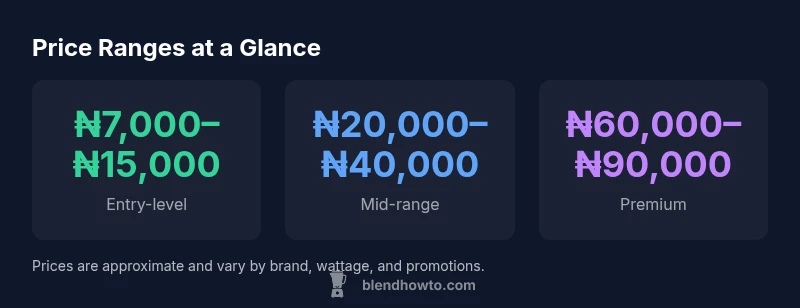
Prices for blenders in Nigeria typically span from about ₦7,000–₦90,000, depending on brand, wattage, and features. Basic models start around ₦7,000–₦15,000, mid-range units run ₦20,000–₦40,000, and premium, multi-feature blenders can reach ₦60,000–₦90,000. When budgeting, also consider accessories, warranty, and after-sales support, as well as local promotions, installment options, and potential import costs in Nigeria.
Market Overview and Price Landscape
If you’re asking how much does a blender cost in nigeria, you're not alone. The Nigerian market for kitchen blenders reflects a balance between local manufacturing, assembled imports, and periodic promotions, leading to a wide price spectrum. In 2026, price trends show three broad bands that most shoppers encounter: entry-level models, mid-range machines, and premium appliances with advanced features. For the home cook who blends fruit smoothies a few times a week, a base model can suffice, while serious cooks or small businesses may need higher wattage, sturdier jars, and more reliable motors. Exchange-rate volatility and import duties influence the final sticker price, especially for branded or globally popular models. Beyond the label price, shoppers should consider long-term costs such as replacement parts, spare blades, jar lids, and the availability of service centers. In everyday practice, understanding these dynamics helps you budget effectively and avoid overspending on features you won’t use. This overview serves as a starting point for a more practical buying decision.
Price Tiers and What You Get
Blenders in Nigeria generally sit in three price tiers, each aligning with particular capabilities and durability. Entry-level models typically offer around 300–600W, a modest motor, fewer speeds, and a plastic jar. These are adequate for light blending tasks like smoothies or sauces but may struggle with dense ingredients. Mid-range units usually fall in the ₦20,000–₦40,000 range and bring better motor longevity (600–1000W), more speeds, a glass or sturdy plastic jar, and better blade designs. Premium blenders at ₦60,000–₦90,000 or more often feature 1000–1200W motors, metal or tempered glass jars, multi-speed controls, and extended warranties. When choosing, map your use case to the price tier: daily smoothies and soft ingredients? Entry- or mid-range is often enough; batch processing, nuts, ice, or doughs may justify stepping up to higher power and build quality. Also be mindful of warranty length and customer support in Nigeria, which can add value beyond the upfront price.
How Features Affect Price
Price is often a direct reflection of the underlying technology and materials. A higher-watt motor (500–1200W) delivers smoother blends with fewer jams, especially for fibrous fruits, ice, or frozen ingredients. Jar material matters: tempered glass or metal jars resist staining and scratches better than basic plastic. Blade quality, often stainless steel with multi-tiered designs, influences both performance and longevity. Control interfaces matter too: simple dial controls cost less, while smart presets and pre-programmed modes (ice crush, puree, smoothie) add to the price. Noise levels and thermal protection are two other differentiators: robust builds with better insulation may run more quietly and handle longer blending sessions without overheating. Finally, brand reputation and after-sales support can tilt price judgments, as consumers in Nigeria weigh the peace of mind against sticker price. In sum, you don’t pay for aesthetics alone—you pay for performance, durability, and serviceability.
Retail Channels in Nigeria: In-store vs Online
Where you buy can influence the final price as much as the blender’s spec sheet. Online marketplaces, official brand stores, and general electronics retailers each run different pricing strategies, promotions, and return policies. In-store purchases provide immediate access to try-out demos, but promotions are often region-specific and time-limited. Online shopping complements the Nigerian market by offering price comparisons, user reviews, and a wider selection of brands that may not be stocked locally. When shopping, track promotions such as bundle deals with jars, extra blades, or warranty extensions, and watch for seasonal sales around holidays or back-to-school periods. Consider total cost of ownership: delivery fees, installation (where applicable), and potential service needs. For the average Nigerian household, balancing upfront price with warranty coverage and after-sales service typically yields better long-term value than chasing the lowest sticker price.
Saving Tips: Getting More Value for Your Budget
To maximize value, start with a clear use-case map: daily smoothies, batch soups, or occasional grinding. Then prune features you don’t need. Here are practical tips: compare total cost of ownership rather than just the upfront price; look for energy-efficient models with good motor heat management; prioritize durable jars, blade quality, and a reliable warranty; bundle purchases with spare blades or accessories; and consider whether a higher-priced model would save money in repairs or replacements over time. Leverage price-tracking tools and season-specific promotions; consider paying in installments if your budget requires it, but ensure interest terms are reasonable. Lastly, test for compatibility with Nigerian service centers and spare parts supply to avoid a dead-end if blades wear out or seals leak.
Maintenance and Longevity: Budget vs Premium
Maintenance considerations can significantly affect long-term cost. Cheaper models may require more frequent blade replacement, jar replacements, or motor repair, which can add up over years. Premium models typically offer longer warranties and easier access to spare parts, reducing downtime. Regular cleaning after each use, avoiding blending extremely hot liquids in plastic jars, and following the manufacturer’s service schedule extend the life of your blender. In Nigeria, availability of replacement parts and service centers varies by city, so verifying nearest support options before purchase can save time and money. If you blend daily, a mid-range or premium model is generally the more economical choice in terms of reliability and upkeep. For occasional use, a basic model can suffice as long as it’s well cared for.
Practical Buying Scenarios: Quick Picks
Scenario A: You blend smoothies daily and occasionally crush ice. A mid-range blender with a 600–1000W motor and a glass jar is a sensible balance of price and performance. Scenario B: You cook or bake intermittently and need a resilient unit to blend sauces and nuts—consider a higher-wattage model and a robust jar. Scenario C: You’re setting up a small home business mixing beverages—invest in a premium model with strong warranty, spare parts availability, and reliable after-sales service. For each scenario, compare not just the upfront price but the total cost of ownership over 3–5 years. Opt for peace of mind and the ability to service parts locally in Nigeria.
Regional Variations: Exchange Rates and Local Brands
Nigeria’s import dynamics mean exchange rates and duties can push prices up or down across regions and brands. Local or regional brands may provide better after-sales support and easier access to spare parts, potentially lowering long-term costs. If you’re considering imported models, verify the availability of service centers and compatible parts in your city. Currency fluctuations can affect promos and stock levels, so monitor price movements across several weeks and align purchases with favorable rate windows when possible. In practice, the right blender for you balances performance with reliability and accessible support, rather than focusing solely on the headline price.
Price tiers for household blenders in Nigeria (2026)
| Tier | Typical Price Range (Naira) | Common Wattage | Notes |
|---|---|---|---|
| Entry-level | ₦7,000–₦15,000 | 300–600W | Basic models for light blending tasks |
| Mid-range | ₦20,000–₦40,000 | 600–1000W | Better durability and more features |
| Premium | ₦60,000–₦90,000 | 1000–1200W | High power, premium jars, long warranty |
Frequently Asked Questions
What factors mainly drive blender price in Nigeria?
Blender price is driven by motor power, jar material, blade quality, brand reputation, and warranty length. Import duties and exchange rates also influence costs, especially for imported models. Local availability and after-sales support can shift the perceived value beyond the sticker price.
Blender price depends on power, parts, and support, plus imports and promotions.
Are imported blenders more expensive than locally manufactured ones?
Imported models often carry higher upfront costs due to duties and shipping, but some local brands may price aggressively to gain market share. Compare total cost of ownership, including parts availability and service, rather than just the sticker price.
Imports can cost more upfront, but check parts and service locally.
Is it better to buy online or in-store in Nigeria?
Online platforms provide price comparisons, reviews, and wider selection, while in-store shopping allows hands-on testing and immediate pickup. Balance convenience with return policies and after-sales coverage when deciding where to buy.
Shop both online and in-store to compare deals and try before you buy.
Do warranties affect the total cost of a blender?
Warranties add value by reducing future repair costs and downtime. A longer warranty may justify a higher upfront price if it ensures lower long-term maintenance costs.
Longer warranties can save you money on repairs later.
What features should I prioritize to maximize value at a low price?
Prioritize motor wattage within your budget, jar durability, and a reliable blade set. Look for a solid warranty and parts availability rather than extra presets you won’t use.
Focus on power, durability, and warranty, not just fancy settings.
How should I compare blender prices across regions in Nigeria?
Track prices over several weeks, compare total cost of ownership, and consider local promos. Region-specific stock and service networks can affect long-term value more than the initial price.
Watch price trends and check service options in your city.
“Choose a blender that matches your daily chores and maintenance expectations. Wattage, build quality, and warranty determine long-term value more than the initial price.”
What to Remember
- Budget with clear price bands before shopping
- Prioritize wattage and jar quality for value
- Check warranty and after-sales support
- Shop across channels for promos and bundles
- Consider total cost of ownership, not just sticker price