How Much Is a Ninja Blender? A 2026 Price Guide
Discover Ninja blender price ranges in 2026, from budget personal models to premium bundles. Learn what drives price, how to spot value, and smart buying tactics from BlendHowTo.


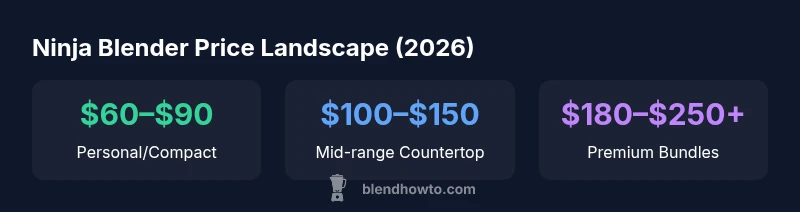
Ninja blender prices span a wide range based on power, jar size, and included attachments. Basic personal units typically run about $60–$90, mid-range countertop models usually price from $100–$150, and high-capacity or bundled configurations commonly sit in the $180–$250 range. Limited editions or premium bundles can exceed $250. For budget-conscious shoppers, look for seasonal sales or refurbished options to maximize value.
What goes into Ninja blender pricing
If you're wondering how much is a ninja blender, the answer depends on power, capacity, and attachments. Higher wattage and a larger jar typically raise the price, while added accessories like multiple blades, to-go cups, or food-processing lids can push the total cost upward. In 2026, price bands reflect three common use cases: quick smoothies on the go, daily meal-prep blending, and bulk batches with heavy-duty motors. Understanding these drivers helps you choose a model that fits both your kitchen needs and your wallet. This guide maps price bands to model types, explains how discounts and bundles affect the out-the-door total, and shows you where to look for legitimate deals. By the end, you’ll have a clear framework to estimate how much you should spend and what you should expect to receive for that investment.
Price bands by model type
Ninja blenders come in a few broad families, and each family targets different tasks and budgets. Personal or compact models typically occupy the lower end of the price spectrum, often around $60–$90, and are ideal for single-serving smoothies or travel cups. Mid-range countertop units usually run about $100–$150 and offer larger jars, more consistent blending, and a wider accessory set. Premium bundles and high-capacity configurations frequently land in the $180–$250+ range and include extra jars, specialty blades, or built-in pre-programmed settings for foods beyond smoothies. Finally, occasional limited editions or bundles with premium attachments can exceed $250. When shopping, compare not just the sticker price but the total value of included features and warranties.
How features drive price-to-performance
Power wattage matters: higher wattage typically translates to smoother blends with tougher ingredients, but price follows power. Jar size and material matter too: glass or heavy-duty BPA-free polymer jars increase durability and cost. Blade design, fan cooling, and noise reduction features can add hundreds of dollars in some packages. Accessories, such as to-go lids, food-processor attachments, or recipe books, contribute to the overall package value. In practical terms, if you blend soups weekly and crush ice often, you may justify a higher upfront price for a model with a robust motor and sharper blades. For light daily smoothies, a modest unit may suffice. This section helps you translate features into a sensible price-to-performance ratio.
Where to find deals without sacrificing quality
Timing can dramatically change what you pay for Ninja blenders. Retailers frequently run seasonal promotions around holidays or back-to-school periods, and many stores offer bundle discounts that include extra jars or attachments. Sign up for retailer newsletters and price-watch alerts, and check official Ninja or retailer pages for promo codes. Consider certified refurbished units from reputable sellers, which can slash the price while maintaining warranty terms. When comparing deals, compute the cost per use over the expected lifetime of the blender rather than focusing on the upfront price. A slightly higher upfront cost can pay off with faster blending and longer-lasting components.
Hidden costs to factor into total ownership
The sticker price is only part of the equation. Replacement blades, jars, gaskets, and seals can add up if you use the blender heavily or if the jar breaks. Some models restrict dishwasher use or require hand washing, which affects maintenance time costs. Warranty length matters: longer coverage often accompanies higher prices but can save money on repairs. If you expect to upgrade attachments or swap in specialty blades, budget for those add-ons as well. Finally, take into account energy usage over several years; a more efficient model can reduce operating costs, a factor that matters if you blend daily.
Buyer scenarios to guide your choice
- Busy family aiming for quick meals: a mid-range countertop Ninja with a larger jar and multiple blades is usually the sweet spot, balancing price and versatility. Expect to pay in the $100–$150 range for a solid, dependable unit with decent warranty coverage.
- Single cook who travels often: a compact personal blender around $60–$90 may be perfectly adequate, offering portability and fast cleanup.
- Home chef focusing on batch prep and smoothies: a premium bundle around $180–$250 with extra jars and blades can reduce the need for separate appliances and streamline meal prep.
Refurbished vs. new: value and risk
Refurbished Ninja blenders can offer substantial savings, often 20–40% off new prices, but approach this option with caution. Verify that refurbished units come with a warranty and a return window, and buy from reputable sellers. Read the listing carefully for the model’s power, jar size, and included attachments. If you rely on a blender every day, ensure that you’re not trading away essential parts or warranty protection for a lower price. For cautious buyers, new units with standard warranties tend to deliver the smoothest experience with predictable performance.
Smart buying checklist before you click Buy Now
- Define your use-case: smoothies, soups, or batched sauces? 2. Set a budget range: basic, mid-range, or premium bundles? 3. Compare jar size and blade configuration across models. 4. Check warranty length and replacement-part availability. 5. Look for bundle value: extra jars, blades, or lids can boost long-term value. 6. Read verified reviews focusing on durability and noise. 7. Confirm compatibility with dishwasher if that matters to you. 8. Watch for sales events and sign up for price alerts. By following this checklist, you can avoid overpaying and pick a Ninja blender that matches your kitchen routine.
Ninja blender price tiers at a glance
| Model Type | Typical Price Range | Key Benefit |
|---|---|---|
| Personal/Compact | $60–$90 | Portable, quick smoothies |
| Mid-range Countertop | $100–$150 | Versatile, larger jar |
| Premium Bundles | $180–$250+ | Extra attachments, higher power |
| Refurbished/New-in-box | varies | Potential savings, check warranty |
Frequently Asked Questions
What is the typical price range for Ninja blenders?
Ninja blender prices span a broad spectrum, from about $60–$90 for basic personal models to $180–$250 for premium bundles. The exact price depends on power, jar capacity, and included attachments. Always compare what’s included rather than focusing on the sticker price alone.
Ninja blenders range from around sixty to two hundred fifty dollars, depending on model and extras.
Are Ninja blenders worth the price compared to competitors?
For everyday blending, Ninja offers solid value in the mid-range tier, especially with bundled accessories. If you need pro-level performance or ultra-quiet operation, compare features and warranty against similar brands to ensure you’re getting the best overall value.
Ninja can be a strong value, especially with bundles, but compare features and warranty with others before buying.
Should I buy a Ninja blender on sale or refurbished?
Sales and refurbished options can dramatically lower cost. If you opt for refurbished, verify warranty coverage and return terms and ensure the model includes essential attachments you need.
Sales or refurbished units can save money, just check warranty and returns.
Which Ninja blender is best for smoothies?
For smoothies, a mid-range Ninja model with a decent jar and solid blades is typically sufficient. If you blend large batches, consider a premium bundle that includes additional jars and blades.
A mid-range Ninja with a good jar is usually best for smoothies.
Do Ninja blenders require special maintenance?
Regular cleaning after use, inspecting seals, and replacing worn parts keeps Ninja blenders performing well. Follow the manufacturer’s recommendations for dishwasher safety and attachment care.
Keep it clean, check seals, and replace worn parts to extend life.
“Prices for Ninja blenders reflect power, capacity, and attachments. Compare total value, not just the sticker price, to choose the best fit for your kitchen.”
What to Remember
- Define your use-case before buying
- Expect price bands by model type
- Factor in bundles and warranties
- Shop sales and compare total value
- Consider refurbished options cautiously