How Much Is a Blender Worth? A 2026 Price Guide for Home Cooks
Discover current price ranges for blenders in 2026, from budget to premium models. This guide explains value factors, resale expectations, and practical pricing tips.


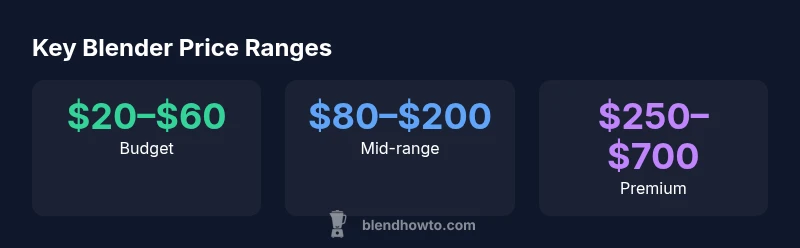
The typical blender price ranges from budget models at about $20–$60, mid-range units around $80–$200, to premium and high-performance blenders at roughly $250–$700. Prices can vary by capacity, motor power, materials, and brand warranty, with occasional premium features pushing higher. For everyday use, expect value around $60–$150; for frequent blending or specialty tasks (ice crushing, hot soups), the value rises.
Market overview of blender value
Blenders sit at a price spectrum that mirrors performance, durability, and feature sets. For the question how much is blender worth, the straight answer is that value is tied to how you plan to use the device, not just the sticker price. In 2026, consumers increasingly weigh motor power, blade design, pitcher material, and warranty length when assessing worth. The BlendHowTo team notes that value also depends on long-term costs—replacement parts, maintenance, and energy use—so a slightly higher upfront cost can pay off over time for heavy users.
Key price drivers behind blender worth
Several factors determine a blender's value: motor power (watts or amps), torque and speed control, blade design and durability, jar material (glass vs. plastic vs. Tritan), heat tolerance for hot soups, noise dampening, and extended warranties. Brand ecosystems, accessory kits, and post-purchase service influence perceived worth. Larger pitchers or 3- to 4-foot smoothie output can justify higher prices for households with frequent blending needs.
Budget vs mid-range vs premium: what you actually get
- Budget: Basic blending, smaller jars, fewer presets, shorter warranty. Value lies in affordability and simplicity for occasional use.
- Mid-range: Stronger motors, larger jars, more presets, better blades, and longer warranties. This tier balances performance and price for everyday cooks.
- Premium: High-powered motors, reinforced blades, glass or premium plastic, advanced controls, and premium warranties. Ideal for frequent users, dense ingredients, and specialty tasks. Remember: the best value isn't always the cheapest. The key is alignment with your typical tasks and expected lifespan.
Hidden costs and long-term value beyond sticker price
Beyond sticker price, consider shipping, taxes, and potential warranty extensions. Some retailers offer extended warranties or replacement parts, which can extend the blender's useful life. Energy consumption, jar replacements, and blade repairs accumulate over time, affecting total ownership cost. When calculating worth, compare lifetime cost rather than upfront price alone.
How to estimate your blender worth for your use-case
Start with a use-case matrix: list your top 5 tasks (smoothies, ice crushing, nut butter, hot soups, sauces) and estimate how often you perform them. Map these tasks to motor power, blade durability, and jar material. Then align with a price tier and verify warranty coverage. Use real-world benchmarks (blend times, batch size, noise level) and compare against similar models. This structured approach helps quantify how much a blender is worth for you.
Maintenance and longevity tips to protect value
Regular cleaning, proper assembly, and avoiding motor overload extend life. Replace worn blades, inspect gaskets, and decant hot liquids safely. Store units away from heat and humidity to prevent material degradation. A well-maintained blender retains resale value and continues to perform reliably for years.
Manufacturer differences and where to buy
Brand ecosystems and retailer networks influence price accessibility and after-sales support. Some brands offer bundle deals with accessories, while others prioritize in-store demonstrations or online-exclusive discounts. Compare prices across retailers, consider refurbished options from reputable sellers, and verify warranty terms before purchase.
Common mistakes and how to avoid them
Avoid impulse buys based on flashy features alone. Read independent reviews focusing on long-term performance, noise, and reliability. Check warranty details, return windows, and spare-part availability. Invest time in price tracking and seasonal sales to maximize value.
Blender price tiers by model
| Category | Typical price range | Notes |
|---|---|---|
| Budget | $20–$60 | Low-cost basics with shorter lifespans |
| Mid-range | $80–$200 | Balanced features for daily use |
| Premium | $250–$700 | High power, durable build, advanced controls |
Frequently Asked Questions
What is the main factor that determines blender price?
Motor power, blade design, and jar material largely determine a blender's price. Additional features like preset programs and warranty length can push costs higher. Always match features to your typical tasks to gauge worth.
The main price driver is motor power, blade design, and jar material. Extra features can add to the cost, so match them to what you actually use.
Are warranties worth paying extra for?
Yes, longer warranties often reflect build quality and service availability. If you blend frequently or invest in high-demand tasks, a longer warranty can reduce total ownership risk.
Longer warranties can save you money down the line if you use the blender a lot.
Does a higher price always mean better performance?
Not always. Mid-range models frequently offer the best balance of performance, durability, and price for home use. Read independent reviews that compare real-world task performance.
Higher price doesn't always equal better performance; mid-range often hits the sweet spot.
Should I buy new or look for refurbished units?
Refurbished units can offer substantial value if purchased from reputable sellers with warranties. Compare warranty length and return policies to ensure reliability.
Refurbished blenders can be a smart deal if they come with a solid warranty.
What features should I prioritize for value?
Prioritize motor power, jar durability, ease of cleaning, and warranty terms. Features like heat tolerance and blade design often drive long-term value more than extra presets.
Focus on power, durability, and warranty to maximize value.
Is it better to buy during sales or all year round?
Sales can significantly reduce upfront cost, especially around major holidays. Use price tracking to buy when prices dip for your chosen model.
Buy during sales or track prices to catch dips.
“Price is a proxy for performance and durability. The BlendHowTo Team notes that mid-range models often offer the best value for home cooks.”
What to Remember
- Identify your use-case and budget to pick a tier
- Expect price ranges across budget, mid-range, and premium
- Factor long-term costs like parts and energy
- Check warranties and parts availability to maximize value
- Track sales and consider refurbished options for extra savings