Hummus Blender vs Food Processor: A Practical Comparison for Home Kitchens
An analytical, side-by-side comparison of hummus blender vs food processor, covering texture, batch size, cleaning, and value to help home cooks decide which appliance fits their hummus prep needs.


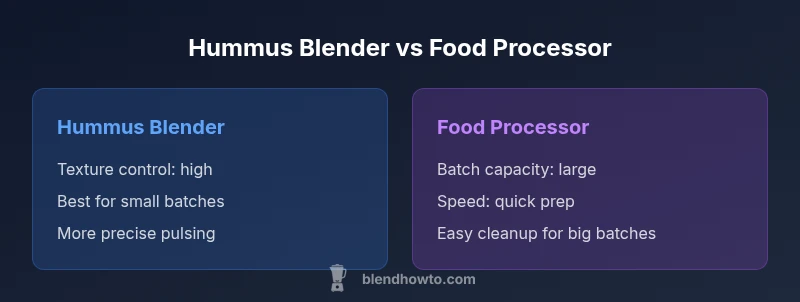
For hummus, the choice between a hummus blender vs food processor hinges on texture control and batch size. A dedicated hummus blender can yield ultra-smooth, crema-like dips with careful pulsing, while a food processor handles larger batches and faster prep with robust chopping. If texture precision and smaller portions matter most, the hummus blender often wins; for speed and scale, the processor is typically preferred.
Overview: hummus blender vs food processor
Choosing between a hummus blender vs food processor isn’t just about brand names; it’s about texture targets, batch size, and how you cook. In this article we analyze how each tool handles chickpeas, tahini, lemon, and garlic, and where they excel or fall short for home cooks. The core question is which appliance consistently delivers creamy, scoopable hummus with the least fuss, while fitting your kitchen routine and budget. According to BlendHowTo, texture control is the deciding factor for many families, followed by batch size and cleanup considerations. Understanding these dynamics helps you align your purchase with real cooking habits rather than aspirational recipes. This guide uses practical tests and everyday scenarios you’ll encounter in a typical week of hummus making.
How chickpeas, tahini, and lemon respond to each tool
When you blend chickpeas with tahini and lemon, the mechanical action of the tool matters. A hummus blender applies consistent, fine blending that gradually builds a smooth emulsion. It often requires less liquid to reach a silky consistency and minimizes over-processing that can strip flavor. By contrast, a food processor relies on sharper blades that chop more aggressively, which can accelerate texture formation but risks ganache-like lumps if you overwork it. For a quick hummus with a bright lemon edge, a processor can be convenient, especially when you’re making larger batches. However, the hummus blender approach tends to preserve more nuanced flavors from garlic and tahini because the blending is gentler and more controllable. BlendHowTo’s practical testing indicates that achieving the classic hummus of restaurant texture is easier when you optimize pulse patterns and liquid additions for the chosen device.
Texture outcomes: creamy smooth vs rustic charm
Texture is the central axis on which hummus blender vs food processor decisions turn. A high-quality hummus blender often produces a velvety, ultra-smooth texture with minimal effort, especially for small to medium batches. The smoother finish benefits dips, sandwiches, and plated spreads that demand refinement. A food processor can also reach a creamy texture, but its more aggressive blade action may introduce tiny bits of skins or firmer chickpea fragments unless you work with warm chickpeas and ample tahini or lecithin-like emulsifiers. For those who prioritize a rustic, homespun feel with a bit of texture in each bite, the food processor can be a perfect fit. Both approaches can deliver excellent hummus; the key is to know when to stop blending and how much liquid to add at each stage.
Control, speed, and pulse patterns: dialing in emulsions
The control scheme defines how reliably you can reproduce your favorite hummus texture. A dedicated hummus blender gives you fine-grained pulsing, slower speed ramps, and precise timing, allowing for repeated emulsification without overheating the mixture. A food processor offers variable speed settings and a powerful pulse function, which is ideal for rapid texture development when you’re aiming for consistency across a party-sized batch. The trade-off is that the processor’s higher shear can overwork chickpeas quickly if you don’t monitor the process. Smart technique—stopping at the right moment, adding ingredients gradually, and scraping down sides—helps both tools perform at their best. Practically, beginners may prefer a processor for its forgiving, fast results, while experienced cooks may favor the blender for repeatable, exact emulsions the moment they want.
Batch size, capacity, and kitchen workflow
Batch size is a practical divider between hummus blender vs food processor. A blender designed for hummus typically shines when you’re producing 1–2 cups per session, which aligns with midweek meals and small dips. It also tends to occupy a smaller footprint, simplifying storage in compact kitchens. A food processor is the go-to option for larger batches—think 2–6 cups at a time—where the speed of processing and the ability to handle more bulk save time. If you frequently prepare hummus for gatherings or meal-prep, a processor’s bigger bowl and powerful blades can deliver quick results. For homes that prepare hummus as a daily staple, a blender can reduce waste and streamline the workflow by removing the need to re-blend portions in multiple batches.
Cleaning and maintenance: effort vs endurance
Cleaning is a factor often underestimated in kitchen appliance choices. A hummus blender usually has fewer blade assemblies or a simpler set of components, making cleanup relatively straightforward after small batches. However, dedicated units may require more frequent disassembly and careful drying to prevent residue buildup in narrow blending chambers. A food processor has more components—bowl, lid, blade assembly—which means more pieces to rinse and dry, but each part is typically dishwasher-safe and designed for heavy use. The lifetime value depends on how meticulously you care for the blades and seals, how often you run through dishwasher cycles, and whether you routinely lubricate seals. BlendHowTo’s practical advice emphasizes a quick rinse immediately after use and thorough drying to maximize longevity of either device.
Price ranges and long-term value: investment decisions
Pricing for hummus-specific blenders varies with capacity, motor performance, and accessories, often landing in a mid-range segment for dedicated devices. Food processors present a broader price spectrum, from compact models to high-capacity units with robust processing power for multiple tasks beyond hummus. When evaluating value, think beyond the initial sticker price. A blender that consistently produces restaurant-grade hummus with minimal effort may reduce prep time and food waste over time, offering better long-term value for texture-focused cooks. Conversely, a processor can be a better buy if you already need a versatile appliance for chopping, grinding, and other tasks beyond hummus. The decision should be grounded in your typical batch size, storage space, and willingness to pursue smooth texture through method rather than power alone.
Practical tips: how to optimize hummus with either device
If you want creamier hummus with either tool, start with well-cooked, warm chickpeas and a generous amount of tahini. Add lemon juice gradually to maintain emulsion, and pause to scrape down the sides so every chickpea participates in blending. For the blender, go slow and use short pulses, allowing air to incorporate gradually for a silkier texture. For the processor, pulse in short bursts and scrape the bowl frequently; add liquid and tahini in stages as the mixture thickens. Soaking chickpeas overnight can also smooth the texture and shorten blending time. In both cases, don’t rush the emulsification; patience pays off in flavor and smoothness, and avoid over-processing which can dull the aroma and make the dip heavy.
Common mistakes to avoid: troubleshooting tips
A frequent error is adding too much liquid at once, which can make hummus runny and unstable. Another misstep is blending for too long, which breaks emulsions and introduces a chalky aftertaste. Leaving skins in the mixture can produce a grittier texture, especially when using a processor with a powerful blade. If texture seems off, try warming the chickpeas slightly, adjust the tahini ratio, and revise the lemon-to-chickpea balance. Keeping blades sharp and ensuring clean seals helps reduce friction and prevents overheating during longer blends. With practice, you’ll identify a reliable cadence for your device, ensuring consistent results across both tools.
Variations and advanced tips: garlic, roasted peppers, and tahini blends
Experimenting with flavor additions like roasted garlic, extra-virgin olive oil, or roasted red peppers can elevate hummus to a restaurant-quality dip. If aiming for a richer texture, whisk in a small amount of ice-cold water or aquafaba to promote emulsification. For the hummus blender route, you may reach optimal smoothness with a slightly looser emulsion and a gentle finish of olive oil. If you’re using a processor, consider adding tahini paste to stabilize the emulsion and a touch of ice water to maintain a silk-like texture. In both cases, tasting as you go ensures you achieve the signature balance of nuttiness, tang, and creaminess that defines hummus.
BlendHowTo insights: decision framework for selecting your tool
BlendHowTo emphasizes that the best choice depends on your typical batch size, texture target, and how you plan to use the appliance beyond hummus. If your kitchen habit centers on smooth, ultra-creamy dips in modest portions, a hummus blender can be a more consistent performer with less waste. If your goals include speed, workforce efficiency, and a multi-task appliance that covers chopping and pureeing for larger meals, a food processor holds clear advantages. A practical approach is to map your weekly hummus volume, consider storage constraints, and test a few small batches on each device before committing. In many homes, a hybrid approach—using a blender for daily meals and a processor for big batches—offers the best balance of texture, efficiency, and value.
How to decide for your kitchen: a quick decision checklist
- Do you make hummus weekly in small to medium batches? Consider a hummus blender.
- Do you prepare large batches or need a multi-task appliance? A food processor might be better.
- Is texture control a priority, or is speed more important? Prioritize texture control with a blender when possible.
- Do you have limited storage space or multiple devices? A compact blender may fit best, or a processor with a smaller footprint.
- What is your budget and willingness to maintain more parts? Weigh the upgrade against long-term value.
Comparison
| Feature | Hummus Blender | Food Processor |
|---|---|---|
| Texture control | Excellent for ultra-smooth texture with controlled pulsing | Good texture, may require more process time for uniform smoothness |
| Batch size | Typically 1–2 cups per session | Typically 2–6 cups per session |
| Ease of cleaning | Fewer parts, straightforward cleanup with careful disassembly | More parts to clean, but dishwasher-safe in many models |
| Speed and prep time | Slower, more measured emulsification | Faster results, especially for larger batches |
| Price range | $40-$140 (dedicated hummus blenders in this range) | $60-$180 (mid-level to high-end processors) |
| Best For | Texture-focused hummus and dips in small batches | Large-batch prep and versatile chopping tasks |
What's Good
- Better texture control for hummus with a dedicated blender
- Excellent consistency in small batches
- Compact footprint and easy storage
- Versatile for other dips and creamy sauces
The Bad
- Limited capacity for very large batches
- Potentially higher cost per batch for small-volume work
- Less efficiency for chopping tasks beyond blending
Texture-focused blenders win for small, creamy hummus; food processors win for speed and large batches.
Choose a blender when texture precision in small portions matters most. Opt for a processor when you regularly make big batches or need a multi-task appliance for other kitchen tasks.
Frequently Asked Questions
Is a hummus blender truly necessary, or can a regular blender work?
A dedicated hummus blender can help achieve a consistently smooth emulsion, especially with chickpeas, tahini, and lemon. Regular blenders may require more technique and may struggle with ultra-smooth texture in some batches.
A dedicated hummus blender often gives smoother results with less effort, but you can still make good hummus with a regular blender if you adjust technique.
Can a food processor make creamy hummus?
Yes, a food processor can produce creamy hummus, but you may need to stop and scrape often and add tahini or liquid gradually to prevent lumps.
Yes, you can get creamy hummus in a processor, just blend in short bursts and scrape down the bowl.
What about an immersion blender for hummus?
An immersion blender works for small batches, but it can be harder to achieve restaurant-grade smoothness due to power and blade geometry. It’s a good backup tool.
An immersion blender can do small batches, but it’s usually trickier to reach ultra-smooth texture.
Are there multi-purpose appliances that handle hummus well?
Yes, some high-performance blenders or compact processors can handle hummus well, especially when you optimize the liquid and emulsifier balance.
Some multi-purpose blenders can do hummus well, but check the blade design and capacity.
How should I clean after making hummus?
Rinse to remove chickpea residue, disassemble blades, wash with warm soapy water, and dry thoroughly to prevent odor or residue buildup.
Rinse, disassemble, wash, and air-dry for best results.
What to Remember
- Choose blender for creamier texture in small batches.
- Choose food processor for speed and larger batches.
- Account for cleaning effort in your routine.
- Weigh price against expected hummus frequency.