Ninja vs Vitamix Blender: Which Blender Wins Your Kitchen in 2026?
In this BlendHowTo guide, we compare Ninja and Vitamix blenders across power, durability, price, and usability to help home cooks decide which blender best fits their kitchen and budget. Learn through a detailed, analytical lens which option suits your needs in 2026.


For most households, Vitamix delivers the strongest blend quality and long-term durability, making it the safer choice for serious blending. Ninja provides solid performance at a lower price with versatile cup options and space-saving designs. If you prioritize ultimate texture and reliability, choose Vitamix; if you need budget-friendly power and flexibility in a compact form, choose Ninja.
Ninja vs Vitamix: Core Design Philosophies
In the world of kitchen blenders, two names stand out for different reasons: Ninja and Vitamix. When you consider the phrase ninja vs vitamix blender, you’re weighing speed, versatility, and long-term value rather than a single feature. BlendHowTo analyzes how these brands approach everyday blending and specialized tasks, from smoothies to hot soups. Ninja tends to emphasize value, accessory ecosystems, and compact options that fit small counters. Vitamix emphasizes pure blending power, durability, and a streamlined design focused on consistency. Both brands offer a range of models from entry-level to premium lines, but their core philosophies diverge in ways that matter for different homes. The BlendHowTo team weighs kitchen size, budget, and typical tasks to guide you through this comparison. If you want a quick read, you’ll find key differentiators below, followed by practical buying tips that reflect real-world use cases. In short: the right choice depends on how you plan to blend, what you’re willing to invest, and how much you value long-term reliability.
Motor Power, Blades, and Performance
Performance is often the decisive factor for many buyers. Vitamix machines are renowned for their high-performance blending, delivering strong power through blade geometry and motor control that produce silky textures even with tough ingredients. Ninja models vary across lines, with some units delivering excellent results on common tasks like smoothies and ice crushing, while others skew toward more budget-friendly performance. The real-world takeaway is that both brands can handle everyday blending well, but Vitamix tends to provide more consistent results across diverse ingredients and batch sizes, while Ninja offers flexibility with multiple blade configurations and optional single-serve cups. If you frequently blend fibrous greens, frozen fruits, or dense mixtures, evaluate the model’s task list and read user reviews focused on texture outcomes.
Texture, Consistency, and Blend Quality
Texture quality often separates premium blenders from their budget counterparts. Vitamix diets are designed to deliver exceptionally smooth purees and ultra-fine textures with minimal chunkiness, thanks to blade geometry and motor control that optimize shear forces. Ninja blenders can reach similar textures for many everyday jobs, but texture uniformity can vary by model and batch size. The key nuance is understanding when you want silky soups and nut butters versus hearty smoothies with visible pulp. If you value speed plus a reserve of power for tougher blends, Vitamix tends to stay ahead. For households seeking a more modular setup with cups and attachments, Ninja adds versatility that can compensate for slightly uneven texture in some tasks.
Jar Design, Capacity, and Compatibility
Jar design matters for daily use. Vitamix standard jars are typically large, with tall sides and a smooth pouring experience, and they often support a broad ecosystem of blades and accessories. Ninja usually combines a large traditional pitcher with multiple single-serve cups and a range of lids for different tasks. This mix improves convenience for multi-person households or on-the-go blending, but it can introduce more parts to clean and manage. When shopping, consider your preferred jug size, the ease of switching between pitcher and cups, and whether the included accessories fit your typical recipes. The practical takeaway is that jar versatility can trump raw power in small kitchens where space and cleanup time matter.
Controls, Usability, and Cleaning
Control schemes influence everyday satisfaction. Vitamix products typically rely on dial-speed controls or simple push-button interfaces focused on longevity and incremental adjustments. Ninja leans toward modern presets and digital interfaces that are quick to learn but can be model-dependent. Cleaning is another practical factor: Vitamix jars are designed for straightforward cleaning, sometimes with a self-cleaning cycle; Ninja jars may require more attention to small parts and lids. If you blend daily and value minimal maintenance, prioritize models with fewer detachable components and a self-clean option.
Durability, Warranty, and Long-Term Value
Durability is a major criterion for a long-term investment. Vitamix machines are widely regarded for their robust construction and long warranty periods, which translates into higher upfront costs balanced by years of service. Ninja models vary by line, with higher-end Ninja blenders offering good durability and extensive accessory ecosystems, while some entry-level models may show wear earlier if used aggressively or daily. When deciding, weigh the expected lifespan against your budget and intended frequency of use. Long-term value often tips in Vitamix’s favor for frequent, heavy blending tasks, while Ninja can maximize value for casual, budget-conscious use.
Noise, Comfort in Everyday Use
Noise is a practical comfort factor, especially for early-morning blends or apartments. In general, Vitamix blenders are powerful enough to achieve smooth results but can be noticeably loud at peak speeds. Ninja models span a broader range; some can be surprisingly quiet for their class, while others emphasize high-speed performance that tends to raise decibel levels. If noise sensitivity is important in your household, check model-specific reviews and look for cups or jars with sound-dampening features. This is a real-world trade-off: you can trade some noise for higher performance, or you can prioritize quiet operation at the cost of peak speed.
Price, Value, and Budget Considerations
Price is often the first filter for many shoppers. Ninja blenders typically offer budget-friendly options and frequent sales, making them attractive for those who want reliable blending without a large upfront investment. Vitamix, while more expensive, positions itself as a premium, durable option with a strong track record for consistent results and long service life. The choice comes down to whether you want to pay more upfront for potential savings over years of use or opt for immediate value with fewer upfront costs and possibly more frequent model refreshes. BlendHowTo consistently finds that value is not just price, but the balance of quality, durability, and the breadth of tasks you expect your blender to handle.
Use-Case Scenarios: Smoothies, Soups, Ice, and More
In daily kitchen tasks, your choice becomes clearer once you map out your typical recipes. For smoothies, both brands perform well, though Vitamix often yields a smoother texture with fewer passes. For hot soups, Vitamix has the advantage of built-in friction heat in some models allowing you to simmer without a stove. Ice crushing is strong in both brands; the Ninja might crack ice quickly in a few bursts, while Vitamix maintains a consistently fine crush. Nut butters and seeds can be easier with Vitamix due to blade geometry, though Ninja can handle these with the right model. The upshot is to align your use-case map with the model that optimally covers each task.
How to Choose: Step-by-Step Buying Guide
Start by mapping your budget and the main tasks you perform most often. List the jar types you’ll use (pitcher versus cups) and how much counter space you can allocate. Check warranty length and service options in your region, and read model-specific reviews focusing on texture, reliability, and maintenance. Then, compare two or three models from Ninja and Vitamix that fit your profile, paying attention to jar compatibility and cleaning ease. Finally, decide based on long-term value rather than immediate savings, especially if you blend frequently or prepare hot soups or nut butters.
Common Myths and Misconceptions About Ninja vs Vitamix
A common myth is that higher price always guarantees better results. In reality, performance depends on model design, blade geometry, and motor control relative to the intended tasks. Another misconception is that larger jars always yield better texture; in practice, jar shape and capacity must match your typical batch size. Finally, some shoppers assume accessories always improve outcomes; while they can add convenience, the core blending capability is driven by motor power, blade design, and user technique. Understanding these nuances helps you choose based on actual needs rather than marketing statements.
Comparison
| Feature | Ninja Blender | Vitamix Blender |
|---|---|---|
| Motor Power | Medium-to-high (model dependent) | High-power, consistent performance |
| Blade Design | Multi-wing / varied configurations | Precision blades with optimized geometry |
| Capacity/Jar Options | Large pitcher + single-serve cups | Large pitcher + optional accessories |
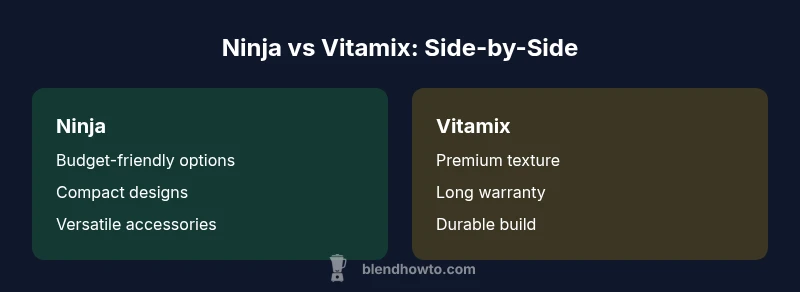
| Best For | Budget-friendly blending and versatility | Premium texture and long-term reliability |
| Ease of Cleaning | Typically straightforward; more parts in some kits | Often designed for easier cleaning; some models include self-cleaning options |
What's Good
- Lower upfront cost on many Ninja models
- Compact designs save countertop space
- Wide accessory ecosystem for Ninja models
- Vitamix offers exceptional texture and durability
- Broad model range lets you pick by need
The Bad
- Inconsistent build quality across Ninja sub-lines
- Vitamix models can be pricey upfront
- Large Ninja kits can have many parts to manage
- Repair parts or service can be costly for some units
Vitamix is the stronger long-term blend for texture and durability; Ninja offers solid value and flexible, space-saving options.
Choose Vitamix if you prioritize silky textures and durability over years of heavy use. Choose Ninja if you want budget-friendly blending, compact design, and broad accessory options without a large upfront price. Your choice should hinge on how you plan to use the blender and how much you value long-term reliability vs. upfront savings.
Frequently Asked Questions
Which blender is better for smoothies, Ninja or Vitamix?
Both perform well for smoothies, but Vitamix typically yields the smoothest texture due to blade geometry and motor control. Ninja can deliver excellent results at a lower price, especially for everyday blends. Choose Vitamix for premium texture and Ninja for value.
For smoothies, Vitamix usually delivers the smoothest texture, while Ninja offers solid results at a lower cost.
Are Ninja and Vitamix compatible with accessories and jars?
Accessory compatibility varies by model. Check jar types, lids, and blade assemblies to ensure you can use the items you already own. Vitamix accessories tend to be universal within a line, while Ninja accessories are model-specific.
Accessibility depends on the model; verify jar and accessory compatibility before buying.
Do these brands last as long as each other?
Vitamix is widely regarded for longevity and strong warranties. Ninja durability depends on the line and model but can be excellent in higher-end options. Overall, Vitamix often outlasts budget Ninja models.
Vitamix often lasts longer and comes with solid warranties, while Ninja can be very durable in the right line.
Is a hot soup feature available in Ninja or Vitamix?
Vitamix models commonly leverage blade friction to heat soups during blending, a feature not universal across all Ninja models. If hot soup capability is important, check the specific model’s specs.
If you want to make hot soup in the blender, look for Vitamix models designed for that feature.
Which is better for nuts and nut butters?
Vitamsx focuses on consistency for nut butters due to blade geometry. Ninja can also handle nuts well, but outcomes may vary by model. For consistent nut butter, prioritize Vitamix.
For creamy nut butter, Vitamix generally has the edge.
What should I consider when choosing between Ninja and Vitamix?
Define your task list, preferred jar sizes, budget, and tolerance for cleaning. Consider warranty length and expected usage frequency. Read independent reviews that emphasize texture and reliability.
Think about what you’ll blend most, the space you have, and how much you’re willing to invest for durability.
What to Remember
- Prioritize long-term durability for frequent blending
- Consider jar options and accessory ecosystems
- Balance upfront cost with expected lifetime use
- Account for noise and workspace when choosing model
- Read independent reviews focused on texture outcomes