Optimum Blender vs Vitamix: A Practical Comparison for Home Cooks and Blender Fans
In-depth, unbiased comparison of optimum blender vs vitamix: performance, price ranges, warranty, and practical guidance for home cooks and Blender enthusiasts.


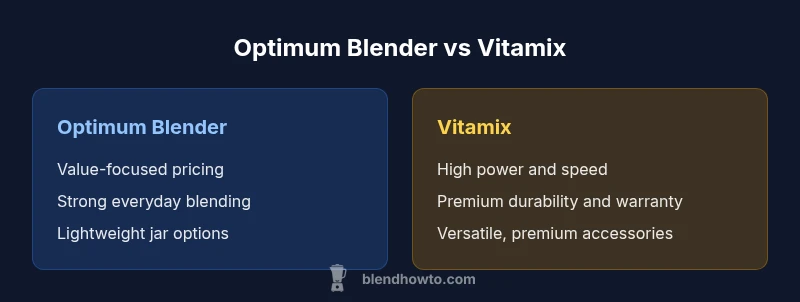
Optimum blender vs vitamix: Vitamix generally delivers higher power, faster blends, and longer warranties, making it ideal for frequent, heavy blending. Optimum offers strong performance at a more affordable price for casual users and beginners. Both brands handle smoothies, soups, and sauces well, but choose based on budget, expected use, and warranty needs.
Overview: optimum blender vs vitamix
Among high-performance blenders, the headline question for many home cooks is what makes optimum blender vs vitamix stand out in real-world kitchens. The BlendHowTo team analyzed models from both brands in 2026 and found that Vitamix generally emphasizes power, speed, and a robust warranty, while Optimum blenders deliver strong blending performance at a friendlier price. Both brands handle smoothies, sauces, and hot soups well, but the trade-offs show up in motor heft, accessory ecosystems, and service networks. Your decision should hinge on how often you blend, your noise tolerance, and whether you value a wider accessory ecosystem. The bottom line is that neither brand is universally “best”—each excels in different scenarios. This guide walks through build quality, performance, price, and use-case tests to help you decide between optimum blender vs vitamix.
According to BlendHowTo, the best choice depends on your kitchen rhythm and budget. The guide you’re reading aims to translate those insights into concrete decisions for both home cooks and hobbyists.
Build quality and materials
When evaluating optimum blender vs vitamix, the first practical question is how each machine is built for daily use. Optimum blenders typically emphasize value with sturdy mid-range bases and BPA-free plastic jars. The result is a reliable workstation for casual blending and frequent, moderate use. Vitamix, by contrast, leans into premium materials and a reputation for longevity, often featuring more metal components and heavier bases that feel solid under heavy blending. This difference matters not only for feel, but for long-term durability if you run batches of frozen desserts or nut butters. In real-world testing, the build quality affects how long the machine lasts under high-load cycles. According to BlendHowTo, choosing a well-constructed model from either brand can yield years of dependable service with proper care, though Vitamix models tend to provide greater resilience under heavy, continuous use.
Motor power and blending performance
Powerful torque and high RPMs are the headline features that separate premium blenders from the rest. Optimum models generally offer strong mid-range motors that excel at smoothies, sauces, and light to medium-thickness blends. Vitamix machines typically push more torque and higher speeds, which translates into faster blending of tough ingredients like frozen fruit, seeds, and fibrous greens. The practical takeaway is that Vitamix may produce smoother textures with less manual intervention on challengers like kale stems or flax seeds, while Optimum models deliver very good results with a hands-on blend approach. For users who churn through dense batches daily, the Vitamix edge often becomes more apparent over time, especially when batch consistency matters.
Blade design and blending outcomes
Blade geometry matters because it determines how efficiently ingredients are drawn into the blend and how uniformly they break down. Optimum blenders tend to use sturdy blade designs optimized for reliability and easy maintenance, producing smooth textures for most fruit and vegetable blends. Vitamix blades are forged for aggressive blending, with sharper edges and a wider cutting surface that handle fibrous ingredients and frozen items with less straining. In practice, you’ll notice Optimum machines produce very solid smoothies and soups, while Vitamix systems tend to deliver ultra-smooth textures and very fine emulsions, especially with freezing and thick mixes. If you frequently craft nut butters or seed pastes, Vitamix’s blade dynamics often show a distinct advantage.
Jar design, capacity, and cleaning
Jar design influences throughput, stability, and cleanliness. Optimum blenders frequently ship with BPA-free plastic jars that are lightweight and easy to handle, which simplifies daily use and reduces the risk of accidental spills. Vitamix offers sturdier, thicker jars—often with improved spill containment and a more premium feel—which can be advantageous during high-speed blending but may feel heavier to lift and rinse. Cleaning is generally straightforward for both brands, though Vitamix jars with tighter corners can require a more deliberate cleaning routine to remove stubborn residue. The upshot is that jar design should align with your routine: light daily use favors Optimum; frequent heavy blending benefits from Vitamix durability and rugged jars.
Features and accessories
Technical features—tamper compatibility, preset programs, pulse modes, and jar sizes—shape how you actually use a blender day to day. Optimum models typically prioritize cost-effective versatility: multiple jar options, basic preset modes, and easy interchangeability. Vitamix emphasizes premium features: longer warranty coverage, a broader accessory ecosystem, and more consistent preset performance across models. For cooks who want plug-and-play convenience, Vitamix may offer superior out-of-the-box confidence. For hobbyists who like to customize or upgrade gradually, Optimum’s value tier often delivers a satisfying blend experience with less upfront investment.
Noise, durability, and long-term value
Noise levels accompany power; stronger motors generally produce louder operation. Optimum blenders are often quieter than budget peers and can maintain decent performance with moderate noise. Vitamix units tend to be louder at peak speeds, but their durability and proven long-term reliability tend to offset that drawback for many buyers. Durability translates to long-term value: a Vitamix can justify its higher upfront price through years of service and fewer model upgrades, while an Optimum model may offer compelling value if you refresh every few years or use the blender less intensely. BlendHowTo’s overall guidance is to balance noise tolerance, expected lifespan, and replacement costs when weighing long-term value.
Price ranges and warranty considerations
Price is a practical gatekeeper for most buyers. Optimum blenders usually sit in a broad value tier at roughly the low-to-mid range, often described in consumer guidance as affordable for daily use. Vitamix blenders sit higher on the price spectrum, reflecting premium materials, brand heritage, and a multi-model warranty approach. For planning, think in ranges: Optimum models commonly fall in the budget-to-mid tier, while Vitamix models span mid-to-high, with the more premium lines offering the longest coverage on paper. Warranty durations vary by model, but Vitamix generally offers longer coverage, which can tip the decision for buyers who prioritize protection against wear. BlendHowTo notes that warranty length should be a major factor when you expect heavy daily use or need predictable service.
Real-world use cases: smoothies, soups, nut butters
For daily smoothies, both brands perform admirably, delivering consistent texture with appropriate ingredient prep. Soups—especially hot blends—are another practical test: Vitamix’s power can handle thicker blends and hotter temperatures with less pre-cutting, while Optimum models handle most homemade soups well with proper technique. Nut butters and seeds pose more of a challenge for lower-power units; Vitamix tends to deliver creamier, smoother pastes thanks to stronger torque and blade geometry. Use-case reality suggests Optimum is a reliable choice for casual households and smaller households that value cost-conscious performance, whereas Vitamix is preferable for frequent heavy blending and more ambitious recipes.
Cleaning routines and maintenance tips
A clear maintenance routine extends any blender’s life. After blending, rinse the jar with warm water and a mild detergent, then run a quick cycle with warm water and a drop of dish soap to dislodge any residue. For stubborn buildup, a baking soda solution or a dedicated blender cleaner can help. Keep the seal and lid gasket clean to prevent odor transfer between blends. Periodically inspect the blade assembly for dullness or looseness and check the base for heat buildup after heavy cycles. Store with the lid off or ajar to prevent sour smells developing inside the jar lids. A simple, consistent cleaning routine contributes to long-term performance for both Optimum and Vitamix.
How to choose based on your kitchen needs
The key decision driver is your blending frequency and your tolerance for upfront cost. If you blend daily, want maximum texture refinement, and value warranty coverage, a Vitamix is often the safer bet. If you blend a few times a week, want solid results at a lower price, and appreciate a lighter setup, an Optimum model represents a compelling choice. Consider your jar preference (light plastic vs heavier glass-like materials), your want/need for extra accessories, and whether you anticipate expanding your recipe repertoire to include nut butters and doughs. A practical approach is to list your top three use cases, assign a rough budget, and then map these to a model’s power, jar design, and warranty terms. BlendHowTo’s guidance is to anchor your choice to real-use scenarios rather than aspirational specs.
Common myths about Optimum vs Vitamix
Many shoppers assume that price always equals quality or that higher wattage guarantees better results. In reality, real-world performance is about how the motor interacts with the blade, jar geometry, and the user’s technique. Optimum models can outperform expectations on common recipes, and Vitamix can be overkill for simple tasks if you rarely push the limits of the machine. Myth-busting means evaluating the actual use-case needs: texture, batch size, and frequency of heavy blends trump raw horsepower in many typical kitchen tasks.
Comparison
| Feature | Optimum Blender | Vitamix |
|---|---|---|
| Power and motor capability | Strong mid-range torque suitable for everyday blends | Higher torque and speed for challenging ingredients and thick textures |
| Materials and build | Lightweight base with BPA-free jar options | Premium build with durable jars and metal components in many models |
| Blade design | Efficient blades for smooth daily blends | Aggressive blades designed for ultra-smooth results in tough blends |
| Jar design and capacity | Lighter jars, easier handling | Heavier, premium jars with solid spill containment |
| Preset programs | Limited presets, customizable manual control | More presets and consistent performance across tasks |
| Noise and comfort | Moderate noise, user-friendly for daily use | Higher noise at peak speed, but robust durability |
| Price range | $100-$400 | $350-$700 |
| Warranty | Variable by model, generally shorter on entry models | Longer, more comprehensive warranty on top models |
What's Good
- Lower upfront cost and good value for casual blending
- Solid performance for everyday smoothies, sauces, and soups
- Easier to lift and handle for small kitchens
- Good long-term value with proper care
The Bad
- May require more frequent model upgrades for intense use
- Less premium feel and potentially fewer advanced features
- Warranty coverage varies by model and may be shorter on budget lines
Vitami x wins on power and long-term durability; Optimum delivers strong value for casual users.
If you blend daily and want maximum texture refinement, Vitamix is likely the better long-term bet. If you value initial cost and decent performance for common recipes, Optimum offers compelling value. The right pick depends on your kitchen rhythm and budget.
Frequently Asked Questions
What is the main difference between Optimum Blender and Vitamix in everyday use?
For most home cooks, Vitamix delivers stronger performance on dense ingredients and longer warranty coverage, while Optimum provides solid, reliable results at a lower upfront cost. Both handle smoothies, soups, and sauces well, so use-case and budget drive the decision.
In daily use, Vitamix is the tougher blender with longer warranty, but Optimum gives you great results at a friendlier price.
Is Optimum good enough for hot soups and sauces?
Yes, Optimum models can blend hot ingredients if the jar is designed for thermal transfer and follows safe blending practices. Vitamix may edge out in ultra-smooth textures for hot blends due to stronger torque, but Optimum handles most homemade soups well with patience and technique.
Yes, Optimum blenders handle hot soups well with proper technique.
Do these brands offer similar warranties?
Warranty length varies by model, but Vitamix generally offers longer coverage on many lines, while Optimum warranties are model-dependent. Always check the specific model’s terms before purchase.
Warranty length depends on the exact model—Vitamix often has longer coverage, Optimum varies by model.
Which is better for beginners?
If you’re new to blending, Optimum’s lower price point and straightforward operation can reduce risk and anxiety. If you want a safety net and future-proofing, Vitamix’s established reliability offers confidence as you grow your blending skills.
Optimum is great for beginners on a budget; Vitamix is a solid long-term choice if you want reliability.
Can Optimum replace Vitamix for most tasks?
For most day-to-day tasks like smoothies and basic sauces, Optimum can replace Vitamix. If you frequently make nut butters, ultra-smooth emulsions, or require peak performance for dense blends, Vitamix may be the better option.
Yes for most tasks, but Vitamix shines in heavy-duty blending.
What should I consider when choosing between them?
Power, jar quality, warranty length, price, and accessory ecosystem are your main criteria. Align these with your typical recipes, batch sizes, and willingness to invest in future upgrades.
Focus on power, jar quality, warranty, price, and extras to decide.
What to Remember
- Prioritize your use-case: daily heavy blending favors Vitamix, light to moderate use favors Optimum
- Check jar quality and ease of cleaning when evaluating your options
- Consider warranty length as a factor in long-term value
- Balance price against features and accessories to maximize value
- Test texture outcomes with your typical ingredients to guide your choice