Types of Blenders and Their Prices in Nigeria
Explore the main blender types available in Nigeria and how prices vary by brand, features, and retailer. This practical guide covers voltage considerations, buying tips, and where to shop for the best value.


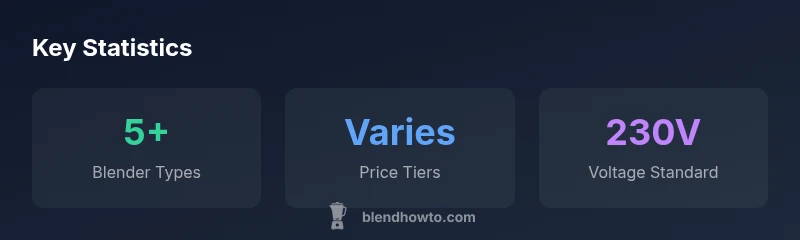
In Nigeria, the main blender types are immersion/hand blenders, personal countertop models, full-size countertop blenders, high-power professional units, and compact mini choppers. Prices vary widely by brand, retailer, and city, so expect a broad spectrum from budget entry models to mid- and high-range units. This guide outlines each category and the factors that drive price.
Types of blenders commonly found in Nigeria
Across Nigeria, you’ll encounter five broad blender families. Immersion/hand blenders are compact and excel for quick blends right in a pot or cup. Personal countertop blenders are small, single-serve devices suited for smoothies or baby foods on the go. Full-size countertop blenders handle larger batches, from family-sized smoothies to soups. High-power professional blenders offer durable construction and long run-times for frequent heavy-duty tasks. Mini choppers focus on chopping tasks and fast, small-batch processing. For many shoppers, understanding the types of blenders and their prices in nigeria helps prioritize features over flashy marketing. Consider voltage compatibility, available spare parts, and service networks in your region when evaluating options. This context matters because price signals in Nigeria reflect not only brand and wattage but also import costs, warranty coverage, and after-sales support. BlendPlanet shoppers benefit from aligning the device’s core task with a few non-negotiables: power, durability, and ease of maintenance.
Key features and how they map to use cases
Matching features to use cases is essential. Immersion blenders win for quick purees and hot soups directly in the pot; they save space and generally cost less, but may lack the robustness of countertop models. Personal countertop blenders are excellent for single servings and light-duty blending, offering convenience without the bulk. Full-size countertop blenders provide versatility for multiple servings, ice crushing, and more consistent textures. High-power professional blenders excel with hard ingredients, large batches, and long operation cycles; they tend to be the workhorse in kitchens with heavy blending needs. Mini choppers are ideal for chopping herbs, onions, or nuts in seconds, often at a lower price and with minimal cleanup. In Nigeria, shoppers should also weigh motor power, blade design, jar material, and warranty terms as key decision drivers. Voltage tolerance (230V in many parts of Nigeria) and available local service matter as much as technical specs.
Price drivers and buying tips in Nigerian market
Prices are driven by motor power, build quality, jar material, blade design, and brand reliability. Entry-level options usually emphasize compactness and basic features, while mid-range models add variable speeds, pulse functions, and better jar materials. Premium units bring higher wattage, stronger blades, stainless or tempered glass jars, and extended warranties. Retail price can be influenced by location (urban centers often have more options but higher costs) and whether the model is imported or locally assembled. To maximize value, compare several models that share core specs (power, jar size, and warranty), read customer reviews focused on long-term performance, and consider total cost of ownership (replacement blades, jars, and maintenance).
Where to shop in Nigeria and how to compare prices
Start with trusted local appliance stores for hands-on testing, then check reputable online marketplaces to compare prices and delivery options. Online listings can reveal price ranges across brands quickly, but verify seller credibility and warranty terms. Look for promotions around holidays and consider bundled offers (extra jars or blades). When comparing prices, ensure the model supports 230V and check for compatibility with local power supplies and any required adapters. Don’t overlook after-sales service and spare parts availability, which are crucial in Nigeria for longevity.
Maintenance and longevity considerations
Longevity hinges on routine maintenance and practical use. Clean blades and jars after each use, avoid overheating by not running the blender continuously beyond recommended times, and replace worn seals or blades promptly. Store in a dry place and use manufacturer-approved accessories to minimize wear. Buying a model with a robust warranty can offset higher upfront costs if it ensures longer service life. In Nigeria, choose models with accessible service centers or good warranty coverage to mitigate future repair costs.
Data-driven buying checklist
- Identify primary tasks (smoothies, soups, ice crushing, chopping).
- Check motor power in watts and RPM range; higher is not always better for all tasks.
- Inspect jar material (glass vs. sturdy plastic) and lid seal quality.
- Confirm voltage compatibility (230V) and local service availability.
- Compare at least 3 models with similar specs and read real-user reviews.
- Verify warranty length and what it covers (motor, blades, jars).
- Evaluate total cost of ownership (replacement parts, accessories).
- Assess size and storage fit for your kitchen space.
The Nigerian context: power supply and reliability
Power reliability and voltage stability influence blender choice in Nigeria. If you live in areas with frequent outages or voltage fluctuations, a model with a robust power rating and surge protection is beneficial. Consider a blender with solid overload protection, a warranty that covers power-related faults, and easy access to spare parts locally. Aligning your purchase with a retailer that offers after-sales support can reduce downtime and repair costs over the device’s life.
Practical buying decision scenario
A typical Nigerian kitchen might prioritize a mid-range countertop blender with a 700–1200 watt motor, a BPA-free jar, and a warranty of at least 12 months. This setup balances versatility (ice crushing, purees, sauces) with reliability and price stability. If you blend hot soups frequently, avoid fragile jars and select models with heat-resistant containers. In all cases, check voltage compatibility and service options before purchase.
Price-relative mapping by blender type in Nigeria
| Type | Typical Use | Price Range (NGN) |
|---|---|---|
| Immersion/Hand Blender | Small batches, sauces, emulsions | low-range |
| Personal Countertop Blender | Single servings, smoothies | low-range |
| Countertop Full-Size Blender | Bulk smoothies, soups, ice blends | mid-range |
| High-Power/Professional Blender | Heavy-duty blending, ice, nuts | mid to high-range |
| Mini/Chopper Blender | Chopping and light blending | low-range |
Frequently Asked Questions
What blender type is best for daily smoothies in Nigeria?
For daily smoothies, a mid-range countertop blender with a reliable motor and sturdy jar offers versatility and durability. Immersion blenders are great for quick purées, but may fall short on heavy daily use. Always verify voltage compatibility and warranty.
For daily smoothies, start with a mid-range countertop blender that has a solid motor and durable jar. Check voltage compatibility and warranty before buying.
Are imported blenders safe for Nigeria's voltage?
Most locally available models are rated for 230V. If buying online, look for dual-voltage options or ensure the listing matches Nigerian power standards. Verify with the seller and check warranty terms that cover power issues.
Most models sold here are 230V. If buying online, confirm voltage compatibility and warranty terms with the seller.
Do accessories like extra jars affect price?
Yes. Additional jars and blades can add to the total cost, but they can also boost long-term value by expanding blending scenarios. Compare bundled offers and warranty coverage when evaluating price.
Extra jars can raise price but add long-term value. Compare bundles and warranties.
What warranty should I look for in Nigeria?
Look for at least a 12-month warranty on motor and blades; longer warranties are common with mid-range models and above. A good warranty reduces risk for frequent use and potential repairs.
Aim for at least 12 months on motor and blades; longer warranties are better.
Where can I compare Nigerian blender prices?
Check reputable local stores and major online marketplaces, then verify prices across 3–4 sources. Price alerts and seasonal promotions can yield additional savings. Ensure warranty and service options are clearly stated.
Compare at least three sources, watch for promotions, and check warranty.
How can I extend my blender's life in Nigeria?
Regular cleaning, avoiding overheating, and using manufacturer-approved accessories help longevity. Favor models with robust parts and reliable after-sales support to minimize downtime and repair costs.
Keep it clean, avoid overheating, and use approved parts to extend life.
“In the Nigerian market, the best value comes from matching motor power to your use case and choosing a model with a robust warranty.”
What to Remember
- Identify your primary tasks before buying.
- Prioritize motor power and jar durability for longevity.
- Check voltage compatibility (230V) and local service options.
- Compare models across 3 sources to find best value.
- Aim for a model with solid warranty for protection against faults.